Family is supposed to be your anchor, but for me, it was the storm. My parents, Charlie and Tanya, didn’t vanish in a single moment. They eroded, their love for me wearing away as they built new lives with new partners and new children. I became a weekly scheduling conflict, then a burden, and finally, an afterthought. The night I heard my stepfather say, “She’s not my kid,” and my father on speakerphone admit, “Ivy doesn’t even fit in here,” was the night my childhood truly ended. A few days later, I was standing on my Aunt Carol’s porch with my world stuffed into three garbage bags.
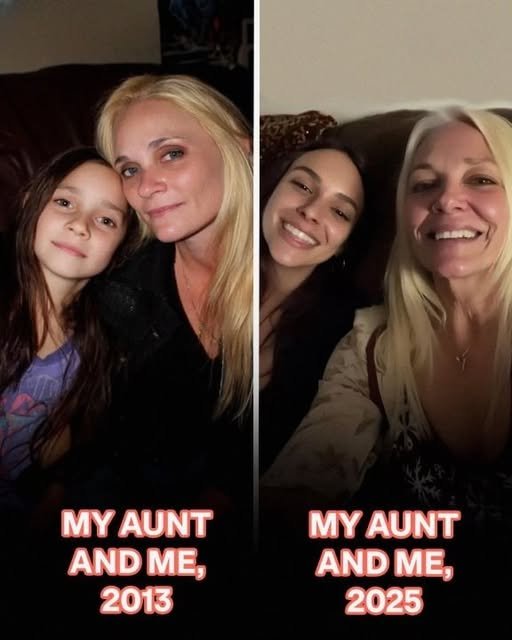
Aunt Carol didn’t have much, but she had a heart bigger than her small yellow house. She saw the trash bags and understood the message instantly. Without a word of pity, she got to work building me a home. She gave me space to be angry, to be sad, and most importantly, to create. She saw my art not as a hobby, but as a vital part of who I was. She was my cheerleader, my editor, my ride to every art fair, and the reason I believed I could be someone. Under her care, I grew from a scared, abandoned girl into a young woman with a voice and a vision.
That vision led to an art competition win and a life-changing sum of money. I was honest in interviews about being raised by my aunt after my parents’ abandonment. The spotlight, it turned out, has a way of attracting ghosts. Charlie and Tanya reappeared, dripping with sudden pride and manufactured emotion. They wanted to make amends, to be a family. But over a painfully awkward dinner, their facade cracked, revealing the old blueprint of their selfishness. They needed money—for a car, for a move. Their attempt to smear Aunt Carol, the woman who saved me, was the final straw.
I didn’t get angry. I got strategic. I told them I would consider helping if they came to a special event I was hosting that Saturday. Their eyes lit up with dollar signs. They arrived at the community center, dressed for a financial transaction, not a revelation. The event was packed with my real community: friends, mentors, and Aunt Carol’s neighbors. The program was a loving roast of sorts—a slideshow and speech dedicated entirely to my aunt, the woman who built me. As photos of our life together flashed on screen, my parents’ discomfort was palpable.
When I took the microphone, I looked straight at them. I thanked Carol for being my parent. Then, I turned to Charlie and Tanya and explained my condition for help: they had to be here, in this room, to hear me say no. I told them they would get nothing from me, that they had forfeited every claim to my life or my success the moment they drove away from Aunt Carol’s house. The sound of the crowd’s support was thunderous. I left the stage, took my aunt’s arm, and walked out. The parents of my past were left sitting in the silence of their own making, while I moved forward with the family that always chose me.