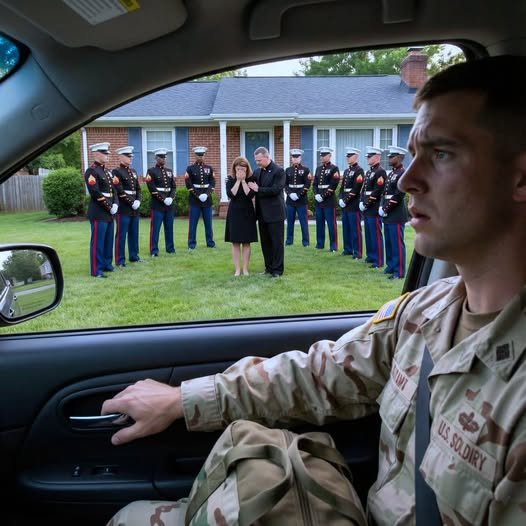
Every service member knows the fear embodied in the sight of a sedan with official plates pulling up to a home. For Staff Sergeant Michael Torres, that fear was realized in the most bizarre way possible: he was the one in the sedan’s back seat, watching a Casualty Assistance Call Team (CACT) assembled on his own lawn.
Returning early from deployment, Torres was met with a scene every soldier dreads: the full, formal ritual of military loss centered on his wife. A tragic error had occurred. Following an IED attack that killed two soldiers—Sergeant First Class David Torres and Specialist James Torres Martinez—a rushed identification process led to Michael’s file being pulled. Someone saw ‘M. Torres,’ ignored discrepancies in duty station and timeline, and pushed the notification through without final verification. For four days, his wife was a casualty of the system.
This story is less about a miraculous homecoming and more about a profound systemic failure. It highlights the catastrophic result when checkpoints are ignored. The investigation revealed pressure to expedite notifications, leading a Lieutenant Colonel to bypass protocol. The result was two families initially denied timely, accurate news of their loss, and one family inflicted with a traumatic false loss.
For Torres, a professional soldier, the personal and professional betrayal cut deep. The institution he served had, through negligence, inflicted severe psychological harm on his family. His fight shifted from overseas to holding his own chain of command accountable. He sat through the funerals of his fallen brothers, his attendance a solemn reminder of the very real cost that underpinned the clerical error.
The aftermath offers critical lessons for the military community. It underscores the non-negotiable importance of meticulous procedure in casualty affairs. It also reveals a gap in support: what resources exist for a family that experiences a false notification? The trauma is real and unique, a form of moral injury inflicted by friendly forces.
Torres and his wife are now navigating a difficult path. They must reconcile his continued service with a broken trust in the institution’s safeguards. His story is a stark call for vigilance, for absolute integrity in the sacred duty of casualty notification, and for expanded support systems to address the full spectrum of trauma military families can face—even from the very system designed to protect them.