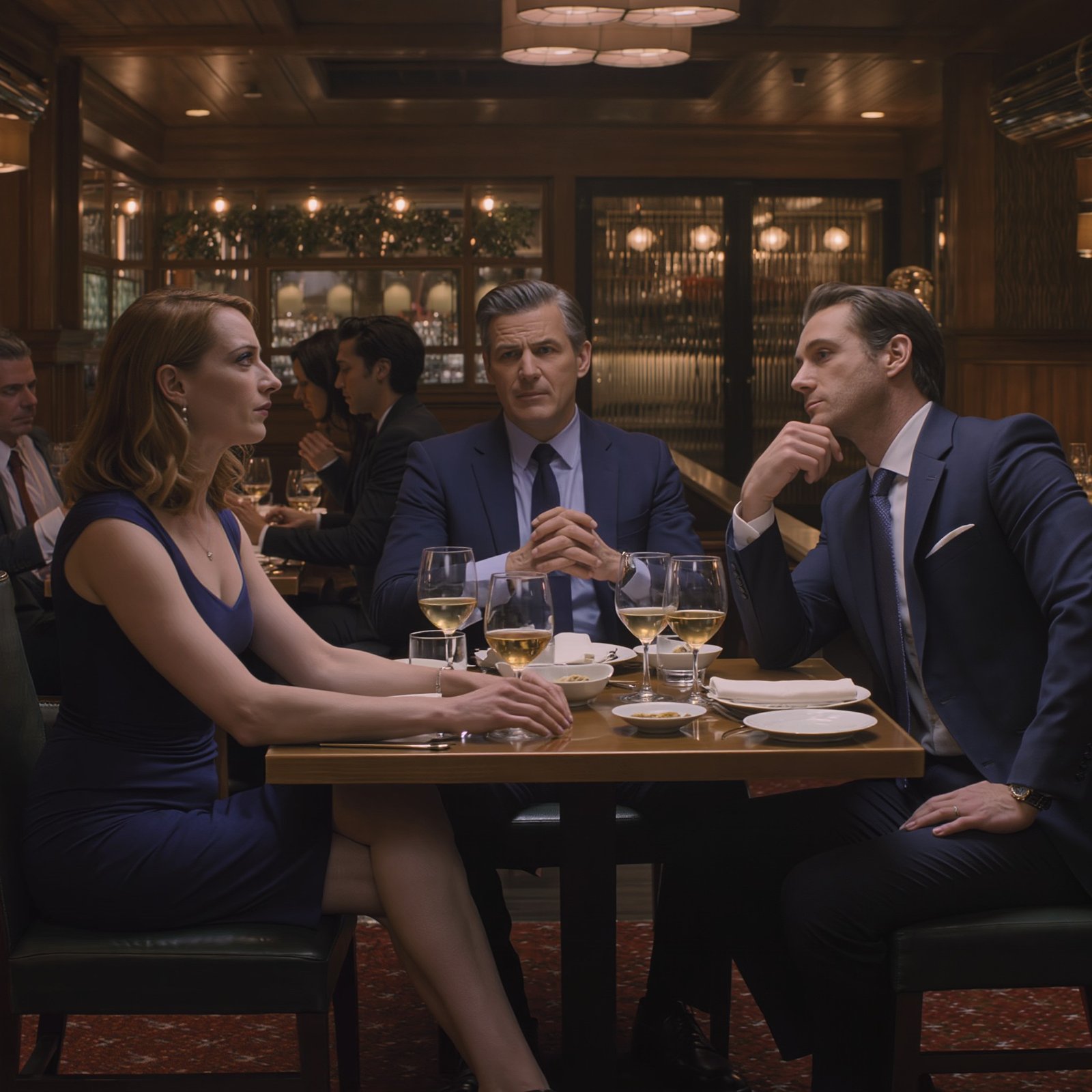
For years, I perfected the art of being the supportive wife. I managed our home, attended events, and smiled on cue. My husband David’s career was the sun around which our life orbited. When he needed me to attend a dinner with a Japanese client, Mr. Tanaka, his instructions were clear: look elegant, be pleasant, and don’t worry about the conversation. He was fluent, and I wouldn’t understand a word. He was half right. He was fluent. And I understood every single, devastating word.
The evening began with formal politeness. David was in his element, negotiating and boasting. I watched Mr. Tanaka, a dignified man, whose eyes occasionally flickered to me with a polite curiosity. Then David, seeking to build rapport, began to speak freely. He translated my life into a series of dismissals: my work was a hobby, my ambitions were nonexistent, my purpose was domestic and decorative. He then detailed how he was securing “his” assets independently and confessed to an affair with a woman whose mind he admired.
Hearing your life summarized as a minor inconvenience is a uniquely hollowing experience. The tablecloth, the fine china, David’s confident smile—all of it blurred into a backdrop for my internal unraveling. Yet, amid the shock, a plan crystallized. He believed he was speaking in a safe code, a language of exclusion. He was wrong. That code was now my blueprint for escape.
I didn’t weep or rage. I gathered myself, and then I gathered evidence. With the guidance of a attorney friend, I accessed accounts, documented transfers, and preserved proof of his infidelity. I realized the lonely evenings I’d spent studying verbs and vocabulary had armed me for the most important fight of my life. When David was finally served, his confusion quickly turned to panicked recognition. The wife he thought he was managing had outmaneuvered him completely.
The divorce settlement reflected the truth I’d uncovered. Later, a message from Mr. Tanaka led to a career opportunity that valued my skills and my discreet strength. He hadn’t missed the tension at that dinner. My journey from being described as “just for appearance” to becoming a director in my own right was the ultimate rebuttal. That night taught me that when someone tries to render you silent and invisible, the greatest power is in choosing what you do with the truth they never meant for you to hear.