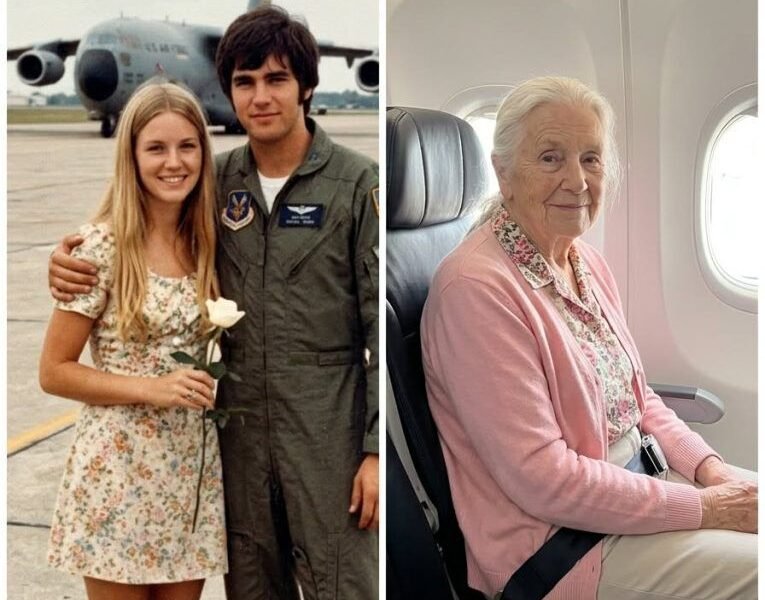
The lock clicked into place with finality, the cheerful “rest well, Mom” echoing hollowly through the guest room door. Below, Christmas morning unfolded without her—the laughter, the wrapping paper, the family traditions from which she’d been deliberately excluded. Pressing her ear to the wood, she heard the truth she’d been avoiding: her son’s relief at her silence, her daughter-in-law’s exasperation, their shared laughter that excluded her.
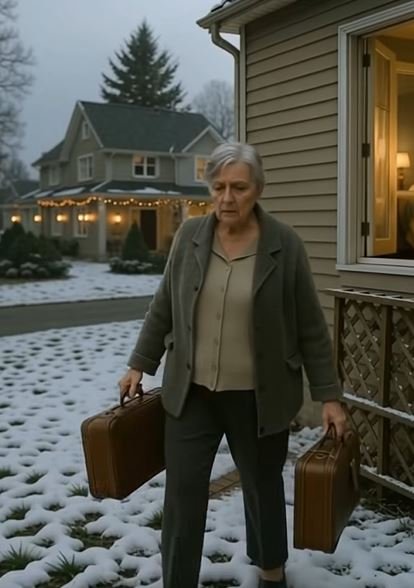
In that moment, the grandmother made her decision. She wrote a simple note on fancy stationery—no anger, just truth—then climbed out the window like a rebellious teenager, the cold air feeling more like freedom than punishment. At the Greyhound station, when asked her destination, “somewhere quiet” was both an answer and a promise to herself.
That somewhere quiet became a worn Minnesota farmhouse she transformed into Qualls’ Rest, where she built a life piece by piece, finding herself in the quiet mornings and satisfied exhaustion of creating something truly hers. When her family appeared months later, apologies on their lips, she welcomed them not as a penitent mother returning to fold, but as the proprietor of her own domain.
The healing that followed was slow and honest, culminating in a Christmas where snow fell outside her own windows, and her granddaughter placed a silver key pendant in her hand. “You showed me how to hold my own,” the girl whispered, and the grandmother finally understood: she hadn’t abandoned her family that Christmas morning. She had simply chosen to stop abandoning herself.