Muscle memory is a curious thing. It allows hands to find chords on a guitar after decades of silence, and it allows the heart to remember how to hope after a lifetime of disappointment. Walter Briggs was an expert in the mechanics of the first kind, but had long since retired from the second. In November 1983, as he prepared to leave his failed garage, the sputter of a dying van and the strain of an acoustic guitar triggered something deep within him—a memory of youth, passion, and road not taken. His hands, skilled at repair, acted almost on their own, pulling him toward one last act of service.
He fixed more than a van that night; he patched a leaking dream. He saw the band’s desperation not as a burden, but as a sacred trust. By orchestrating their arrival in Chicago, he effectively poured the last of his own dreams into their tank. He watched them drive away toward a sunrise he would never see, believing his story had reached its sensible, quiet conclusion. He packed his own dreams away as carefully as his tools, and headed north to a life of anonymous labor, the melody of what might have been a faint, persistent hum in the background of his days.
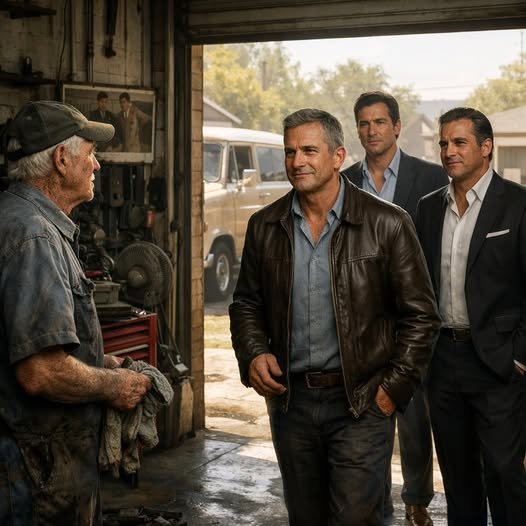
The knock that came twenty-five years later was the sound of that hum becoming a symphony. The four men at his door were living testaments to the power of his single night’s work. They had not only remembered the mechanic; they had mythologized him. In their relentless search, they demonstrated a loyalty that transcended fame and fortune. They were there to settle accounts, but the currency was dignity, belonging, and legacy. The check they offered was life-changing, but the real wealth was in their insistence that he was, and always had been, an essential part of their story.
The reunion with his daughter, Natalie, was the final repair, mending the most painful break in his life. It was the gift that made all others meaningful, grounding his sudden windfall in the bedrock of family. The job at the music school was the perfect denouement—it allowed the musician he had once been to finally mentor the next generation, his hands remembering their old craft on the fretboard as surely as they had on an engine. He was no longer just a mechanic or a janitor; he was Walter Briggs, teacher, grandfather, and unsung hero.
Walter’s tale is a masterclass in delayed grace. It argues that our worth is not determined by our lowest moments or our quietest years. It shows that an act of pure generosity writes its own indelible contract with the universe, one that may take decades to mature. He thought he had merely been kind; in truth, he had been sowing seeds in the frozen ground of his own despair. And with infinite patience, those seeds grew into a forest of second chances that finally sheltered him in his golden years, proving that hope, like a favorite song, never really leaves you—it just waits for the right moment to be played again.