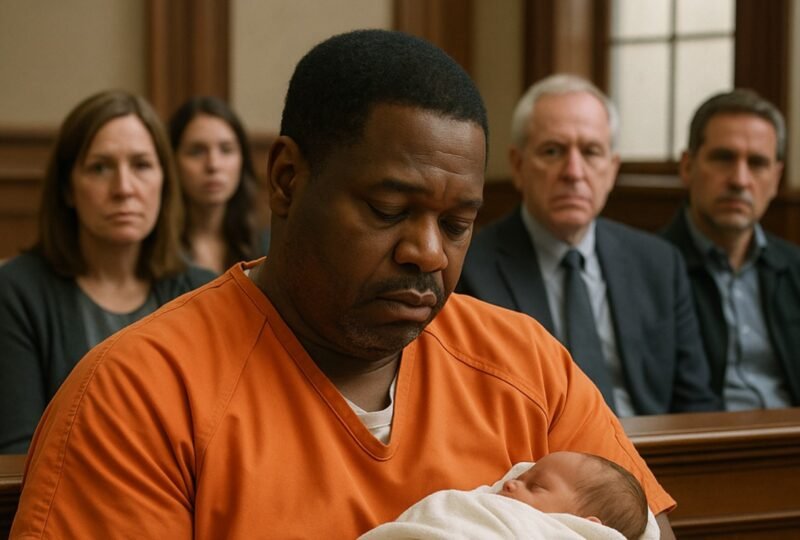
The judge’s words echoed through the silent courtroom: “Life imprisonment.” The man in orange stared ahead, his future collapsing into a single, bleak path. When asked for final words, he made a simple, heartbreaking request: “I want to hold my son.”
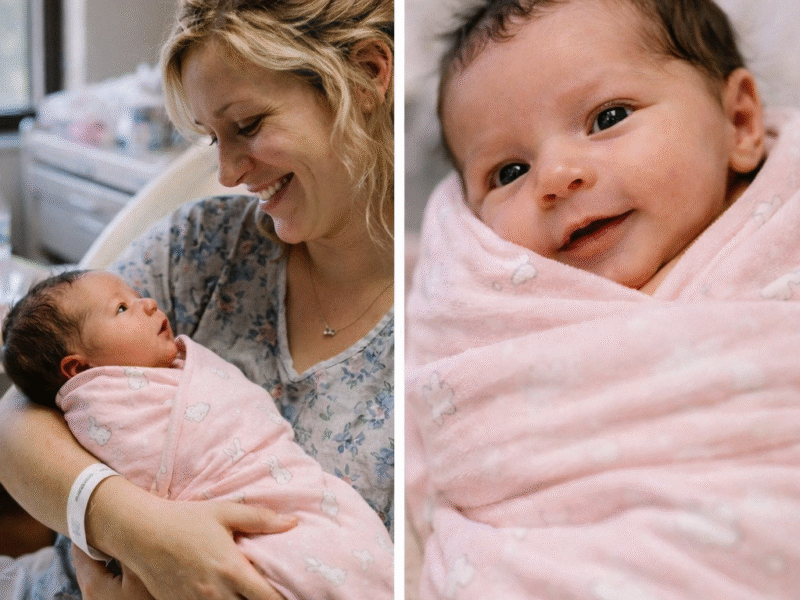
The door opened, and a woman entered, carrying a small bundle. As the guards removed his handcuffs, he reached for the infant with trembling hands. For the first time, he cradled his child, tears streaming down his face. The courtroom watched, captivated by the raw emotion of the moment.
Then something shifted. The man’s tears weren’t just of sadness anymore, but of resolve. He looked up, his voice clear and firm. “I must speak the truth,” he began, and the story tumbled out—a story of brotherly protection, of taking blame that wasn’t his to bear. But holding his son had changed everything. The abstract concept of “family” had become real, tangible, in his arms.
A week later, the case was reopened. The man who walked out of the courtroom was different from the one who entered it—not just because of his freedom, but because he had finally chosen the right family to protect.