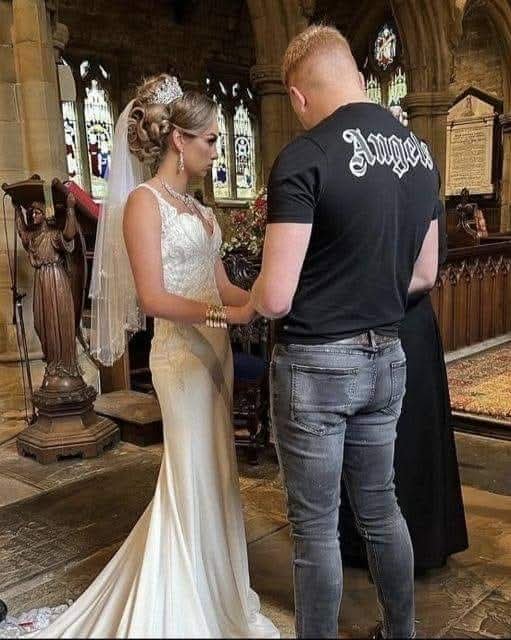
A viral wedding photo is prompting couples everywhere to have an important conversation. The picture shows a bride in full regalia next to her groom in a casual t-shirt and jeans. While the internet erupts over the apparent clash, the real story likely lies in a conversation this couple had—or didn’t have—before their big day. This moment transcends fashion; it’s a case study in alignment, communication, and defining shared values as a partnership facing its first major public test.
The negative reactions online stem from a perceived imbalance. Many see the bride’s elaborate gown as an investment of thought, resources, and emotion, and view her partner’s casual wear as a failure to match that energy. This can feel intuitively unfair, suggesting one person is carrying the symbolic weight of the occasion alone. For many, this sparks a fear of being unsupported or an afterthought in their own partner’s eyes. The criticism, though harsh, often comes from a place of projecting that fear onto the anonymous couple, asking, “If he can’t dress up for this, what will he show up for?”
However, the supportive comments point to a different, equally valid relationship dynamic: one built on radical acceptance and personal autonomy. In this framework, the wedding is an expression of the two individuals coming together as they are. The joy on their faces suggests a mutual agreement or acceptance that overrides conventional expectations. This scenario champions the idea that in a strong partnership, each person feels free to be their authentic self, even on a day laden with pressure. Their happiness suggests his jeans were not a point of contention but a non-issue, or even a welcomed quirk, within their bond.
For couples planning a wedding, this viral moment is a valuable prompt. It underscores the critical need to discuss expectations openly, not just about budgets and guest lists, but about the tone and symbolism of the day itself. What does getting dressed up mean to each of you? Is it an essential ritual, or an optional formality? Getting on the same page prevents surprise and resentment, ensuring you walk toward the altar as a unified team, whether in matching tuxedos or mismatched outfits. The goal is to make conscious choices together, not to have one person’s assumptions shattered at the altar.
In the final analysis, the success of Catherine’s marriage won’t be found in a Reddit thread debating her husband’s sneakers. It will be built in the thousands of unphotographed moments that follow: the compromises, the support during hard times, the shared laughter. The original poster noted the bride had found love after swearing it off. That poignant detail hints that for her, the profound value was in the presence of the man, not the packaging. Their photo serves as a reminder that while the world may judge a relationship by its cover, the real story—the commitment, the understanding, the joy—is always written on the pages within, visible only to the two people who matter most.