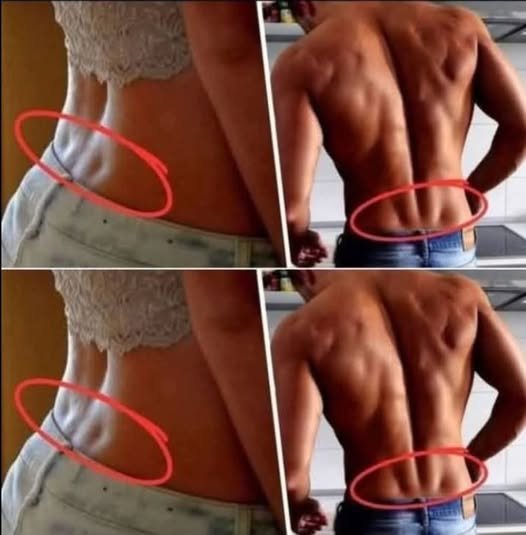
Imagine a feature so distinct it’s named after ancient deities, yet so personal it’s dictated by your own DNA. That’s the reality of the two small dimples that appear on some people’s lower backs. These aren’t marks from clothing or signs of a specific lifestyle; they are permanent indentations formed where the skin dives down to meet deep pelvic ligaments. Their presence speaks to ancestry, their visibility to fitness, and their allure to centuries of artistic tradition.
The fundamental truth is genetic. These dimples are a dominant inherited trait. The specific bony landmarks on your pelvis, combined with the way your skin connects to them, determine whether these hollows are present. This means they are a familial trait, a subtle heirloom passed down through generations. You can’t earn them with crunches or lose them with weight gain; they are a fixed part of your anatomical landscape, becoming merely more or less prominent with changes in body composition.
Their cultural journey is rich. Christened the “dimples of Venus” in women, they were romanticized as an external sign of internal grace and fertility. For men, the “dimples of Apollo” tied them to classical ideals of heroic beauty. This mythological branding wasn’t accidental. It elevated a minor physical attribute into a symbol of desirable human qualities, ensuring these dimples were sought after and admired in life and immortalized in art.
Let’s be clear: from a health perspective, these dimples are irrelevant. They are not indicators of good or bad health, strength, or flexibility. They are a cosmetic variation, pure and simple. This is actually wonderful news, as it removes any pressure or judgment. They can be appreciated without medicalization—seen as charming dots on the map of the body, not as diagnostic markers.
In a world obsessed with manufactured beauty standards, these natural dimples are a refreshing anomaly. They represent beauty that cannot be bought or trained for, only inherited. They encourage a shift in perspective: instead of focusing on what we can change, we can learn to admire the intriguing, unchangeable details that make our bodies uniquely ours. Whether visible or not, they remind us that true appeal often lies in these authentic, predetermined details.