Leaving for work that day, my mind was preoccupied with presentations and deadlines. The noisy street was just part of the routine. A loud, unnatural crack made me look up. I saw a window on the fifth floor burst, its glass twinkling as it fell. My first thought was of falling objects. Then I saw the child, a small silhouette against the brick, beginning a terrible descent. In that moment, everything else ceased to exist.
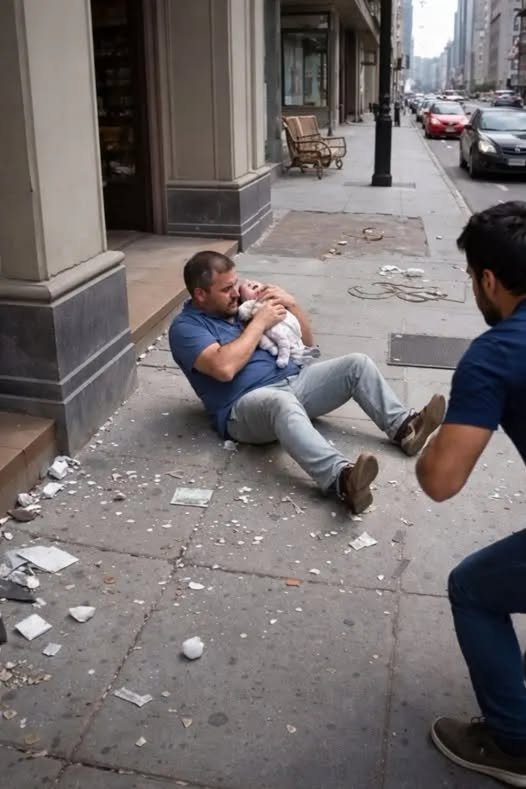
There was no internal debate. My feet were moving before I could think, a raw, automatic response to impending disaster. I ran harder than I ever have, the world reducing to a tunnel with the child at its end. The impact was a shocking, painful jolt that drove us to the concrete. A heavy darkness pressed at the edges of my sight, accompanied by a symphony of pain. What pulled me back was a sound—the vibrant, furious crying of the child. It was proof of life, and it changed everything.
People gathered quickly, their hands keeping me still, their voices a blend of panic and reassurance. The ambulance ride was a strange pocket of calm. Lying there, I traded glances with the paramedic working on the boy. We both knew what the crying meant. I hurt, but he lived. It was a trade I would make a thousand times over. This clear, moral certainty was upended seven days later by a legal notice. The parents were suing me for “reckless rescue,” claiming I had caused their child harm and trauma.
The legal proceedings were a surreal nightmare. The narrative was twisted so that my act of prevention became an act of violence. My momentary dive was framed as a dangerous, unprofessional intervention. The pressure to admit fault and settle was intense. I held firm, but as the days wore on, the system seemed stacked against simple truth. I began to wonder if goodness was a liability in a world eager to assign blame.
Salvation came from an unexpected witness. A tourist, unaware of the trial, had seen news coverage and realized what her vacation video contained. She brought it to the court. When played, the silent video was more powerful than any argument. It showed the negligent push from the apartment, the child’s fall, and my full-speed dive to intercept him, clearly cradling his head. The truth was irrefutable. The case was not just dismissed; it was condemned. Stepping outside, the sun felt like an affirmation. A reporter asked the inevitable question: “Would you do it again?” The answer was an easy yes. Because the video proved more than my innocence; it proved that sometimes, the right thing to do is also the only thing to do, regardless of the cost.