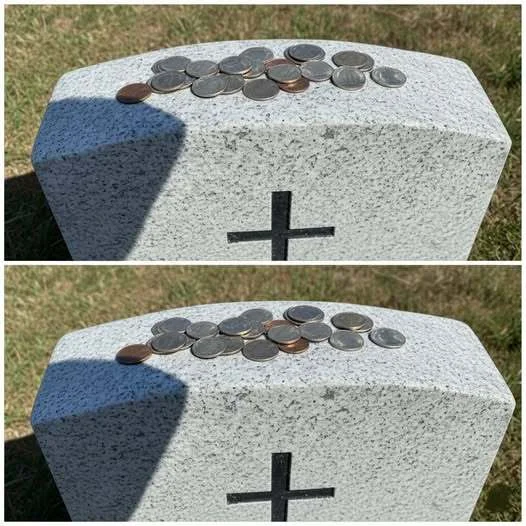
Among the flags and flowers decorating a soldier’s grave, you might see coins. This is no accident. In military cemeteries, this is a revered custom, a way for the living to speak to the fallen in a language of metal and memory. What seems like mere pocket change is, in fact, a deeply symbolic act, rich with history and heartfelt meaning.
The tradition echoes ancient beliefs where coins were left to ensure safe passage to the afterlife. In modern America, it found its voice during the Vietnam War, a conflict that left deep scars on the national psyche. Veterans, returning to a divided country, needed a way to honor their friends that felt personal and free from political debate. So they began leaving coins. It was a solitary gesture that said, “I was here for you,” a moment of connection in a world that often didn’t understand their loss.
The type of coin left behind conveys a precise message, creating a quiet code of camaraderie. A penny means the person stopped by to pay their respects. A nickel tells of shared days in training. A dime signifies they served together on active duty, bound by the experiences of deployment. A quarter carries the greatest weight, stating plainly that the visitor was with their comrade when they died. This simple system allows for a complex history to be told in an instant, a story of friendship and sacrifice etched not in stone, but in currency.
For families visiting a grave, these coins are more than objects; they are messages of solidarity. Each one is proof that their loved one’s service and sacrifice are remembered by others who walked the same path. It is a comfort to know the bonds of brotherhood and sisterhood extend beyond death. In our loud and busy world, this practice is a whisper of enduring respect. It reminds us that the most powerful memorials are not always grand statues, but can be as simple and enduring as a coin left in the sun, a silent promise to never forget.