In the darkest hours of the night, while her son slept, Rosa Reyes pushed a wooden cart through mountains of refuse. Her hands, tough and resilient, sorted plastic from paper, metal from rot. Each piece she salvaged was a coin for her son’s future, a small step away from the poverty that confined them. Miguel, her brilliant boy, studied by candlelight in their humble home, his dreams illuminated by that single, dancing flame. Their life was a duet of silent sacrifices—hers in the grime of the landfill, his in the focused solitude of his studies.
The world outside their home was less kind. At school, Miguel’s reality was a source of merciless teasing. The other children, insulated by their own comfort, could only see the surface: the old clothes, the unmistakable scent that lingered on him. They called him “garbage boy” as if it were his name, and he learned to make himself small and quiet, hoping to escape their notice. The shame he felt was a betrayal of his mother’s love, and that conflict tormented him. He was proud of her, but he was also desperately afraid of the ridicule her work invited.
Everything changed with a single school essay. The assignment was to write about a hero, and Miguel realized his hero didn’t live in a history book or on a movie screen. She came home every morning smelling of hard work and hope. When he read his essay aloud, his voice trembling but clear, he reframed his entire existence. He wasn’t the “garbage boy”; he was the son of a woman who could see potential where others saw only waste. The classroom, once a place of torment, became a place of redemption. For the first time, he was seen for who he was, not what he lacked.
The ultimate test of their dream came with Miguel’s university acceptance. The cost was far beyond their means, a sum that mocked their daily struggles. In response, Rosa did the unthinkable: she sold her garbage cart. It was more than a tool; it was their livelihood, their stability. In that moment, she was not just giving him money for school; she was giving him her entire world, trusting him to build a new one for them both. Miguel carried the gravity of that gift with him, and it became the engine of his success.
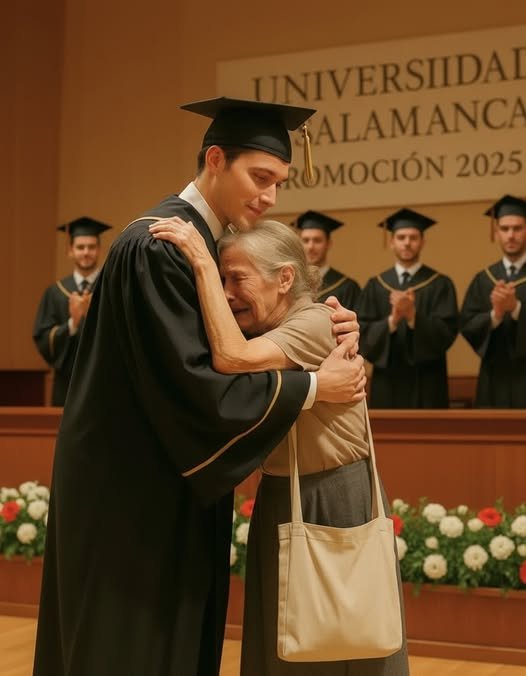
Years later, as he stood in his cap and gown, Miguel held the microphone and looked at the woman who had given him everything. The speech he had written felt hollow compared to the truth in his heart. “You laughed at me because my mother collects garbage,” he told the gathered crowd. “But she taught me how to turn trash into gold.” The line hung in the air, simple and devastating. Then, the tears began to fall—not just from Rosa’s eyes, but from hundreds in the audience. It was a powerful reminder that the most profound successes are built not on privilege, but on love, and that the most valuable treasures are often found in the most unlikely places.