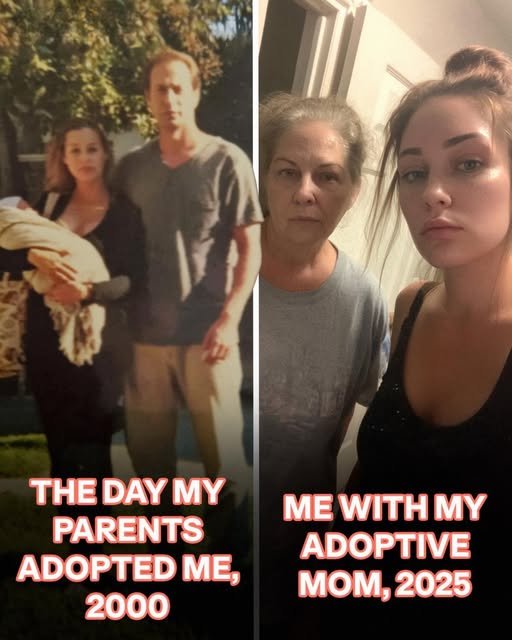
I grew up believing I was a rescued orphan, a story that never quite felt whole. My adoptive mother, Margaret, was a distant, stern figure who seemed to parent out of obligation. Her constant reminders to be “grateful” for a home created a chasm between us, making me feel like a burden rather than a beloved daughter. The only genuine affection I received was from my adoptive father, George, and when he passed away, the last ember of warmth in that house went with him. I spent my youth feeling like a ghost, haunting a life that wasn’t truly mine.
At 25, driven by a deep-seated need for answers, I decided to trace my roots. The journey was supposed to start at the orphanage. But when I arrived, officials found no trace of me in their records. The shock was visceral. The single, solid fact of my existence was a phantom. I went home and faced Margaret, the woman who had built this fragile house of cards, ready to demand the truth.
What I received was a story far more tragic and beautiful than I could have imagined. Margaret, through sobs, revealed that my biological mother was her beloved older sister. She had been given a devastating choice: treatment for a aggressive cancer, or the chance to bring me to term. She chose me. Margaret, grieving and unprepared, had promised to raise me. The coldness I felt my whole life was the shadow of that grief; she saw her sister’s sacrifice every time she looked at me, and it was a pain she couldn’t overcome.
This revelation didn’t instantly heal our relationship, but it reframed it entirely. I stopped being the ungrateful adoptee and became the daughter of a heroine. The void of not knowing was filled with the powerful story of a mother’s love. I now have a history, a lineage of courage and sacrifice. While my relationship with Margaret is complex, we are slowly building a new connection based on truth. I carry the knowledge of my mother’s choice not as a weight, but as a foundation, finally solid beneath my feet.