Long before the name Jeffrey Epstein became synonymous with one of the most disturbing criminal scandals in modern American history, there were murmurs. They were faint at first—isolated comments, interviews that felt strange in hindsight, fragments of allegations that seemed too large, too unbelievable to fully grasp. In the world Epstein inhabited—private jets, elite fundraisers, academic conferences, and rooms filled with billionaires and politicians—credibility flowed downward from power. If someone stood inside that world, it was difficult to imagine they were operating outside the law. And yet, years before federal indictments, before televised hearings, before survivor testimonies reshaped public consciousness, there were individuals who claimed something was wrong. The tragedy is not simply that crimes occurred. The deeper tragedy is that early warnings often failed to trigger meaningful action.
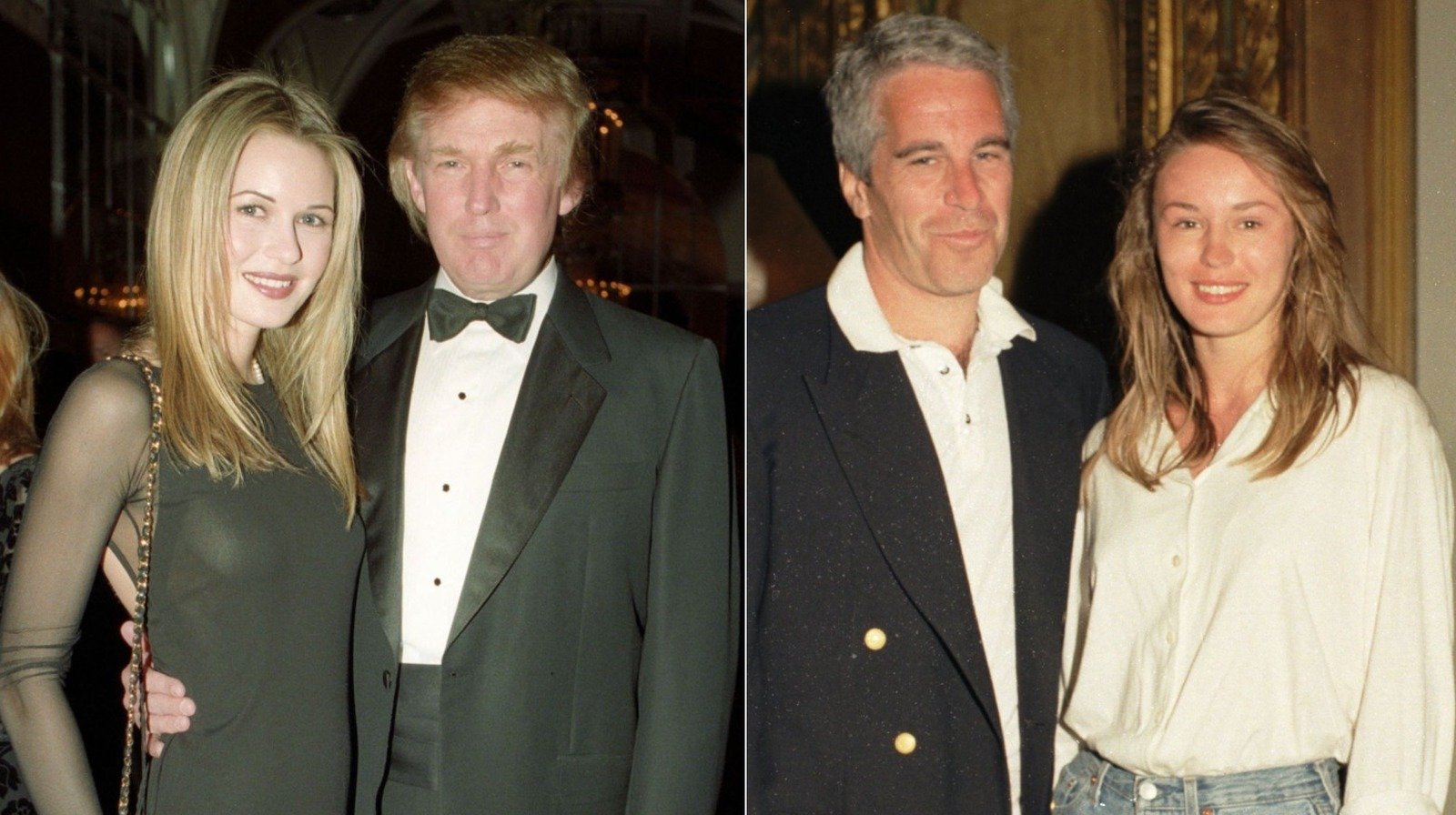
Understanding how this happened requires looking beyond one man. It requires examining how influence works in America. Epstein cultivated relationships that spanned finance, academia, politics, and entertainment. Photographs of him with powerful figures circulated long before his arrest. These images, often taken at charity galas or conferences, symbolized something subtle but important: legitimacy. Social proximity to wealth and authority confers trust. When someone appears accepted by presidents, royalty, scientists, and cultural icons, skepticism softens. Doubt becomes socially inconvenient. This phenomenon is not unique to Epstein; it is a recurring pattern in cases involving elite misconduct. The human mind struggles to reconcile public success with private depravity. We want coherence. We want the world to make sense. When confronted with allegations that threaten that coherence, many people default to disbelief.
In the early 2000s, rumors about Epstein’s behavior began circulating more broadly. Some former associates distanced themselves quietly. Some media outlets received tips. Survivors spoke to law enforcement. Yet the system moved slowly. Prosecutors negotiated. Lawyers maneuvered. In 2008, Epstein secured a controversial non-prosecution agreement in Florida that allowed him to avoid federal charges and serve a short sentence under unusually lenient conditions. For many observers, that deal marked a turning point. It suggested that wealth and legal strategy could bend accountability. At the time, public outrage was limited. The broader cultural movement that would later reshape conversations about sexual abuse had not yet reached its peak. The phrase “believe survivors” had not become a rallying cry. The environment was different, and in that environment, power had the advantage.
Jeffrey Epstein: how US media – with one star exception – whitewashed the story | Jeffrey Epstein | The Guardian
When individuals speak out early—before institutions validate their claims—they often face a complicated landscape. Whistleblowers are rarely greeted with immediate applause. Instead, they encounter scrutiny. Are they credible? Are they stable? Are they exaggerating? Do they have motives? These questions are not inherently unfair; they are part of due process and responsible journalism. But in cases involving powerful defendants, the threshold for credibility can become nearly insurmountable. Media organizations worry about defamation lawsuits. Editors require documentation. Lawyers demand corroboration. If the accused has access to top-tier legal representation, the chilling effect intensifies. For someone without institutional backing, raising allegations against an elite figure can feel like stepping into a storm alone.
The psychological toll of speaking out should not be underestimated. Public skepticism can morph into personal attack. Careers can stall. Social networks shrink. The act of challenging a powerful individual disrupts more than headlines; it disrupts relationships, income, reputation, and emotional stability. This reality explains why many victims and witnesses remain silent for years. Silence is often mistaken for complicity or fabrication, but more often it reflects self-preservation. The Epstein case forced the public to confront this uncomfortable truth: systemic abuse can persist not only because perpetrators are cunning, but because the cost of accusation is extraordinarily high.
As investigative journalism intensified in the late 2010s, new reporting began to revisit earlier decisions. Journalists examined the 2008 plea deal and asked how federal charges were abandoned. They uncovered internal communications that raised difficult questions about prosecutorial discretion. Public awareness expanded. The cultural landscape had shifted. Movements advocating for survivors of sexual abuse had gained momentum. Social media amplified stories that once might have remained localized. When Epstein was arrested again in 2019 on federal sex trafficking charges, the reaction was explosive. The same allegations that had once seemed improbable now appeared part of a broader pattern. Survivors’ voices received unprecedented attention. The conversation was no longer limited to whether crimes occurred; it expanded to how institutions had responded—or failed to respond—when earlier warnings surfaced.
This shift reveals something profound about timing. Truth is not only about evidence; it is also about readiness. Societies must be prepared to absorb difficult realities. In earlier decades, deference to elite status was stronger. Media ecosystems were more centralized. Gatekeepers controlled narrative flow. Today, information travels differently. Digital platforms allow individuals to bypass traditional channels. That democratization of speech has risks—misinformation spreads easily—but it also reduces the likelihood that powerful actors can quietly contain damaging allegations. The Epstein saga straddled two eras: one dominated by institutional gatekeeping, and another shaped by viral scrutiny. The contrast is stark.
Yet even in the age of transparency, accountability remains complex. After Epstein’s death in federal custody in August 2019, many legal questions remained unresolved. His death closed certain avenues of prosecution but intensified scrutiny of potential enablers and associates. Civil lawsuits continued. Investigations expanded. Public frustration grew. For survivors, justice felt incomplete. The story became not only about individual criminality but about systemic vulnerability. How could someone so visible operate for so long? The answer lies in a combination of wealth, legal maneuvering, institutional hesitation, and human psychology. Power does not operate in isolation; it relies on networks. When those networks are reluctant to confront one of their own, misconduct can hide in plain sight.
The broader lesson extends beyond one case. Whistleblowers across industries—from finance to government to entertainment—face similar dynamics. Early warnings are often dismissed as improbable. Institutions protect reputation first. Only when evidence accumulates beyond denial does action accelerate. By then, damage has often multiplied. This pattern raises a difficult question: how can systems evaluate serious allegations responsibly without defaulting to disbelief simply because the accused is powerful? Skepticism is necessary in a society governed by rule of law. But skepticism must not become reflexive dismissal. The balance is delicate, and history shows how easily it tips toward protection of status rather than protection of the vulnerable.
Another dimension worth examining is trauma. Survivors of exploitation frequently disclose information in fragmented ways. Memory under stress does not unfold like a chronological transcript. Inconsistencies can appear. Details can shift as recollection deepens. Critics often seize on these shifts as evidence of unreliability. Trauma research, however, suggests that nonlinear recall is common among survivors of abuse. This tension between psychological reality and legal standards complicates public discourse. The Epstein case highlighted how easily credibility can be undermined when narratives do not fit tidy expectations.
Media responsibility also plays a critical role. Journalists must verify. They must protect against defamation. But they also must recognize patterns. When multiple accounts align, even if individually imperfect, they may signal systemic harm. Investigative persistence is often the difference between rumor and revelation. In Epstein’s case, sustained reporting eventually exposed layers of institutional decision-making that might otherwise have remained obscure. That reporting did not emerge overnight. It required time, courage, and resources. It also required a public climate receptive to uncomfortable truths.
In retrospect, the early years of the Epstein saga feel like a study in hesitation. Signals existed. Allegations circulated. Yet meaningful intervention lagged. This lag is not unique. History is filled with examples of wrongdoing that persisted because early warnings were discounted. The challenge moving forward is not to abandon standards of proof, but to strengthen mechanisms for evaluating claims without undue influence from wealth or status. Transparency in prosecutorial decisions, protections for whistleblowers, and independent investigative channels can help mitigate systemic blind spots.
Ultimately, the story is about more than one individual or one network. It is about how societies respond to power. It is about whether institutions prioritize truth over reputation. It is about the cost borne by those who raise alarms before validation arrives. And it is about timing—the fragile interval between allegation and acknowledgment. When the interval stretches too long, harm multiplies.
Emails reveal Epstein’s network of the rich and powerful despite sex offender status | PBS News
As the legal and cultural repercussions of the Epstein case continue to unfold, the memory of early warnings remains instructive. Some voices spoke before the world was ready to listen. Some were doubted. Some were sidelined. Later developments shifted perception, but retrospective validation cannot fully erase earlier consequences. The lesson is not to romanticize every claim as prophetic. The lesson is to cultivate systems capable of careful, independent evaluation even when the accused occupies rarefied social space.
Power will always exist. Wealth will always influence perception. But accountability can coexist with both—if institutions are structured to resist intimidation and if public discourse remains grounded in evidence rather than deference. The Epstein case, in its complexity and tragedy, offers an opportunity to reexamine how early warnings are handled. Listening does not mean abandoning skepticism. It means applying scrutiny consistently, regardless of status.
History often appears obvious in reverse. It is easy to ask, “How did we not see this?” The more productive question is, “What will we do differently next time?” If the cost of speaking too soon remains unbearable, silence will continue to prevail. If credibility continues to flow downward from power, imbalance will persist. But if institutions learn to evaluate claims with independence and integrity, early warnings may carry greater weight. The goal is not outrage; it is resilience. A society that can confront uncomfortable truths without delay is a society less vulnerable to hidden exploitation.
In the end, the legacy of this scandal is not confined to courtroom transcripts or media archives. It lives in the evolving standards by which we judge power, protect the vulnerable, and respond to those who step forward. Whether early warnings are ignored or investigated shapes not only individual outcomes but collective trust. The next time allegations surface against someone influential, the measure of progress will not be how loudly we react after proof becomes undeniable. It will be how thoughtfully and fairly we respond when the first uneasy signals appear.