The highway was a study in monotony, a gray scar through the fiery decay of an Kentucky autumn. For Officer Tobias Harwell, the landscape was a familiar companion, its rhythms as predictable as the paperwork waiting on his desk. Then a car passed, and the world tilted on its axis. It was nothing he could articulate, just a whisper of wrongness that echoed in the quiet space between heartbeats. A flicker of white in the rear window, a Rorschach test of potential tragedy at sixty miles per hour.
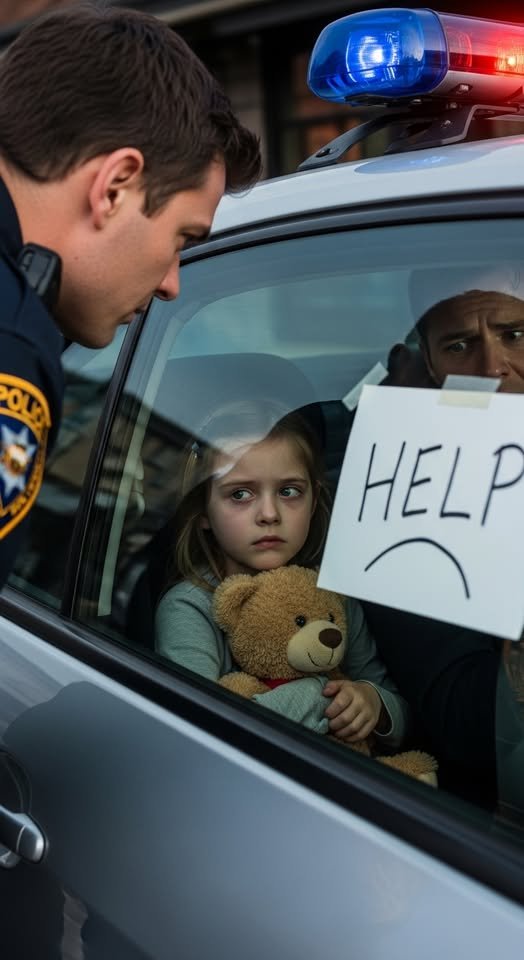
He turned his cruiser, a hunter answering a call only he could hear. As he drew closer, the blur resolved into a child’s stark manifesto. A face, rendered in the innocent medium of crayon, was contorted in despair. Tears fell in blue rivers, and below, the word “HELP” stood as a brutal, four-letter poem. This was no ordinary drawing; it was a paper prayer, sent out into the universe with the desperate faith that a righteous pair of eyes would see it.
The man in the driver’s seat, Raymond, was a portrait of fractured love. His words were lies, but his body was a testament to the truth—a truth of possession and a terrifying finality hinted at in a notebook discovered under the seat. The little girl, Nora, was a statue of fear, her wide eyes holding a universe of confusion. In her, Harwell saw the ghost of his own failure, a personal demon that now gave him the clarity to act.
The reunion in the police station lobby was a symphony of raw humanity. The mother’s sobs were not of sadness, but of a soul snapping back into its rightful place. The child’s embrace was the final, silent verdict on the man who had taken her. In that moment, the cynical world of the patrol officer fell away, replaced by the undeniable truth of a family made whole.
Weeks later, under a spring sun that promised renewal, Officer Harwell received his absolution in an email. The child now drew houses with flowers and yellow suns. The sad face was framed, not as a trophy of trauma, but as a reminder of a battle won. Driving his patrol route, Harwell understood that his job was not just to enforce the law, but to bear witness to the secret sorrows of the world, and to answer the paper prayers taped against the glass.