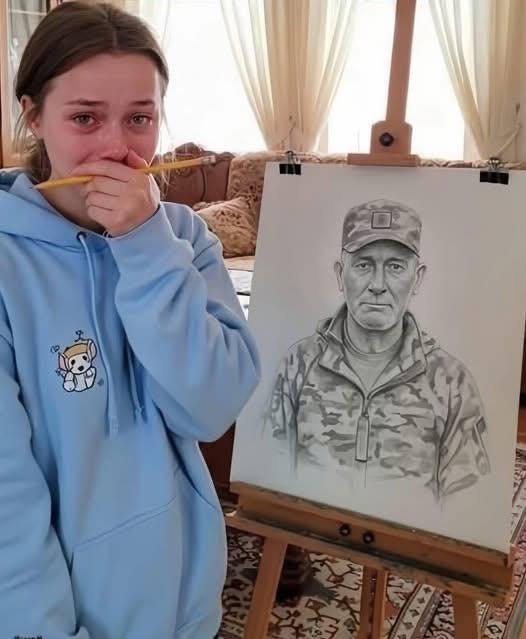
Grief can be an intensely lonely journey, a path walked in silence where the world seems to move on without noticing your pain. One young woman knew this feeling all too well after the loss of her father, a soldier who never returned home. In an effort to externalize her sorrow, she spent weeks crafting a detailed pencil portrait of him. The process was cathartic yet agonizing, a daily confrontation with a love that had no physical place to go.
When she mustered the courage to share this deeply personal monument to her father online, she was met with an echo of her own isolation—digital silence. The lack of engagement felt like a dismissal of her pain and a forgetting of his life. It was a crushing blow that reinforced the solitary nature of her loss, leaving her to hug her knees on the floor, wondering if her grief was invisible to everyone but her.
But grief, it turns, has a way of connecting us even when we feel most alone. The next day, her post was discovered and shared by a compassionate stranger. The accompanying message, “A daughter’s love doesn’t die when a father does,” acted as a key, unlocking a floodgate of empathy. Suddenly, her private mourning became a public conversation about love, loss, and memory.
Her phone buzzed incessantly with notifications from people across the globe. They shared their own stories, offered words of comfort, and honored her father’s sacrifice. The overwhelming response did not erase her grief, but it fundamentally altered its character. It was no longer a burden she carried alone but a experience shared and validated by a community of strangers.
This experience taught her a vital lesson about the nature of healing. While grief is personal, support is communal. The world is often waiting for a signal, a shared point of connection, to show it cares. Her portrait became that signal, reminding her and everyone who saw it that our sorrows are interconnected, and that in sharing our most vulnerable moments, we can find a collective strength we never knew was there.