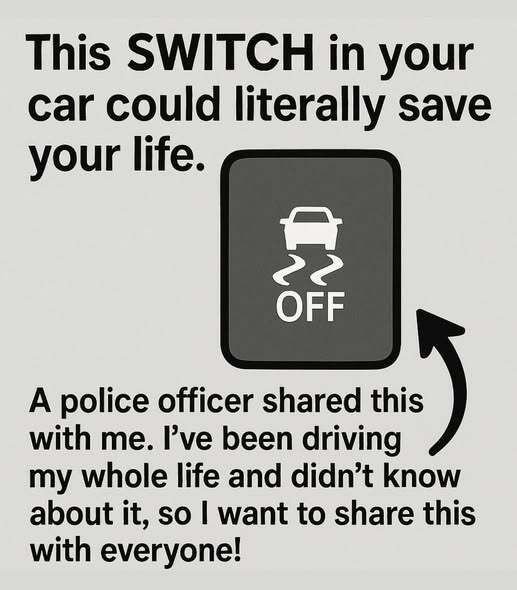
We pride ourselves on knowing our cars. We know the fuel economy, the sound of a healthy engine, and when a tire feels low. But there’s a strong chance a critical safety feature is sitting right under our noses, unnoticed and unappreciated. On the center console or dashboard of most vehicles built in the last twenty-five years, you’ll find a button marked with a car and squiggly tire tracks. This controls your car’s Traction Control or Electronic Stability Control system. Despite its vital role in preventing accidents, it remains one of the most commonly misunderstood and ignored features by otherwise knowledgeable drivers. Understanding it is a quick win for personal safety.
This system is your car’s first line of defense against losing control. Imagine driving on a rain-slicked road and accelerating a bit too quickly from a stop. Without traction control, your drive wheels could spin helplessly, leading to a skid. With it, the system detects the wheel slip, momentarily reduces engine power, or applies the brake to that wheel, allowing it to grip the pavement again. The stability control function goes further. If you swerve sharply to avoid an obstacle, the system can brake individual wheels to help keep the car stable and pointed where you want to go, counteracting the forces that could cause a spin or rollover.
The data on its effectiveness is clear. Widespread adoption of stability control has been linked to a substantial reduction in fatal single-vehicle crashes. It’s a technological shield that operates autonomously, correcting errors in traction that happen faster than a human can react. This is especially crucial for maintaining control during panic stops or when navigating sharp curves at speed. It’s a feature that benefits every driver, regardless of skill level, providing an electronic safety net that is always engaged under normal driving conditions. For daily commuting and long trips, it should simply be left alone, doing its job in the background.
Naturally, the presence of an “off” button raises questions. Why would you ever disable such a helpful system? The reasons are niche but practical. The primary one is for extracting a vehicle that is truly stuck. If you’re mired in deep snow, sand, or mud, you sometimes need sustained wheel spin to clear material or gain momentum. Traction control, designed to limit spin, will hinder this effort. Turning it off temporarily gives you the raw power needed to rock free. Once you’re on stable ground, switching it back on is imperative. For performance driving on a closed track, drivers may also disable it, but that has no application for street driving.
Making a habit of checking that this system is active—indicated by the absence of a warning light on your dashboard—is a smart practice. Familiarizing yourself with its purpose turns an abstract icon into a understood ally. It represents decades of automotive engineering focused on saving lives, not just through crumple zones and airbags, but through proactive systems that help avoid the crash altogether. Don’t let this feature remain a mystery in your own vehicle. A quick glance at your owner’s manual to confirm its location and function is a small investment of time for a major gain in safety awareness on every journey you take.