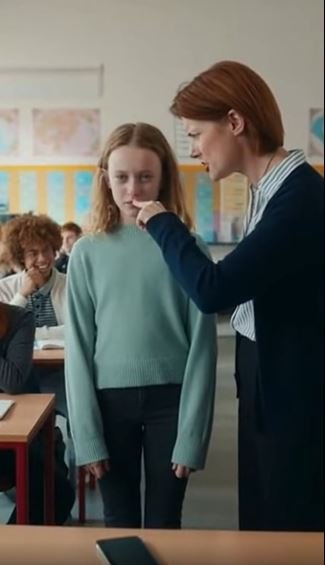
The conflict was primal: a mother’s instinct against a teacher’s arrogance. When Mrs. Gable called, her tone was one of professional annoyance. She had diagnosed my daughter’s condition not as medical, but as moral—a character flaw of “faking.” Rushing to the school, I bypassed all protocol, driven by a fear that logic couldn’t contain. What I found was a betrayal of trust so profound it felt violent. My child was in a prolonged, oxygen-depriving seizure, and the authority figure in the room was quantifying her suffering with a stopwatch, offering it up for peer ridicule. In that moment, the institution meant to protect her had become her greatest threat.
The hospital provided the grim evidence. Lily’s brain was bleeding, a slow-motion injury from a witnessed playground accident that had been minimized. The teacher’s initial dismissal had set a precedent, building a wall of disbelief that Lily could not scale. The thirteen-minute delay in calling for help wasn’t a mistake; it was the logical endpoint of a mindset that valued order over empathy, control over care. As surgeons worked to relieve the pressure in her skull, I realized this was not an accident, but a preventable tragedy.
Confronted with the school’s attempts to deflect blame onto me, I turned to the court of public opinion. Sharing our story was an act of survival. The viral response was a powerful counter-narrative to the school’s official reports. It proved that the public could spot negligence even when a system tried to bureaucratize it away. The resulting protests and legal actions were a form of justice, but they paled beside the slow, heartbreaking work of Lily’s awakening. Her struggle to move her right hand was a physical monument to the cost of being disbelieved.
Our life is now measured in therapy sessions and small victories. This experience has taught me that the most essential form of advocacy is sometimes simply to refuse to be gaslit, to insist on the reality of your child’s pain in the face of official denial. Lily’s ordeal underscores a vital truth: no degree or title trumps the fundamental duty to see a child in distress and act. Sometimes, the most subversive and important thing a parent can do is to believe their own eyes.