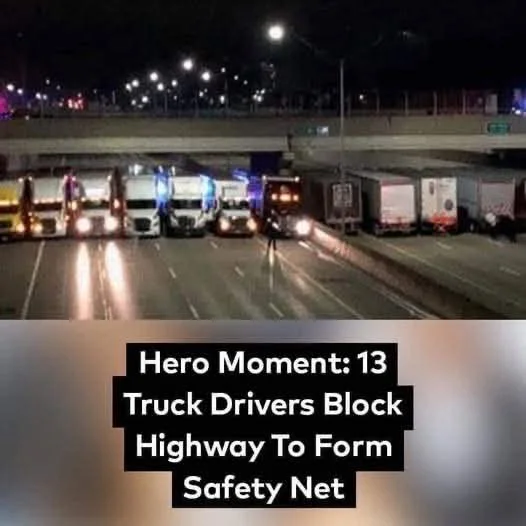
We’ve all been stuck in traffic that seems senseless, a pure waste of precious minutes. But one highway backup in Michigan was anything but senseless. It was, in fact, one of the most meaningful delays anyone on that road could experience. The cause was a line of thirteen trailer trucks, perfectly aligned under an overpass on Interstate 696, creating a total blockade. The reason, however, turned frustration into profound respect. This was a deliberate act of protection, a traffic jam with a solemn and beautiful purpose.
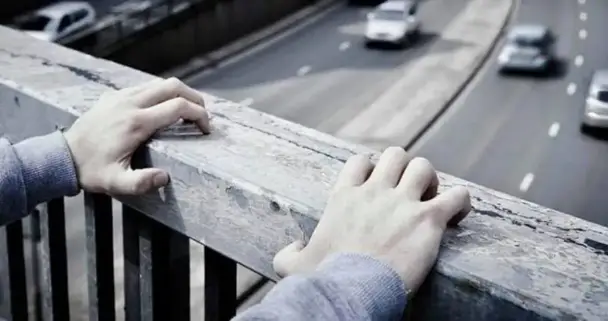
Beneath the routine hum of highway travel, a tragedy was threatening to unfold on the bridge above. Trooper Michael Shaw arrived to find a person in extreme crisis, standing at the brink. Shaw’s training kicked in, focusing on communication and de-escalation. Simultaneously, his instincts as a protector sought a practical solution. He needed to remove the fatal hazard of the hard ground below. His brilliant, improvised plan involved the largest tools available: the tractor-trailers already on the road. He asked for their help in building a physical barrier of hope.
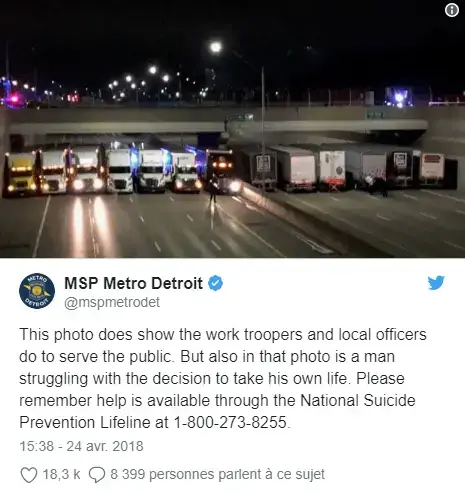
The response from the trucking community was a resounding and immediate “yes.” These drivers, often anonymous figures in the daily flow of commerce, became instant heroes. They carefully parked their rigs, ensuring their trailers covered as much area as possible. Their vehicles, symbols of industry and long-distance hauling, were repurposed as guardians. In that moment, the cargo they were carrying was less important than the lives they were potentially shielding. They created a makeshift landing zone, not for packages, but for a human being whose life was in peril.
Time stretched on for an agonizing four hours. The truck drivers waited, the police negotiated, and the backed-up motorists gradually understood the gravity of the situation. The typical irritation of a stall melted away, replaced by a communal, hopeful anxiety. The trucks were more than metal; they were a statement. They showed the person on the bridge that people they had never met cared deeply about their survival. This visible wall of solidarity was as much a part of the rescue as the words of the experts.
Finally, the standstill ended with movement—the safe movement of a person stepping back from the edge and into care. The trucks, their vital job done, slowly pulled away to continue their routes. The story they leave behind is a powerful antidote to cynicism. It reminds us that our shared roads connect us in more ways than one. Sometimes, the greatest act of service is not about moving forward, but about stopping together to ensure that everyone gets the chance to continue their journey.