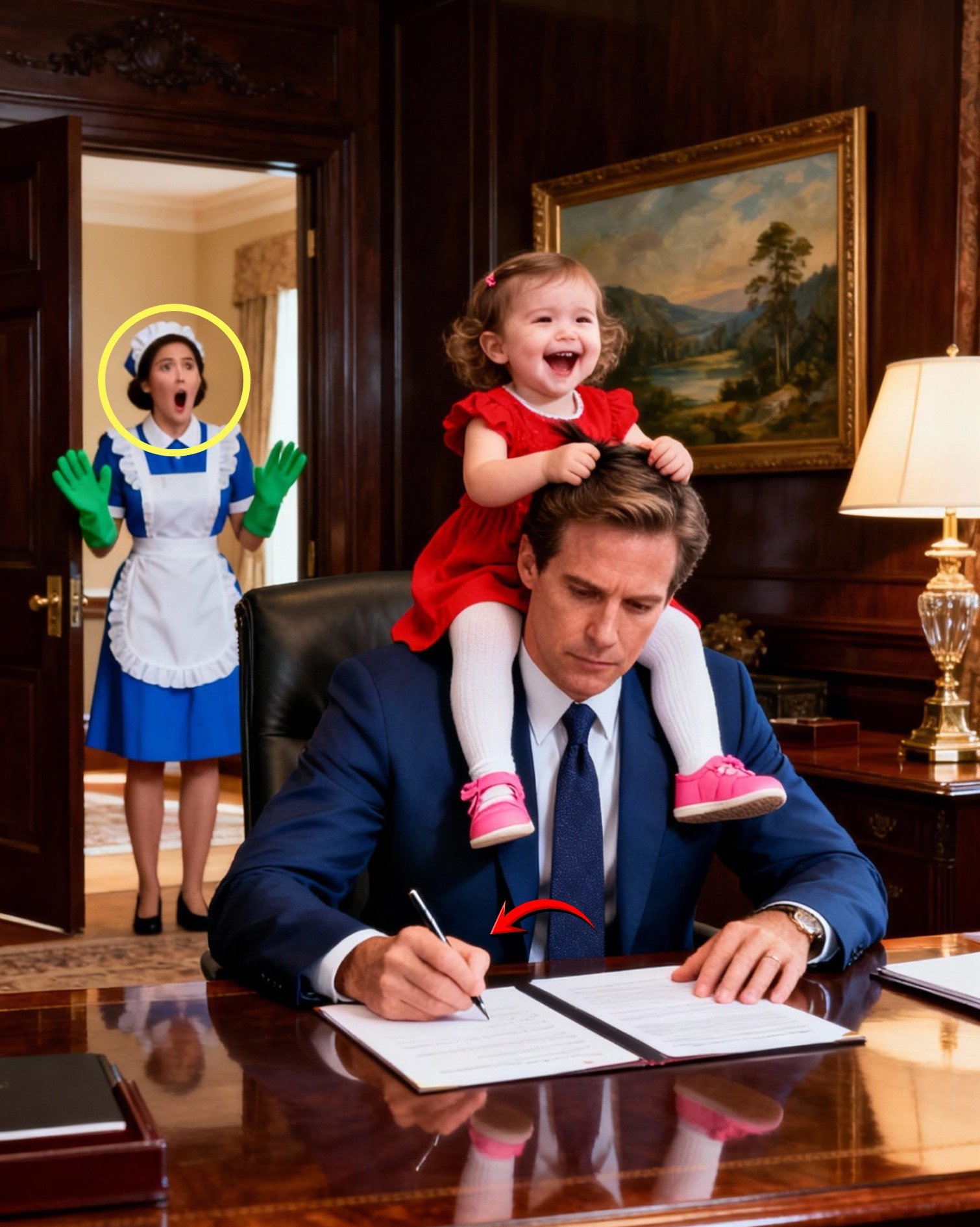
The night held two secrets. On the twentieth floor of a corporate tower, Amanda, a cleaner, hid her infant daughter Bia, praying to avoid homelessness. In the boardroom next door, billionaire Arthur Albuquerque confronted his brother Roberto, seeking the secret behind two missing millions. Their worlds were meant to stay separate, divided by doors and class. But a curious toddler changed the map. Bia, slipping from her hiding spot, crawled into the conference room and under the massive table, a silent observer to a confrontation about betrayal and money.
The tension peaked when Roberto, nervous and guilty, noticed the child and reacted not with concern, but with disgust. His cruel dismissal made Bia wail, a sound that brought her mother rushing in. Amanda’s confrontation with Roberto spilled a second, more personal secret into the open: he was Bia’s father and had abandoned them. As he hurled denials, Arthur Albuquerque watched, his analytical mind catching a crucial detail. On the baby’s neck was a birthmark identical to his own, a genetic stamp of the Albuquerque lineage. In an instant, the crime of fraud was eclipsed by the crime of neglect.
For Arthur, a man living in the shadow of his daughter’s death, the revelation was a seismic shock. He saw his own family’s legacy being denied and discarded. His professional ruthlessness transformed into a protective fury. He secured Amanda and Bia, offering them refuge in his home. This was no mere act of charity; it was a moral imperative. In the safe haven of his estate, the three began an unexpected journey. Bia’s innocence chipped away at Arthur’s grief, while Amanda’s resilience stirred his admiration.
Months later, with Roberto legally severed from their lives, Arthur asked Amanda a question that had grown in his heart. He asked her to stay, not as a guest, but as his wife. The child who crawled into a room to find her mother had, in fact, found a father and a future. Their story became a testament to the idea that the most important discoveries aren’t made in ledgers, but in the human heart, and that sometimes, destiny arrives quietly, on all fours, changing everything in its path.