There is a stillness you learn in special operations, a calm that descends when everything goes wrong. You stop feeling and start calculating. I never thought I’d need that stillness in the fluorescent glare of a county hospital, holding my seventeen-year-old son’s limp hand. Freddy, my gentle boy who loved sketching animals, was in a coma. The reason? A brutal, coordinated beating by seven star athletes from his school. As the doctor listed his injuries—skull fracture, internal bleeding—that operational calm froze the panic in my veins. A new mission was live: navigate a battlefield where the enemy wore the masks of pillars of the community.
The investigation was a farce. The principal offered condolences and a hush-money settlement. The police detective all but shrugged, outlining the unassailable influence of the families involved. It was a closed loop of power. My military mind recognized it instantly: a hostile territory with fortified positions. A direct assault was doomed. This required psychological operations, intelligence supremacy, and the manipulation of the enemy’s greatest weakness: their absolute belief in their own invincibility.
I became a ghost in my own town. While publicly playing the role of a grieving father at my son’s bedside, I privately mapped the ecosystem of corruption. I studied the fathers—their businesses, their vices, their illegal favors. I learned the boys’ patterns, their smugness, their history of violence with no consequences. The plan that formed wasn’t about vengeance; it was about demonstration. I needed to prove, in a way they could not ignore or buy off, that they were not untouchable. The message was delivered precisely, anonymously, and irrevocably.
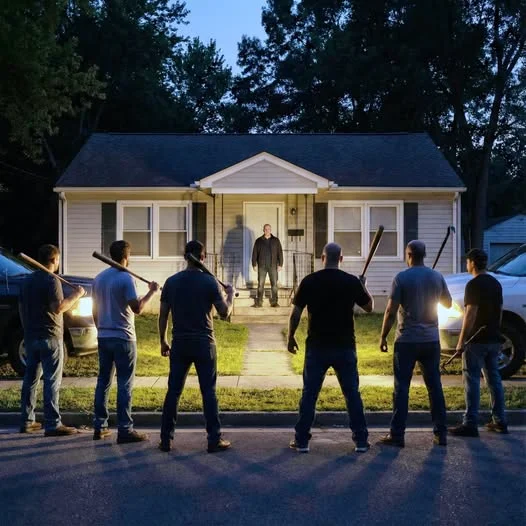
The reaction was a masterpiece of self-destruction. Stripped of their protective narrative, the fathers reverted to their most basic nature: thugs with resources. They marched to my home, providing a filmed confession that would become their undoing. My combat skills were used for a single, defensive minute on my porch. The rest was intelligence work. I had turned their home turf against them, using their aggression as the final piece of evidence. The cameras did the rest, handing their guilt to the world on a digital platter.
Today, the structures they built are crumbling. Lawyers and prosecutors now do the work I started. Freddy is recovering, his spirit resilient. We fish in a silence that needs no words. The powerful lesson from my son is this: the skills I honed in the world’s dark corners were not just for those places. They were for this moment, for this boy. True strength isn’t in dominating others, but in creating a space where decency can breathe, even if you have to carve it out of stone yourself. My son’s fight for life became my fight for his future, and in that fight, I finally understood the true purpose of every battle I’d ever fought.