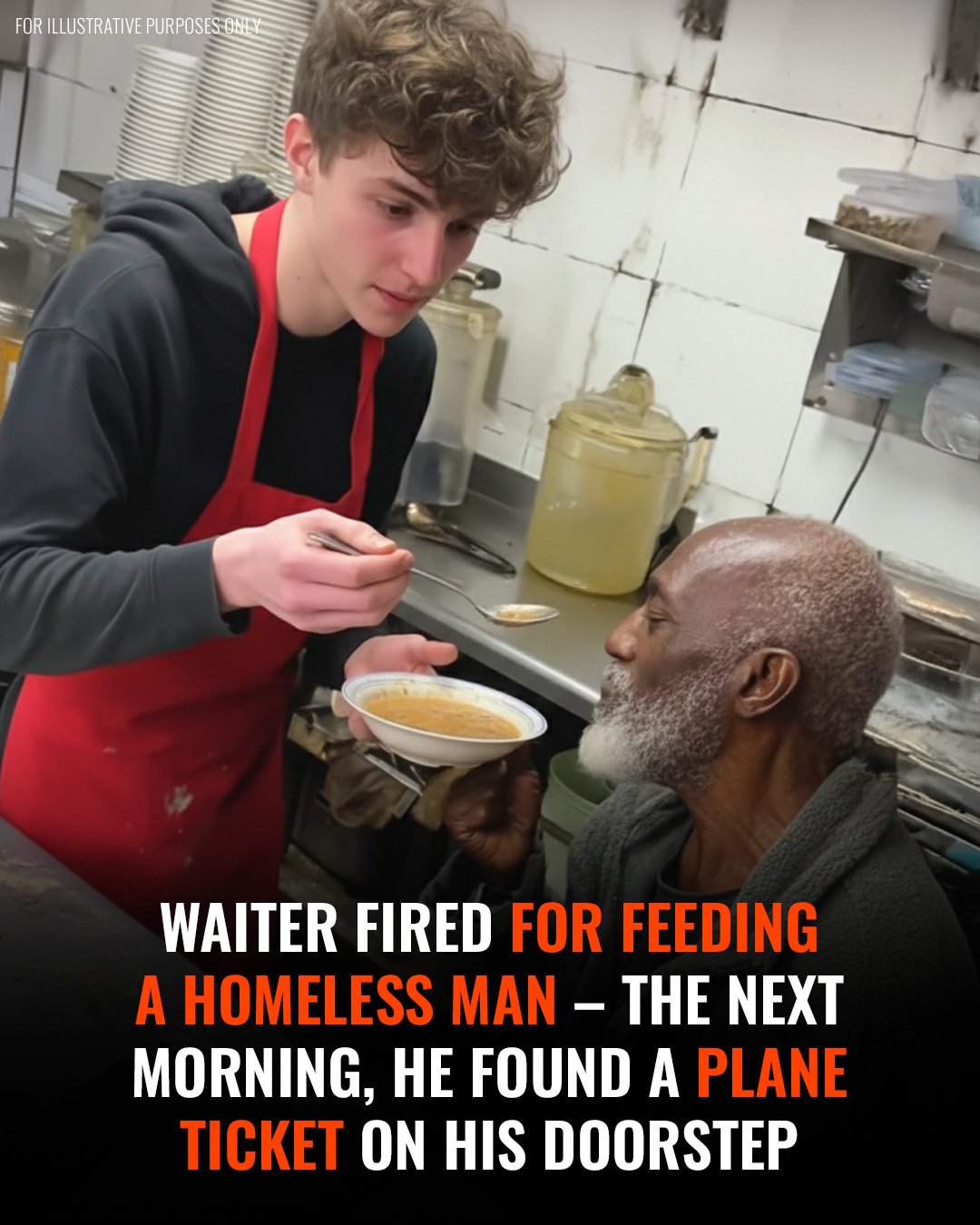
They say character is what you do when no one is watching. For me, at eighteen, it was bringing a freezing homeless man into a restaurant supply closet. It was also what got me instantly fired when the owner walked in. In his eyes, I had committed a cardinal sin against business. As I walked home in the downpour, jobless and facing certain financial collapse, I believed my character had just ruined my life. The universe, it seemed, had a different ledger.
The envelope on my doorstep the next day contained a paradox: a plane ticket to a new life, funded by the very manager who had fired me. Mark’s note reframed everything. He hadn’t seen a fired busboy; he’d seen a young man with a moral compass strong enough to risk everything for a stranger. His firing was a reluctant necessity, but his subsequent act—calling in a favor at a legendary New York restaurant—was his true judgment. He didn’t offer sympathy; he offered a runway.
New York was a shock to the system. The restaurant was a temple of haute cuisine, and I was a novitiate from a world of gum-scraping and dishwashing. But I had a fuel none of the other trainees possessed: a profound, burning need to prove that Mark’s gamble was right. I absorbed everything, worked double shifts, and turned hustle into habit. My rise through the ranks was meteoric because I treated the opportunity not as a job, but as a redemption arc.
Five years later, I was managing the establishment, a testament to the power of second chances and raw determination. When Mark finally visited, the reunion was a silent masterpiece of vindication. He didn’t need to say he was proud; it was etched in his expression as he took in the polished dining room and me in my suit. Serving him was an honor, a tangible closing of a loop that began with me serving soup in a closet.
Our conversation that day ventured into the future. When I confessed my plans to open my own restaurant, his smile was the final blessing. The story that began with an act of mercy that cost me everything had, in fact, given me everything. It taught me that integrity is a long-term investment, and that sometimes, the people who seem to end your story are secretly writing the first line of a much better chapter. The busboy who was shown the door was, in fact, being guided toward the right one.