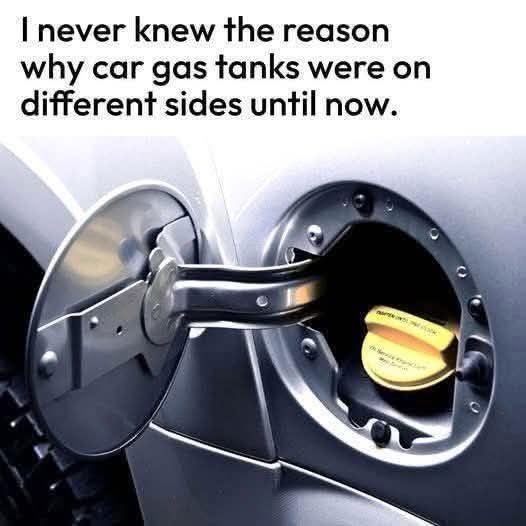
Pulling up to the wrong side of the gas pump is a small, shared annoyance among drivers. It leads many to question why carmakers don’t just standardize where the fuel door goes. The answer reveals the hidden complexities of automotive design. The placement isn’t arbitrary; it’s a final piece in a large puzzle where engineering requirements, global markets, and everyday usability must all fit together perfectly.
The primary dictator is sheer mechanical layout. Before the exterior of a car is even styled, engineers map out the placement of all major components. The fuel tank and its connecting hardware must avoid the exhaust, spare tire, rear axle, and electrical systems. The side that offers the clearest, most cost-effective path from the tank to the outside of the car becomes the home for the fuel door. It’s a decision made for durability and simplicity, not for driver symmetry.
Where you drive in the world also sways the decision. Carmakers produce global platforms, but they make small tweaks for different regions. A model sold in America will likely have a left-side fuel door so the driver can easily reach the pump from the curb. The same model sold in Australia or Japan will often have the door on the right to suit right-hand-drive configurations. This adaptation shows how manufacturers fine-tune details to match local driving behavior and safety.
This lack of standardization, frustrating as it can be, actually makes refueling smoother for society. If all cars were the same, gas station design would be less efficient. The mix of left and right-side tanks ensures that pumps on both sides of an island get used, maximizing a station’s capacity and minimizing individual wait times. It’s an elegant, unconscious solution to a potential logistics problem.
For drivers, the simple dashboard arrow is a savior. Next to the fuel gauge, it points directly to the tank’s side. Looking ahead, the rise of electric vehicles is making the traditional fuel door obsolete, but the design philosophy isn’t. Engineers are now applying similar logic to determine where to put charging ports, weighing accessibility against component packaging. The location of your energy source, whether gas or electrons, will always be a carefully considered piece of the design.