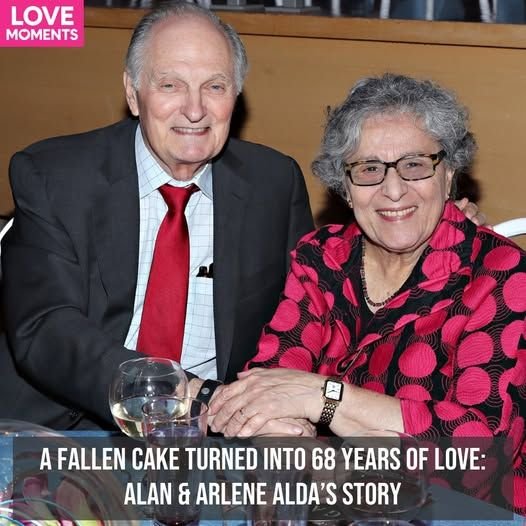
Sometimes, destiny announces itself not with fanfare, but with a laugh. For Alan Alda and Arlene Weiss, their entire future was foretold in a moment of shared mirth over a fallen rum cake in 1956. In that split second of broken social protocol, they recognized kindred spirits. Alan has often reflected that it was Arlene’s infectious laughter that truly captured him, a sound that promised warmth and understanding. The cake was incidental; the real connection was their mutual, immediate recognition of life’s inherent absurdity and the choice to meet it with joy rather than discomfort. This became the defining pattern of their life together.

They built a family and careers on this bedrock of joyful compatibility. Arlene transitioned from the concert hall to the literary and photographic world, crafting an independent creative identity while supporting Alan’s ascent to television icon status on MASH. Their home became the center of their universe, a place where Alan’s fame was irrelevant and the sound of their family’s laughter was the most valued applause. They cultivated normalcy with intention, whether over shared pizzas or quiet evenings, proving that a strong marriage could flourish both in the spotlight’s glare and in the gentle light of domestic life.

The true engine of their marriage’s longevity has been humor, not as a occasional guest, but as a permanent resident. Alan speaks of their relationship with a sense of ongoing discovery, a “puppy love” sustained by an endless well of shared amusement. This humor acted as a daily renewal of their vows, a way to navigate stress, disappointment, and the mundane without losing their connection. It was the secret handshake of their partnership, a language that continually reinforced their bond through every season of life, from the chaos of young parenthood to the contemplative years beyond.
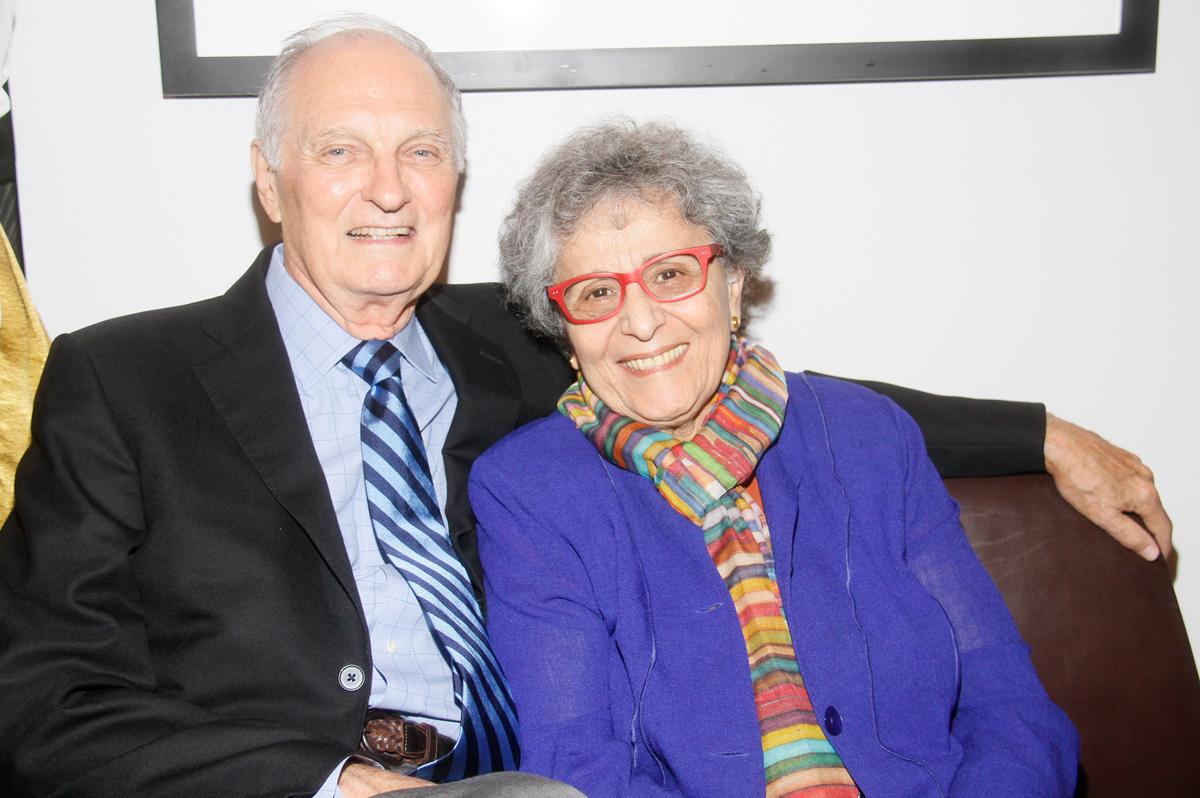
When Alan received his Parkinson’s diagnosis, it presented a formidable new chapter. Yet, their approach remained consistent. They allowed space for the gravity of the situation but refused to surrender their identity as a couple who laughs together. Humor became a strategic tool for resilience, a way to maintain dignity, connection, and even joy in the face of a challenging prognosis. It was not about denial, but about affirmation—choosing to highlight the parts of life that still sparked happiness.
The narrative of Alan and Arlene Alda is a powerful antidote to cynical views of long-term love. It argues that the most durable romantic bond is woven from threads of daily laughter and mutual respect. Their story, spanning from a mid-century New York apartment to the challenges of aging, illustrates that a successful partnership is less about avoiding hardship and more about choosing how to face it together. They remain a living testament to the idea that a couple that laughs together, truly lasts together, building a legacy not of perfection, but of profound, joyful endurance.