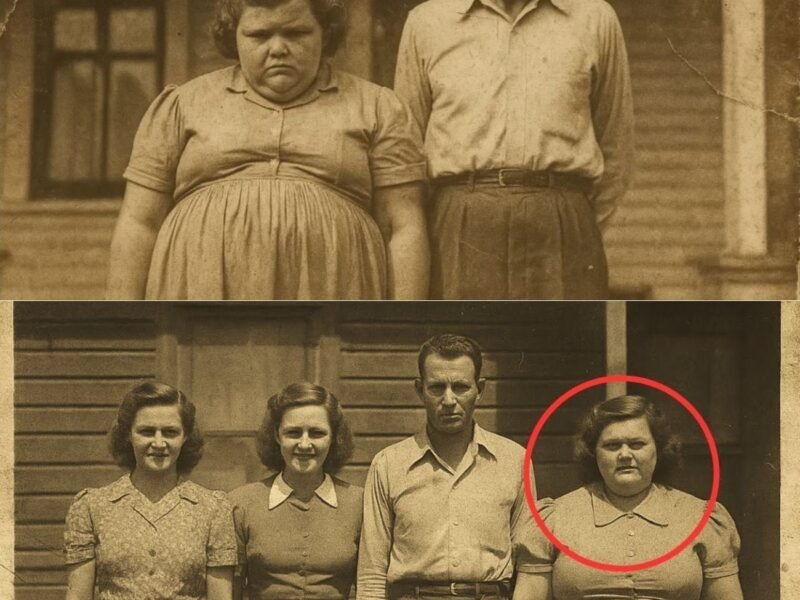
Solitary confinement is designed to sever human connection, to reduce existence to a bare, controllable monotony. Yet, within the psyche of Emily Harper, it fostered not dissolution, but a fierce, creative counter-reaction. Her pregnancy in Cell 17 can be read as a profound psychological response to existential extinction. Facing a life sentence with no visitors or mail, she was socially and emotionally dead to the world. The creation of a child became, for her, an act of psychological survival—a way to assert her humanity and project a part of herself into a future she would never see.
The investigation focused on the “how,” but the deeper question was “why.” Emily’s behavior was not that of a rebellious or mentally deteriorating inmate. She was disciplined and quiet. Her desire for motherhood was a specific, lucid goal, a final project for a mind that refused to accept total erasure. The notes she passed through the vent, saying “I don’t want to live; I just want to be seen” and later, “I’d want to be a mother,” reveal a conscious journey from passive despair to active, if desperate, creation.
This dynamic intersected with the psychology of James Turner, the other inmate. A man imprisoned for a violent act born of familial protection, he was presented with a chance to enable a different kind of protection—to help create life rather than avenge a life. His participation offered a form of redemption, a way to counteract the harm that had defined his own fate. Their silent transaction was a meeting of two psychological needs: one for legacy, the other for atonement.
The impact on the prison social structure was significant. The mystery bred rumor and anxiety among staff, challenging their sense of control and oversight. For Deputy Warden Brooks, Emily’s plea pierced a professional carapace built over personal grief, triggering an empathic response that overrode bureaucratic detachment. The event forced everyone in the system to confront the irreducible human drives that persist behind bars—drives for connection, meaning, and continuity that no lock can fully contain.
In the end, Stella Hope’s birth was more than a medical event; it was the physical manifestation of a psychological triumph over nothingness. Emily’s subsequent devotion to documenting her daughter’s life in a notebook is the continuing expression of that drive. The case illustrates that in the absolute absence of external stimulus, the human mind may turn its formidable resources inward, not to collapse, but to conceive its own reason for being.