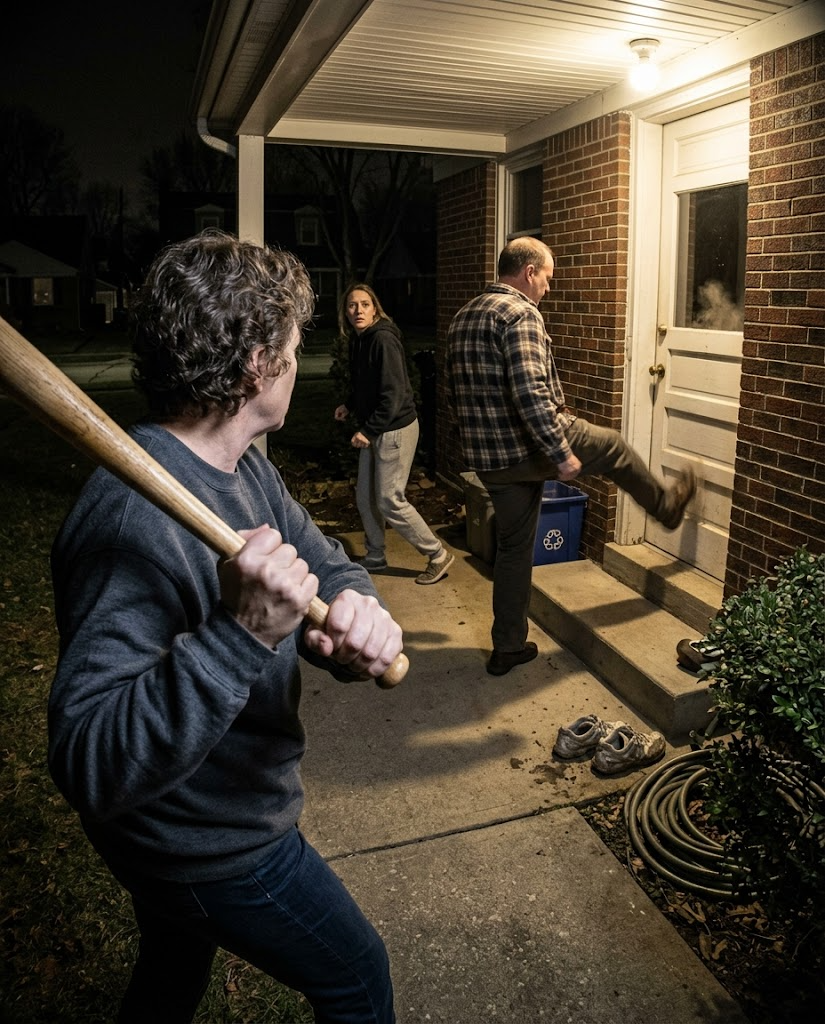
When Officer Hughes said my parents’ names, I did not gasp or cry or drop the phone.
I looked at the coffee darkening the bottom of my mug and felt an old, familiar split open inside me. One part of me was standing in a clean Texas kitchen in a life I had built on purpose. The other part was back in Ohio, right where my family always wanted me: cornered, useful, and somehow responsible for cleaning up Lydia’s messes.
I had been in Texas for less than three weeks.
Marcus and I were still living out of half-unpacked boxes. The kitchen towels were folded in the wrong drawer, the spices were lined up like strangers, and our mornings still had that temporary feeling that comes with a move made for survival instead of excitement. But it was peaceful. There were no surprise visits, no cars slowing outside the house, no buzzing dread every time my phone lit up.
Then Officer Hughes asked me whether I still owned 842 Maple, and peace cracked.
Maple had been my first real victory. I bought that house after eight years in Army logistics, after deployments, after lonely apartments, after every carefully measured decision that turns a person from hopeful into disciplined. I did not inherit a dime. Nobody opened a door for me. I saved. I budgeted. I skipped vacations, drove used cars, and treated homeownership the way some people treat a degree or a medal: proof that all the boring sacrifices had added up to something solid.
My family saw it differently.
To them, my house was not a home. It was an available asset. A thing that could be liquidated if Lydia got herself into trouble badly enough.
That had always been the family system. Lydia was the emergency. I was the response plan. Lydia made reckless decisions, and everyone spoke about her with a kind of reverent panic, as if her chaos made her special. I was the dependable one, which in my family meant I was the one they felt safest exploiting.
Five years earlier, my father had staged the dinner that finally made the pattern impossible to ignore. I still remember the roast chicken, the good plates, and the way my mother smiled too brightly before the ambush began. Lydia arrived with charts printed in color, talking about a startup that was going to change regional shipping in the Midwest. She needed capital, she said. Real families invested in each other, she said. My mother had already told her how much I had saved for a down payment.
When I refused, my father pointed across the table and said, with terrifying calm, Give Lydia your savings or you are no daughter of mine.
Something in me went cold right then. Not dramatic. Just clear.
I said no again. I stood up, left my plate on the table, and walked out before anyone could rewrite what had happened into a misunderstanding. After that, I blocked numbers and did my best to live as if blood was not the same thing as obligation.
For years, it worked.
Then my mother sent the email that reopened everything. The subject line was LIFE OR DEATH. Inside, she claimed Lydia owed $150,000 to dangerous people. She said men had been calling. She said
Page 1 of 5