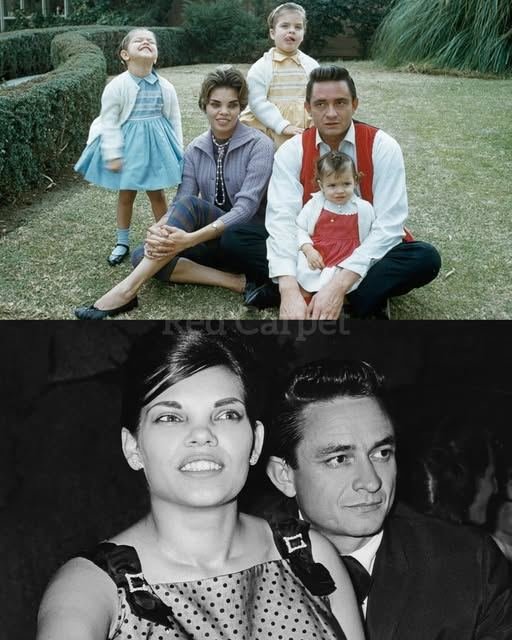
American mythology loves a simple arc: the troubled star redeemed by a great love. In the saga of Johnny Cash, that role is assigned to June Carter. But this neat narrative does a profound disservice to Vivian Liberto, the woman who was there first, who loved him longer under different, perhaps more difficult, circumstances. To understand Johnny Cash fully, we must understand Vivian—not as a rival or an obstacle, but as the foundational love who shared his youth and ambitions, and who possessed a formidable strength all her own.
Their romance has the tender quality of a postwar love story. They met before the world knew his name, connecting through heartfelt letters while he was stationed abroad. When they married, they were two young people dreaming together. Vivian’s role was immediate and immense: she became the manager of their domestic life, enabling Johnny to pour all his energy into music. She bore four daughters and created a home that was his refuge from the road. The song “I Walk the Line” stands as a permanent monument to this era, a direct promise to Vivian born from the fear of losing what they had built.
As Johnny’s fame exploded, the pressures did too. The road life of the 1950s and 60s was grueling, and Cash turned to amphetamines to cope, then became dependent on them. Vivian watched the man she loved become a stranger, grappling with his addiction often from a distance. Simultaneously, she faced a vile public campaign of racism. Mistaken for a Black woman, she received threats that terrified her and endangered her children, a battle she fought with quiet courage, largely alone.
By the mid-1960s, the gap between the promise of the song and the reality of their marriage was a chasm. Vivian’s decision to divorce in 1967 was not a surrender, but a strategic retreat for survival. She chose to remove herself and her daughters from the unpredictable turmoil of Johnny’s addiction and the glaring public eye. It was an act of profound self-preservation and maternal protection, showcasing a clarity and bravery that refute any notion of her as a passive figure.

In the years since, popular culture has largely folded Vivian into Johnny’s story as a minor, often misrepresented character. This is a historical oversight. Vivian Liberto Cash was a central architect of Johnny’s early stability, a resilient mother, and a woman who endured unique public hatred with grace. Her story is not a tragic prelude to a better love story; it is a complete narrative of a woman who loved deeply, endured greatly, and ultimately chose to walk her own difficult line toward peace. It’s time her name is said with the same respect afforded to the legend she helped create.