A single text message can become a Rorschach test for your deepest fears. For me, it was “Last night I spent $100 on you,” flashing on my husband’s phone. I saw clandestine meetings and financial betrayal. Without a word of explanation, I let my rage speak. I destroyed the phone, shattering it against brick, and shut my husband out. For three days, I nurtured my pain, certain I was the wronged party. I was so sure of the story I’d written in my head.
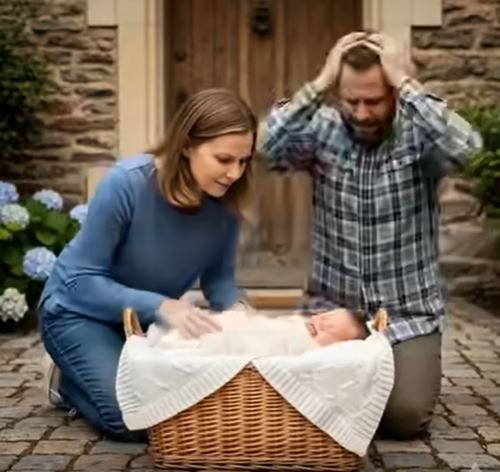
Reality arrived in a basket on my doorstep. A newborn baby with a note that chillingly stated, “my son looks just like you.” Confronted with this tiny, swaddled evidence, my husband’ denials sounded weak. But then I found the clincher—a birthmark. A perfect, snail-shaped mark on the baby’s back, a mirror image of the one my husband had. I held it up as irrefutable proof. “See?” I said, my voice trembling with bitter victory.
His response dismantled my entire reality. He looked at the mark not with recognition of guilt, but with family grief. The text, he explained, was from his identical twin, a brother lost to addiction and the prison system, a man I never knew existed. The hundred dollars was a desperate, last-resort bus fare. The baby, carrying the unmistakable genetic trademark they shared, was his brother’s son, abandoned here as a final, tragic act of trust. The note was not a mistress’s jab; it was a literal, heartbreaking statement of fact from a man who shared my husband’s face, his DNA, and his birthmarks.
The weight of my misunderstanding crashed down. My jealousy had been a blunt instrument, breaking the very communication that could have unveiled a crisis. I had seen a sordid affair when the truth was a family tragedy. The baby, now cradled in my husband’s arms, was not a symbol of our end, but an unexpected, fragile beginning to a much more complicated story. The real betrayal was my rush to judgment, and the real cost was the time we lost when we could have been helping.