MY SISTER CLAIMED HER BABY WAS MY DEAD HUSBAND’S SON—BUT SHE DIDN’T KNOW THE SECRET BURIED IN HIS MEDICAL RECORDS
Adam could not father children.
Not probably couldn’t.
Not we had struggled.
Not the odds were low.
He was medically incapable of it.
And I had known for nine years.
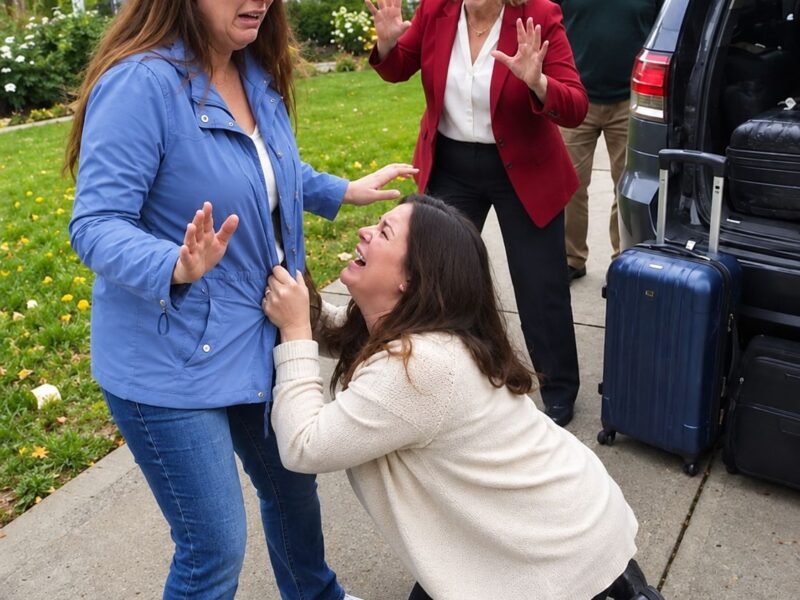
I looked at Cassandra standing beneath the ridiculous blue birthday banner, holding Lucas against one hip and my supposedly dead husband’s “new will” in the other hand.
Then I looked at my parents.
My mother was crying.
My father looked as though someone had struck him.
Tyler—Cassandra’s husband—had gone completely white.
And suddenly the laugh I was fighting no longer felt inappropriate.
It felt dangerous.
Because Cassandra had just accused my dead husband of betraying me.
Humiliated her own husband.
Announced that her one-year-old child belonged to another man.
And demanded hundreds of thousands of dollars.
All in front of thirty people.
Three days after Adam’s funeral.
And she had built the entire performance around one biological fact that was impossible.
“Bridget?”
My mother’s voice trembled.
I realized everyone was waiting for me to collapse.
Instead, I put my lemonade down.
Very carefully.
Cassandra’s expression changed.
Just slightly.
“You seem awfully calm.”
I looked at her.
“I’m trying to understand.”
“There isn’t much to understand.”
She adjusted Lucas on her hip.
“Adam and I made a mistake.”
Tyler flinched.
A mistake.
His wife had just announced an affair in front of his parents, siblings, friends, neighbors, and their one-year-old son.
And she called it a mistake.
Cassandra continued.
“But Lucas shouldn’t suffer because Adam died before he could publicly acknowledge him.”
I glanced at the document.
“When did Adam sign that?”
Her fingers tightened around it.
“Six weeks ago.”
“Where?”
“What?”
“Where did he sign it?”
Cassandra blinked.
“His attorney’s office.”
“Which attorney?”
Her smile thinned.
“Bridget, I don’t think this is the time to interrogate me.”
I nearly laughed again.
“You just announced that my husband had an affair with you and fathered your child.”
I looked around the yard.
“I think we passed ‘not the time’ several minutes ago.”
Nobody moved.
Cassandra shifted Lucas again.
“Adam wanted to protect his son.”
“Then tell me the attorney’s name.”
Silence.
Tyler finally spoke.
“Cass.”
She turned.
“Not now.”
His voice was barely recognizable.
“Whose son is Lucas?”
She stared at him.
“I just told you.”
“No.”
Tyler stepped forward.
“You told everyone.”
His eyes filled.
“I’m asking you.”
Cassandra looked away.
That was the first crack.
I saw it.
So did my father.
He had spent thirty-eight years as an insurance investigator before retiring.
Dad had a particular expression whenever someone gave him an answer that did not match the question.
He was wearing it now.
I held out my hand.
“May I see the will?”
Cassandra hesitated.
“Why?”
“Because you brought it here for me.”
Her jaw tightened.
Then she handed it over.
Four pages.
Adam’s full name.
My name.
Lucas’s name.
Our address.
The house.
Eight hundred thousand dollars.
Everything looked formal enough to frighten someone who was grieving.
But grief had not erased my memory.
Adam and I had signed our estate documents together.
We had updated them eighteen months earlier after refinancing an investment property.
I knew what his attorney’s documents looked like.
This was not one of them.
I turned to the signature page.
Adam’s name appeared above a line.
Adam Michael Reeves.
I stared.
Then I finally smiled.
Cassandra saw it.
“What?”
I looked at her.
“You should have researched him better.”
Her face changed.
“What does that mean?”
I folded the pages.
“Nothing yet.”
“Bridget.”
“You said this came from Adam’s attorney?”
“Yes.”
“And he signed it six weeks ago?”
“Yes.”
“Fine.”
I handed it back.
“Then proving that should be easy.”
Cassandra’s confidence returned.
“Exactly.”
I picked up my purse.
My mother stepped toward me.
“Where are you going?”
“Home.”
“Bridget, please.”
“I buried my husband three days ago.”
My voice cracked for the first time.
The entire yard became quiet.
“I came here because you told me family needed me.”
I looked at Cassandra.
“Apparently what my sister needed was an audience.”
Her face flushed.
“That’s unfair.”
I laughed then.
One short laugh.
I couldn’t stop it.
Cassandra stared.
“You think this is funny?”
“No.”
I looked at Lucas.
“Not even slightly.”
Then back at her.
“But you made one very serious mistake.”
“What mistake?”
I walked toward the gate.
“Call Adam’s attorney.”
Her confidence disappeared again.
“Why?”
“Ask him.”
I left.
My father followed me.
He caught up at the driveway.
“Bridget.”
I stopped.
His face was pale.
“Is it true?”
I knew what he meant.
The affair.
Lucas.
Any of it.
“I don’t know what Adam did when I wasn’t with him.”
Dad looked startled.
“But you were laughing.”
“I know one thing that makes Cassandra’s story impossible.”
His eyes narrowed.
“What?”
I looked back toward the party.
Cassandra was watching us.
So I lowered my voice.
“I’m not telling her.”
Dad stared.
“Why?”
“Because I want to know how far she’s willing to go.”
Something changed in his face.
He understood immediately.
“You think the will is fake.”
“I think several things are fake.”
“Bridget—”
“Dad.”
I touched his arm.
“Please.”
He stopped.
“I need you to do one thing.”
“What?”
“Don’t warn her.”
He looked toward his younger daughter.
Then back at me.
For a father, that request cost him something.
I saw it.
Finally he nodded.
“I won’t.”
I drove home.
Adam’s coat was still hanging beside the front door.
That destroyed me.
Not Cassandra.
Not the will.
A navy coat.
One sleeve folded inward because Adam had always shoved his hands into the pockets before hanging it properly.
I pressed my face against the fabric.
It still smelled faintly like him.
And suddenly I was on the floor.
I cried until my chest hurt.
Because this was the cruelty Cassandra had not considered.
Her performance was entertainment to her.
Strategy.
Money.
A secret revealed beneath balloons.
But I had just buried the man I loved.
I had not slept through a full night in weeks.
I still woke expecting to hear Adam breathing beside me.
His toothbrush was still in our bathroom.
His reading glasses were still on the nightstand.
There was half a bottle of the awful hot sauce he loved in the refrigerator.
And now I had to investigate whether my own sister had manufactured a lie using his name before the flowers on his grave had even begun to wilt.
Eventually, I stood.
Washed my face.
Then walked into Adam’s study.
I called his attorney.
“David?”
“Bridget.”
David Rosen’s voice softened immediately.
“How are you holding up?”
“I need to ask you something strange.”
“All right.”
“Did Adam change his will six weeks ago?”
Silence.
“No.”
“Did he contact you about changing it?”
“No.”
“Did he create a separate will involving a child?”
A longer silence.
“Bridget, what happened?”
I closed my eyes.
“My sister says Adam fathered her son.”
David did not speak.
“And she has a document she says is Adam’s new will. It supposedly gives the child half of our house.”
David inhaled slowly.
“Do you have a copy?”
“Not yet.”
“Get one.”
“I will.”
“Do not sign anything.”
“I won’t.”
“And Bridget?”
“Yes?”
“Your house isn’t Adam’s to give away.”
I stopped.
There it was.
The second secret Cassandra had missed.
“What?”
David continued.
“The residence is titled solely to you.”
“I know.”
But in my grief, I had not even reached that part yet.
Adam and I had bought the house together eight years earlier.
But the money had come from an inheritance my grandmother left me.
For tax and estate-planning reasons, and because Adam insisted it was my family money, title had remained solely in my name.
Adam had lived there.
Loved it.
Renovated it.
Built the cedar shelves in the study.
But legally?
The house was mine.
Cassandra had forged—or obtained—a document in which Adam supposedly gave away something he did not own.
I sat down.
“David?”
“Yes?”
“I think I need you tomorrow.”
“You have me.”
My next call was to Dr. Samuel Levin.
Adam’s reproductive endocrinologist.
Nine years earlier, Adam and I had tried to have children.
For eighteen months.
Nothing.
Tests followed.
Mine first.
Then his.
I still remembered the room when Dr. Levin explained the results.
Adam had non-obstructive azoospermia.
No sperm in repeated analyses.
Additional testing followed.
Then a surgical retrieval attempt.
Nothing viable.
The final conclusion had been devastating.
Biological fatherhood was not going to happen for Adam.
We grieved.
We discussed adoption.
Then life complicated itself.
My career intensified.
Adam’s mother became ill.
Years moved.
We eventually decided that our marriage was enough.
It had hurt.
But it had also become private.
Adam hated people treating infertility as public property.
So only three people knew the full truth.
Adam.
Me.
And his doctor.
Not my parents.
Not Cassandra.
Nobody.
Dr. Levin could not casually release Adam’s medical records merely because I asked over the phone.
I knew that.
So I contacted David again.
We began determining what could legally be obtained and preserved through the estate and appropriate process if Cassandra actually pursued her claim.
Then I did something harder.
I waited.
Cassandra called six times that evening.
I did not answer.
At 10:14 p.m., she texted.
“We need to settle this privately before lawyers make everything ugly.”
I stared at the message.
Privately.
After announcing it publicly.
I took a screenshot.
Then another message arrived.
“Lucas deserves what Adam wanted him to have.”
Screenshot.
Then:
“If you cooperate, I’m willing to accept $300K instead of half the house.”
There it was.
I forwarded everything to David.
His reply came almost immediately.
Do not negotiate.
I didn’t.
The next morning, my parents arrived at my house.
Together.
Mom had clearly been crying.
Dad carried an envelope.
“Cassandra gave us a copy.”
I let them inside.
Mom sat at my kitchen table.
“Bridget, I don’t know what to believe.”
“That makes two of us.”
She looked hurt.
“You don’t believe Cassandra?”
“I believe evidence.”
Dad placed the document in front of me.
I photographed every page.
Then emailed it to David.
Mom watched.
“Why aren’t you more upset about Adam?”
That question hurt.
I looked at her.
“I am upset about Adam.”
“You don’t seem jealous.”
“Mom, he’s dead.”
Her face crumpled.
“I’m sorry.”
“I am trying to survive losing my husband.”
My voice trembled.
“I do not have enough grief left to perform the reaction Cassandra wanted at a birthday party.”
Dad put his hand over Mom’s.
Then he looked at the will.
“I noticed something.”
“What?”
“The witnesses.”
Two names appeared beneath Adam’s supposed signature.
Neither belonged to anyone I knew.
Dad tapped the page.
“I searched them.”
I looked at him.
“Dad.”
“Public information.”
Of course.
Retired investigators apparently remained investigators.
“One appears to work at the salon Cassandra uses.”
Mom stared at him.
“What?”
“The other may be connected to Tyler’s cousin.”
Mom went pale.
“That doesn’t prove anything.”
“No,” Dad said.
“It doesn’t.”
I appreciated that.
Evidence first.
Then the doorbell rang.
David stood outside.
He had driven over himself.
He entered.
Sat at the kitchen table.
Opened his briefcase.
Then looked at all three of us.
“I have reviewed the document.”
Mom gripped Dad’s hand.
“And?”
David removed Adam’s actual will.
“This is the will currently held in my firm’s estate file.”
He placed it beside Cassandra’s.
The difference was immediate once you knew where to look.
Different formatting.
Different witness language.
Different notarial section.
But the most important difference was simpler.
David pointed toward Adam’s signature.
On his authentic will, Adam signed:
Adam M. Reeves.
On Cassandra’s document:
Adam Michael Reeves.
I remembered the birthday party.
You should have researched him better.
Adam hated his middle name.
Not because Michael was bad.
Because his father had used the full name only when Adam was in trouble.
He had signed legal documents “Adam M. Reeves” for his entire adult life.
Was that proof of forgery?
No.
But it was another crack.
David continued.
“There is a larger problem.”
He turned toward my parents.
“The house described in Cassandra’s document is not an asset of Adam’s probate estate.”
Mom blinked.
“What?”
“Bridget owns it.”
Dad looked at me.
“Entirely?”
“Yes.”
I nodded.
Mom stared.
“But they bought it together.”
“With Grandma Evelyn’s inheritance.”
My mother remembered.
Her mouth opened.
“Oh.”
David continued.
“Adam could not simply devise half of Bridget’s separately titled property through his will.”
Dad leaned back.
“So even if this were real—”
“It would not accomplish what Cassandra claims.”
For the first time since the party, I allowed myself a genuine smile.
Then my phone rang.
Cassandra.
I looked at David.
He nodded.
“Answer it normally.”
I put her on speaker.
“Hello?”
“Finally.”
Her voice was cold.
“We need to resolve this.”
“Okay.”
The room became still.
“I spoke with someone. Contesting the estate could become very expensive for both of us.”
“I imagine.”
“So I’m offering you a chance to avoid that.”
“What do you want?”
“Three hundred thousand.”
Mom covered her mouth.
Cassandra continued.
“In exchange, I won’t pursue Lucas’s full inheritance.”
David wrote something on a legal pad.
I read it.
Ask about paternity.
I swallowed.
“And if I don’t pay?”
“Then I prove Lucas is Adam’s son.”
“How?”
“DNA.”
The room changed.
My father looked at me.
David became completely still.
I almost admired Cassandra.
She had stepped directly onto the trap herself.
“DNA?” I repeated.
“Yes.”
“You’re willing to do that?”
“Absolutely.”
“Good.”
Silence.
“What?”
“I said good.”
Cassandra hesitated.
“That doesn’t scare you?”
“No.”
“Bridget, you need to understand that once this becomes public—”
“You announced it to thirty people beside a birthday cake.”
She stopped.
I continued.
“If you want DNA testing, let’s do DNA testing.”
A long silence.
Then Cassandra said:
“Fine.”
“Through attorneys.”
“What?”
“No home kits.”
Her voice tightened.
“Why?”
“Because if you are claiming inheritance rights, we do it properly.”
“I don’t need your permission.”
“Then file whatever claim your attorney advises.”
Silence.
David wrote again.
Ask for her lawyer.
“Who represents you?”
Cassandra hung up.
My father slowly leaned back.
“She doesn’t have one.”
“Probably not.”
Mom looked at me.
Then whispered:
“What do you know?”
I stared at her.
For thirty-four years, my mother had known nearly everything important about me.
This was the one thing Adam and I had kept private.
I looked at David.
He nodded slightly.
So I told them.
“Adam was infertile.”
Mom blinked.
“What?”
“He couldn’t father children.”
Her face changed.
Dad did not move.
I continued.
“We found out nine years ago.”
Mom whispered:
“Why didn’t you tell me?”
“Because Adam didn’t want people knowing.”
Tears filled my eyes.
“And because I didn’t want every family dinner to become a conversation about whether we were adopting, trying something else, praying harder, relaxing more, or drinking some miracle tea somebody found online.”
Mom began crying.
I laughed through my own tears.
“People become very creative when they think your reproductive system belongs to the community.”
Dad stared at Cassandra’s document.
“Medically impossible?”
“As far as every test we underwent established, yes.”
“Could there have been an error?”
I appreciated the question.
“We’ll let proper evidence answer that.”
David nodded.
“That is exactly how we handle it.”
We did not tell Cassandra.
That decision mattered.
Because once a liar knows which part of the story is failing, they can build around it.
We wanted to see what she would do without help.
Three days later, she did it.
She filed a claim.
Not a lawsuit over the house yet.
A formal notice through an attorney asserting that Lucas was Adam’s biological child and potential heir.
Her attorney was not incompetent.
That became obvious quickly.
Within forty-eight hours, he contacted David requesting documentation and proposing formal parentage testing through legally appropriate means.
David responded.
Then we waited.
And Cassandra kept talking.
That was her mistake.
She told relatives Adam had secretly supported Lucas.
She told my aunt that Adam had visited the baby.
She told one cousin there were photographs.
She told someone else Adam had opened a savings account for him.
Each claim reached me eventually.
I wrote nothing publicly.
Said nothing.
David told me to stay quiet.
So I did.
Then Cassandra produced the photographs.
Three images.
Adam holding Lucas.
I stared at the first one until my hands shook.
Not because it proved anything.
Because I recognized the day.
My mother’s summer barbecue.
Adam had held Lucas for perhaps ten minutes while Cassandra went inside.
I had been standing five feet away.
In Cassandra’s version, the photograph became evidence of a secret father bonding with his son.
In reality, it was an uncle holding his nephew while I stood outside the cropped frame.
That was when grief turned into anger.
Not loud anger.
Cold anger.
She was taking ordinary moments from my marriage and rewriting them after Adam could no longer defend himself.
The parentage process moved forward.
Because Adam had been cremated after the funeral, there was no simple direct sample available through him.
But biological questions do not disappear merely because someone dies.
Attorneys discussed appropriate testing and records.
Adam’s surviving mother, Patricia, was still alive.
So was his older brother, Mark.
Both agreed to cooperate with legally supervised kinship testing.
That was when Cassandra panicked.
Her attorney called David.
Then Cassandra called me.
I answered.
“Bridget.”
She sounded different.
“We don’t have to do this.”
I sat down.
“Do what?”
“Drag everyone through DNA tests.”
“You requested DNA.”
“I know, but Lucas is a baby.”
“He won’t remember a cheek swab.”
“You’re being vindictive.”
“No.”
My voice remained calm.
“You said my husband fathered your child.”
“He did.”
“Then the test protects Lucas too.”
Silence.
I continued.
“If Adam was his father, your son deserves the truth.”
Cassandra began crying.
At least, she made crying sounds.
“You’ve always hated me.”
There it was.
The pivot.
Evidence had become uncomfortable, so suddenly the subject was childhood.
“I don’t hate you.”
“You always thought you were better.”
“No.”
“You got everything.”
“What does that have to do with Lucas’s father?”
Silence.
“Cassandra?”
She hung up.
Two days before the scheduled testing, Tyler came to my house.
Alone.
I almost didn’t recognize him.
He looked exhausted.
“Can I come in?”
I hesitated.
Then stepped onto the porch instead.
“What do you need?”
He looked down.
“I need to know what you know.”
“No.”
His eyes lifted.
“Bridget.”
“I’m not feeding anyone information that can be used to change a story.”
His face tightened.
“Do you think Lucas is mine?”
My anger softened.
This man had been humiliated too.
“I don’t know.”
“Cassandra says he isn’t.”
“I know.”
“She told me Adam was the father.”
“I know.”
“And you’re acting like that’s impossible.”
I held his gaze.
“Then let the test answer it.”
Tyler rubbed both hands over his face.
Then he whispered:
“I already took one.”
I stopped.
“What?”
“A paternity test.”
“When?”
“Yesterday.”
My heart began pounding.
“Does Cassandra know?”
“No.”
“When do you get the result?”
“Soon.”
He looked toward the street.
“I couldn’t sit there wondering.”
I understood that.
Then he looked at me.
“She also lied about something else.”
“What?”
“The will.”
My body went still.
Tyler swallowed.
“She told me Adam gave it to her.”
“And?”
“I found the file on our home computer.”
Every sound around us seemed to disappear.
“What file?”
“The document.”
His eyes filled.
“Created eleven days ago.”
Adam had been dead for eight.
I stared at him.
Tyler continued.
“There are earlier versions.”
“How many?”
“Seven.”
My fingers went cold.
He held out a flash drive.
“I copied everything.”
I did not take it.
“Give that to your attorney.”
“I don’t have one.”
“Get one.”
“Bridget—”
“Do not give it to me.”
He looked surprised.
“I don’t want anyone later claiming I changed something.”
I pulled out my phone.
“Call David. Tell him exactly what you found. He will tell you how to preserve it properly.”
Tyler nodded.
Then he started crying.
Not dramatically.
A grown man standing on my porch, trying not to fall apart.
“I loved that kid from the second he was born.”
I looked at him.
“Whatever a DNA test says, that part happened.”
He closed his eyes.
“I know.”
The results came four days later.
We met in David’s conference room.
Me.
My parents.
Patricia.
Mark.
Tyler.
Cassandra.
Her attorney.
David.
Cassandra sat at the opposite end of the table.
No floral dress.
No highlighted hair arranged perfectly.
No baby on her hip.
Lucas was with my mother’s sister.
David had insisted children did not belong in that room.
The laboratory report sat inside a sealed envelope.
Cassandra’s attorney opened it.
He read silently.
Then stopped.
Cassandra leaned toward him.
“Well?”
He did not answer immediately.
“Tell them.”
Her voice sharpened.
He looked at her.
“The results do not support Adam Reeves as Lucas’s biological father.”
Nobody moved.
Cassandra blinked.
“What?”
Her attorney repeated himself.
She stared at him.
“No.”
Tyler closed his eyes.
Patricia began crying quietly.
Not because she had wanted another grandson.
Because her dead son’s name had just been cleared of one lie.
Cassandra pushed back her chair.
“The test is wrong.”
Her attorney spoke softly.
“Cassandra.”
“No. They manipulated it.”
Mark stared at her.
“You think I manipulated my DNA?”
She looked around wildly.
Then pointed at me.
“She did something.”
I sat still.
For weeks, I had imagined this moment.
I thought I would feel triumphant.
I did not.
I felt tired.
“Cassandra.”
She stared.
“Adam couldn’t father children.”
The room became silent.
Her face changed.
Not confusion.
Recognition of catastrophe.
“What?”
I looked at Patricia.
Adam’s mother nodded through tears.
I continued.
“Repeated medical testing established infertility years ago.”
Cassandra’s mouth opened.
Closed.
I did not give her intimate details.
Adam had wanted privacy.
Even dead, he deserved it.
But I gave enough.
“The medical history is consistent with the kinship results.”
Cassandra stared at me.
“You knew?”
“Yes.”
“At the party?”
“Yes.”
Her face twisted.
“That’s why you laughed.”
“I was trying not to.”
My father looked down.
Cassandra whispered:
“You let me go through all this knowing?”
I almost couldn’t believe the question.
“You accused my dead husband of having an affair with you.”
My voice shook now.
“You announced it three days after I buried him.”
“You demanded half my house.”
“You threatened an inheritance claim.”
“You requested DNA testing.”
I leaned forward.
“And now you’re angry because I allowed evidence to answer you?”
She had nothing.
Then Tyler spoke.
“There’s another result.”
Cassandra turned.
His hands were shaking.
“My test.”
Her face drained.
Tyler placed his own laboratory report on the table.
“I’m Lucas’s father.”
Silence.
Absolute.
Complete.
My mother began crying.
Tyler stared at Cassandra.
“You knew.”
“No.”
“You knew.”
“I wasn’t sure.”
“You knew enough to invent Adam.”
Cassandra’s face crumpled.
“You don’t understand.”
“Then explain it.”
She looked around.
No birthday guests.
No audience she controlled.
No sympathetic gasps.
Just people who had spent weeks watching facts destroy her story one piece at a time.
Finally she whispered:
“We needed money.”
There it was.
My father’s jaw tightened.
Tyler stared.
“What?”
“Our credit cards.”
Her voice trembled.
“The personal loan.”
“What personal loan?”
Tyler went completely still.
Cassandra looked at the table.
“Forty-eight thousand.”
My mother gasped.
Tyler whispered:
“You took out forty-eight thousand dollars?”
“I thought I could fix it.”
“How?”
She looked at me.
And suddenly I understood.
Not grief.
Not love.
Not Lucas.
My house.
Eight hundred thousand dollars.
Cassandra had looked at my husband’s death and seen liquidity.
She began crying.
“Mom always said Bridget would be set for life.”
My mother recoiled.
“I never—”
“You did!”
Cassandra snapped.
“You said Adam had life insurance. You said the house was worth a fortune. You said Bridget wouldn’t have to worry.”
Mom stared.
“And you heard that as money available to you?”
Cassandra covered her face.
“I was desperate.”
Tyler stood.
“So you made my son part of a fraud?”
Her head snapped up.
“I was protecting him.”
“No.”
Tyler’s voice cracked.
“You turned him into evidence.”
That sentence destroyed whatever remained of Cassandra’s defense.
She sobbed.
Her attorney asked for a break.
David agreed.
But before anyone moved, Tyler said:
“The computer files.”
Cassandra froze.
Her attorney slowly turned toward her.
“What computer files?”
Tyler looked at David.
“I preserved them exactly as instructed.”
David did not smile.
He simply opened another folder.
Metadata.
Drafts.
Creation dates.
Seven versions of the supposed will.
The earliest had no witness names.
The next added Lucas.
Another changed the percentage.
One version demanded thirty percent.
Another forty.
The final version settled on half the house.
And the final file had been created eleven days earlier.
Eight days after Adam died.
Cassandra stopped crying.
She simply stared.
Her own attorney looked devastated.
“Did you give me a document you knew was fabricated?”
Cassandra whispered:
“I can explain.”
He stood.
“I strongly advise you not to explain anything further without separate legal advice concerning that issue.”
That was the moment the power permanently changed.
Not when the DNA result arrived.
Not when Adam’s infertility became known.
When Cassandra realized the attorney she had hired to threaten me was no longer treating me as the problem.
He was protecting himself from her conduct.
The inheritance claim collapsed.
The house claim had never had a legal foundation to begin with.
The disputed document was turned over for appropriate legal review.
I will not pretend every consequence happened overnight.
Real life is slower than that.
There were attorneys.
Statements.
Digital records.
Questions about who created what.
Questions about the purported witnesses.
One of them admitted Cassandra had asked her to sign a page she described as paperwork confirming Adam’s “intentions.”
The other denied witnessing Adam sign anything.
That mattered.
So did the computer records.
So did the messages Cassandra had sent demanding money.
She had built her own downfall from pieces she assumed nobody would ever put together.
Tyler filed for separation.
Not because Lucas was not his.
Ironically, Lucas was.
He left because Cassandra had publicly told dozens of people that another man fathered his child, then used their son in an attempt to obtain money.
My parents struggled.
Mom especially.
“She’s still my daughter,” she told me one afternoon.
“I know.”
“And you’re still my daughter.”
“I know.”
“I don’t know how to stand between you.”
I looked at her.
“Then don’t.”
She blinked.
“You don’t have to choose a daughter.”
I poured tea.
“You have to choose what is true.”
Mom cried.
That conversation changed something.
For years, she had solved family conflict by asking whoever was calmer to absorb more.
Usually me.
Cassandra cried louder.
Demanded faster.
Broke things more visibly.
So I was expected to understand.
This time, Mom stopped asking.
She told Cassandra she loved her.
She also told her she would not lie for her.
Would not pressure me to drop anything.
Would not call what happened a misunderstanding.
For my mother, that was enormous.
My father had fewer words.
He visited one Sunday carrying a toolbox.
“What’s that?”
“Your back gate drags.”
“Dad.”
“It drags.”
“Adam was going to fix it.”
Dad stopped.
So did I.
For a second, neither of us could breathe.
Then he nodded.
“I know.”
We went outside.
He fixed the gate.
I sat on the porch steps and watched.
Neither of us talked about Cassandra.
Neither of us talked about the will.
We talked about Adam.
His terrible golf swing.
His obsession with labeling freezer containers.
The time he tried to repair our dishwasher and flooded the kitchen.
Dad laughed until he had to sit down.
That was the first afternoon after the funeral when remembering Adam did not feel like being cut open.
Months passed.
The legal mess moved forward without becoming the center of my life.
I refused to let Cassandra take Adam’s death from me twice.
I returned to work.
Slowly.
I joined a grief group.
I stopped avoiding our bedroom.
I donated some of Adam’s clothes.
Kept others.
His navy coat stayed beside the front door until spring.
I could not move it.
Nobody made me.
Tyler eventually brought Lucas to visit.
He asked first.
That mattered.
Lucas waddled through my living room carrying a wooden truck.
He had Adam’s old photograph on the bookshelf behind him.
For a strange moment, I felt something twist inside me.
Not because Lucas was Adam’s son.
He wasn’t.
Because none of this had ever been Lucas’s fault.
He was a baby at a birthday party while adults built lies around his name.
Tyler noticed me looking.
“We can leave.”
“No.”
I knelt.
Lucas handed me the truck.
“Car.”
“Very good.”
“Car.”
“It’s technically a truck.”
He frowned at me.
Tyler laughed.
“He’s one.”
“He should learn standards early.”
That made Tyler laugh harder.
It felt good.
Before leaving, he stood at my door.
“I’m sorry.”
“You didn’t do it.”
“I believed her for three days.”
“So did half the family.”
“I should have known.”
“No.”
I shook my head.
“Knowing someone doesn’t mean being able to imagine every lie they might tell.”
He looked at Lucas.
“I’m trying to make sure he doesn’t grow up inside this story.”
“Good.”
“He’ll know eventually.”
“Yes.”
“But not as a weapon.”
I smiled.
“Then you’re already doing better.”
The first anniversary of Adam’s death arrived quietly.
I went to the cemetery alone.
Snow covered the grass again.
Almost exactly like the day we buried him.
I carried no flowers.
Adam hated cut flowers.
“Dead things given to dead people,” he used to say.
“Very efficient.”
Instead, I brought coffee.
One for me.
One ridiculous empty cup beside his headstone because grief makes perfectly rational people do stupid things.
I sat.
“You would not believe the year I’ve had.”
Wind moved through the bare trees.
I smiled.
“Actually, you would.”
I told him about Dad fixing the gate.
Mom learning not to confuse peace with silence.
Tyler.
Lucas.
The grief group.
The dishwasher I finally replaced instead of pretending Adam might come home and fix it.
Then I told him something I had not said aloud.
“I’m glad we kept it private.”
Our infertility.
The appointments.
The grief.
The decision.
“I hated that your medical history had to become evidence.”
My eyes filled.
“But I kept as much of you private as I could.”
I touched the cold stone.
“You were not a laboratory result.”
I cried then.
Hard.
Because beneath all the scandal was one simple truth.
Adam had wanted children once.
So had I.
And Cassandra had taken one of the deepest wounds of our marriage and accidentally turned it into the thing that cleared his name.
There was no victory in that.
Only irony.
And love.
The following summer, my parents hosted a small barbecue.
I almost did not go.
Then Dad called.
“No announcements.”
I laughed.
“Is that a rule now?”
“Permanent.”
So I went.
There were no banners.
No dramatic glasses tapped with spoons.
Just burgers.
Potato salad.
Too many mosquitoes.
Lucas ran through the yard.
Tyler followed him.
My mother brought lemonade.
Then she stopped beside me.
“Someone wants to speak with you.”
I knew before turning.
Cassandra stood near the back gate.
She looked different.
Thinner.
No polished performance.
No dramatic entrance.
My body tightened.
Mom noticed.
“You don’t have to.”
“Did you invite her?”
“I told her she could come if she respected your answer.”
That was new.
My mother asking me what I could tolerate instead of deciding what I should forgive.
I looked at Cassandra.
“Five minutes.”
Mom nodded.
Then walked away.
Cassandra approached.
She did not hug me.
Good.
“I’m sorry.”
I waited.
She looked toward Lucas.
“I’ve said that sentence so many times it sounds useless.”
“It isn’t useless.”
She looked surprised.
“It’s just insufficient.”
Her eyes filled.
“I know.”
We stood beneath the summer trees.
Then she said:
“I hated you.”
I absorbed it.
“Why?”
“Because your life always looked stable.”
I almost laughed.
“My husband died.”
“I know.”
She wiped her face.
“And somehow I still looked at you three days later and saw what you had.”
Not what I lost.
What I had.
The house.
Insurance.
Savings.
Security.
“I was drowning in debt.”
“So you tried to take from me.”
“Yes.”
“You used Adam.”
“Yes.”
“You used Lucas.”
Her face collapsed.
“Yes.”
“You humiliated Tyler.”
“Yes.”
“And you told everyone my husband betrayed me when you knew he hadn’t.”
Cassandra cried.
“Yes.”
I nodded.
No shouting.
No slap.
No dramatic forgiveness.
Just truth standing between two sisters.
She whispered:
“Can you ever forgive me?”
I thought about it.
Then gave her the only honest answer.
“I don’t know.”
She nodded.
“Okay.”
That surprised me.
The old Cassandra would have argued.
Cried harder.
Called me cruel.
Demanded an emotional outcome on her schedule.
Instead, she accepted uncertainty.
Before walking away, she stopped.
“There is something I need to give you.”
My shoulders tightened.
“No documents.”
She laughed through tears.
“No documents.”
She reached into her purse.
A small flash drive.
I stared.
“What is it?”
“Adam.”
My heart stopped.
“What?”
She swallowed.
“Last Thanksgiving.”
I remembered.
Adam had disappeared into Dad’s garage with half the family while I helped Mom in the kitchen.
Cassandra continued.
“I was recording Lucas taking his first steps.”
My eyes filled.
“Adam walked into the frame.”
She held out the drive.
“He stayed for almost ten minutes.”
I could not take it.
Not immediately.
“What does he say?”
“Nothing important.”
That made it worse.
“He jokes with Dad.”
She smiled faintly.
“He steals a piece of pie.”
My breath caught.
“He talks to you from across the room.”
I looked at her.
“You’re in it too.”
“Then I don’t want it.”
Cassandra’s face tightened.
“I know.”
She held it out.
“But he is.”
I took the drive.
Our fingers did not touch.
“Thank you.”
She nodded.
Then left.
That evening, I sat alone in my living room.
For twenty minutes, the flash drive remained beside my laptop.
I was afraid.
Grief has strange rules.
Sometimes you would give anything to hear someone’s voice again.
Then the possibility appears, and suddenly you are terrified of pressing play.
Finally, I did.
The video shook.
Lucas stood beside my father’s coffee table.
Tiny hands gripping the edge.
Cassandra’s voice came from behind the camera.
Then Adam walked into frame.
Alive.
That was the first impossible thing.
Not Lucas.
Not the will.
Adam.
Alive on my screen.
Wearing the green sweater I had forgotten.
Holding a fork.
Eating pie directly from the plate like an animal.
I laughed and covered my mouth.
Then my own voice came from somewhere off-camera.
“Adam Reeves, if that is my pie—”
He turned.
Looked directly toward me.
Not the camera.
Me.
His entire face changed.
That little smile.
The one nobody else ever noticed.
“Come take it from me, Bridge.”
My chest broke open.
I paused the video.
Cried.
Then played it again.
And again.
Eventually, I noticed something.
Near the end, Lucas released the coffee table.
One step.
Then another.
Everyone cheered.
Adam crouched several feet away.
“Come on, buddy.”
Lucas waddled toward Tyler instead.
Tyler swept him into the air.
The room erupted.
And Adam laughed.
Not like a secret father.
Not like a man hiding some impossible child.
Like an uncle.
Like family.
Like himself.
I watched the clip until midnight.
Then I carried the flash drive into Adam’s study.
The fraudulent will had once threatened to turn that room into evidence.
I refused.
I placed the drive inside the drawer where Adam kept our passports.
Beside it sat our real estate documents.
Our actual will.
Our marriage certificate.
Eleven years of ordinary legal proof that our life had existed exactly as we remembered it.
Then I noticed an envelope behind the folders.
My name.
Adam’s handwriting.
I froze.
I knew the envelope.
He had written it before surgery two years earlier.
Nothing dramatic had happened.
The surgery had been routine.
He came home afterward and joked that the letter was “a spectacular waste of stationery.”
I had never opened it.
Until then.
Inside was one page.
Bridge,
If you’re reading this, something has gone badly enough that I am officially unavailable for comment.
Typical.
I laughed through tears.
The rest was simple.
No hidden fortune.
No secret child.
No revelation.
Just Adam.
He thanked me for our marriage.
Apologized for leaving socks beside the bed.
Insisted I keep traveling.
Told me not to let his brother have his tools because Mark “could injure himself with a level.”
Then, near the bottom:
We spent too many years believing family had to look a certain way. It didn’t. You were my family before we ever tried to add anyone to it, and you are still my family if life leaves you standing alone.
I stopped reading.
For months, everyone had argued about what Adam supposedly left behind.
A child.
A house.
Money.
A will.
Claims.
Rights.
Inheritance.
But Adam had already answered the question.
Not legally.
Humanly.
I finished the letter.
Then I walked into the hallway.
Our house was quiet.
My house.
The eight-hundred-thousand-dollar house Cassandra had once believed was the biggest thing Adam could leave someone.
It wasn’t.
I stood beneath our wedding photograph.
Adam was thirty-two.
I was twenty-three.
We looked absurdly young.
Certain we understood life.
We didn’t.
Nobody does.
I touched the edge of the frame.
Then I laughed.
A real laugh this time.
Because Cassandra had stood at a child’s birthday party expecting to destroy me with the impossible secret that Lucas was my husband’s son.
Instead, the impossible secret had always been hers.
She had invented a biological child for a man who could not father one.
Produced a will giving away a house he did not own.
Created the document after the man who supposedly signed it was already dead.
And built the entire scheme around a widow she assumed grief had made too weak to ask questions.
She had been wrong about Adam.
Wrong about the house.
Wrong about the will.
And most of all—
wrong about me.
I switched off the study lamp.
Walked upstairs.
And for the first time since Adam died, I entered our bedroom without feeling like I was trespassing in a life that had ended.
I climbed into bed.
Placed his letter on the nightstand.
Then turned off the light.
The house settled around me.
Old pipes.
Winter wind.
A branch brushing softly against the window.
Ordinary sounds.
For eleven years, Adam had slept beside me.
Now his side of the bed was empty.
It would always be empty.
But empty was not the same as stolen.
Cassandra had tried to rewrite my marriage.
Evidence stopped her.
She had tried to take my home.
The truth stopped her.
She had tried to use a child to turn grief into money.
Her own choices stopped her.
And somewhere in the middle of fighting all of that, I discovered something I had not expected.
I did not need to defend every memory Adam and I had made.
The real ones defended themselves.
In medical records.
In signatures.
In property deeds.
In badly filmed Thanksgiving videos.
In an unopened letter.
In the way his face changed when he heard my voice from across a room.
That was the inheritance nobody could forge.
And as I closed my eyes, I could almost hear Adam laughing beside me.
Not because any of it had been funny.
But because if he had been there at that birthday party, watching Cassandra wave that fake will in the air and claim her baby was his, he would have leaned toward me and whispered the exact same thing I had been fighting not to say.
“Bridge…”
Then that crooked smile.
“She really should have done her homework.”