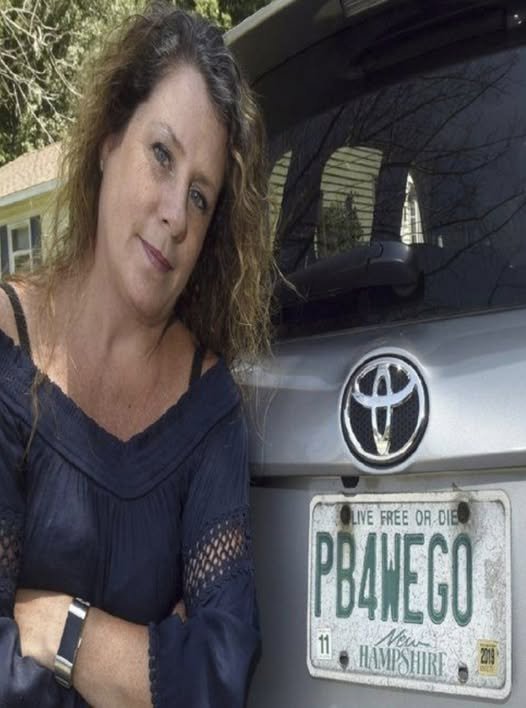
What happens when a joke everyone gets suddenly becomes a joke the government doesn’t allow? Wendy Auger is finding out. Her New Hampshire license plate, “PB4WEGO,” has been a rolling piece of parental camaraderie for fifteen years. It’s a phrase uttered in millions of homes, a pragmatic, loving instruction before car rides. It was never meant to provoke—only to connect. Yet, the state has now ordered her to remove it, labeling it offensive.
The decision left Auger reeling. The plate was part of her story, a small public expression of her role as a mother. Its charm was in its simplicity and universality. The state’s cold notification, devoid of any meaningful explanation, felt like a dismissal of that shared experience. It raised a troubling question: if something this innocuous and rooted in daily life can be deemed inappropriate, what else might be?
The bureaucratic rationale points to rules against obscene content. But to the average person, the leap from a parenting catchphrase to obscenity is a leap too far. Auger’s fight has therefore ignited a broader discussion about the flexibility of such rules and who holds the power to interpret them. It’s a debate about proportionality and whether systems designed to filter out genuine harm are instead being used to sanitize public space of all personality.
Support for Auger has been immense, revealing a public wary of overreach. Her case illustrates a fundamental tension: the need for order versus the right to individual expression. By standing her ground, she isn’t just fighting for seven letters and numbers; she’s advocating for a world where context matters, where humor is understood, and where people can express a piece of themselves without fear of capricious punishment.