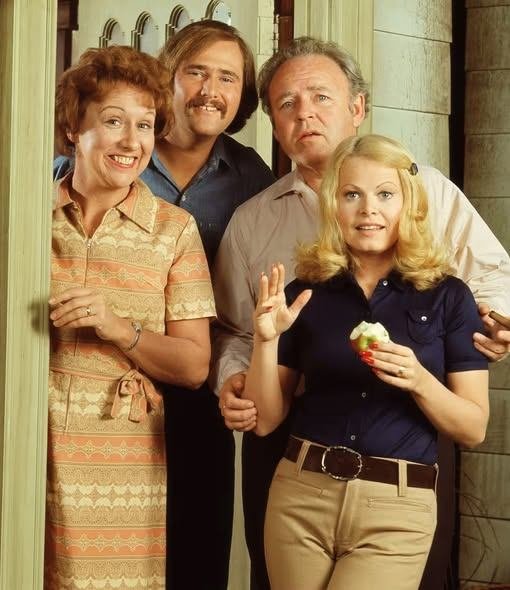
Childhood in the American South during the 1970s offered a masterclass in unspoken social rules, many of them rooted in bias. In my world, certain prejudices were so commonplace they operated as cultural shorthand, rarely examined and never confronted. My moral imagination was limited by this environment—until “All in the Family” arrived. Through the relentless debates between Archie Bunker and his son-in-law Michael “Meathead,” the show staged a weekly drama that mirrored the conflict brewing within me, giving me a script for a morality I couldn’t yet articulate.

Archie was a caricature, but his sentiments were achingly real. He gave voice to the kind of unvarnished bigotry that lurked beneath the polite surface of my community. Meathead, brilliantly underplayed by Rob Reiner, was his perfect foil. He wasn’t a fiery revolutionary; he was a persistent advocate for reason and basic human kindness. His power lay in his refusal to let Archie’s ignorance stand unchallenged. He modeled a crucial truth: silence in the face of prejudice is complicity. For a young person surrounded by complicit silence, this was a thunderous revelation.
The show’s impact was profound because it personalized the political. Meathead’s arguments weren’t abstract treatises on equality; they were urgent appeals about real people—neighbors, friends, strangers deserving of respect. He fought for empathy as a practical guide for living. This demystified activism for me. It became clear that working for justice wasn’t solely about grand gestures, but about the daily, grinding work of questioning harmful ideas, even (and especially) when they came from people you loved. “All in the Family” provided the courage to start that work in my own life, beginning with my own thoughts.

Decades later, the legacy of those TV lessons endures. The show didn’t just make me laugh; it shaped my conscience. It taught me that moral courage often looks like staying at the table for a difficult conversation, armed with empathy as your primary tool. In an era where our public discourse often mirrors the Bunker living room—loud, divisive, and plagued by willful ignorance—the example of Meathead remains a guiding light. He showed a young Texan that it was not only okay to challenge the world you’re given, but that doing so with a compassionate heart is the very essence of integrity.