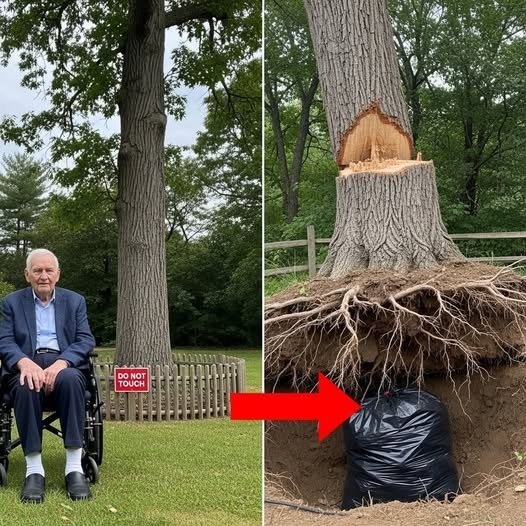
For years, the towering tree in Lester Vance’s yard was a neighborhood landmark, a subject of speculation and unease. To his brother Silas, it was the symbol of Lester’s irreversible change after Vietnam—a change that turned a vibrant sibling into a guarded stranger. When Silas inherited the neglected property, the tree was the first thing on his list for removal. Its fall was loud, but the silence that followed was louder. Exposed roots clung to soil that had been meticulously packed around something man-made.
The discovery was methodical: a shovel, a clunk, and the slow revelation of a military cache. A uniform, a helmet, a gun. Grenades. The ordnance disposal team was clinical, but their presence underscored the latent danger Lester had lived with, literally in his backyard. The legal questions faded, leaving only human ones. Why here? Why like this? The answer came not from the pit in the ground, but from a small, leather-bound book in Lester’s closet.
The journal was a map of a psychological battlefield. Its entries were stark landscapes of fear, loss, and a guilt so consuming Lester believed he could physically inter it. The tree, he must have believed, would absorb the poison, its roots weaving a cage around the memories. He wasn’t hiding evidence; he was conducting a desperate ritual of containment. Silas, reading by lamplight, finally met his brother. Not the withdrawn man of recent years, but the thoughtful, shattered boy who had seen too much and come home to a world that didn’t understand his wounds.
This knowledge dismantled Silas’s practical plans. Selling the house felt like a second betrayal. He stayed. He cleaned, he repaired, and he performed an act of healing. Where the old tree had stood as a prison, he planted a young one as a testament. He buried the artifacts again, but with reverence, not concealment. A simple plaque marked it as a place of remembrance. An old comrade’s visit wove the last threads together, confirming that Lester’s burden was a shared one. Silas inherited more than a house; he inherited the mission of understanding. He learned that the fiercest wars are often fought in silence, and the bravest thing you can do for a soldier is to listen to the quiet.