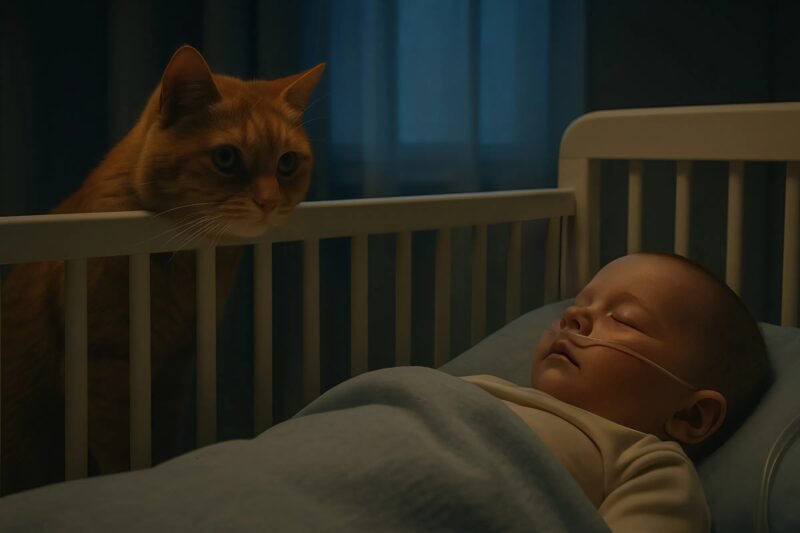
The constant nighttime interruptions had become our new normal. Our cat, once a calm and independent pet, had transformed into a source of endless frustration after the baby was born. It would pace, meow, and scratch at the crib, preventing everyone from getting a full night’s sleep. We assumed it was struggling to adjust to the new family dynamic or was simply seeking attention. Our attempts to correct the behavior were futile, and we started to believe the cat was just being difficult. We were blind to the true meaning behind its actions.
Everything changed one fateful evening. The cat’s behavior escalated from persistent to frantic. It jumped onto our bed, meowing loudly, and then sprinted back to the nursery. A deep, instinctual dread told me to follow. I found the cat standing over the baby, not with malice, but with a focused intensity. I looked at my child and felt a wave of terror. The baby was barely breathing and unresponsive. We called for an ambulance and raced to the hospital, where we learned our child had experienced a sudden and severe medical crisis. The doctors emphasized that our timing had been critical.
In the aftermath, the puzzle pieces fell into place. The cat’s strange behavior had been a series of warnings we were too tired and frustrated to understand. It had detected a subtle change in the baby’s condition long before we could. The animal’s keen instincts had saved our child’s life. The guilt of our earlier frustration was overwhelming, but it was replaced by an immense gratitude. The cat is now celebrated as a hero in our home, a silent and watchful protector whose true nature we were fortunate enough to discover just in time.