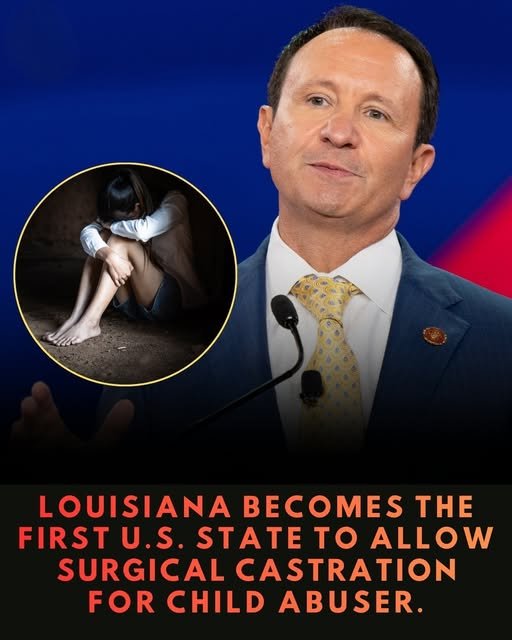
A new law in Louisiana has ignited a deep ethical conflict over how society should confront the horror of child sexual abuse. Act 651, which mandates surgical castration for offenders, forces a difficult question: in seeking to punish a monstrous act, does society risk becoming monstrous itself? Supporters frame the law as the ultimate form of protection and justice, a necessary physical guarantee that a predator cannot harm another child. They see it as a proportional response to a crime that irrevocably shatters a young life.
On the other side, ethicists and human rights advocates warn that the law crosses a dangerous moral line. They argue that responding to violence with state-sanctioned mutilation lowers society to the level of the criminal and abandons the principles of human dignity that underpin a civilized justice system. The ethical objection centers on the belief that no person, regardless of their crime, should be subjected to irreversible physical alteration against their will. This, they contend, is a form of torture that cannot be justified.
The debate also touches on the purpose of the justice system itself. Is its goal purely punitive, to inflict a proportional harm? Or is it meant to rehabilitate and restore? Critics of the law argue that it embraces a purely retributive model, focusing on inflicting pain rather than understanding or addressing the root causes of predatory behavior. By opting for a physical “solution,” the state may be overlooking the complex psychological nature of sexual offending, potentially forgoing more effective, albeit less dramatic, forms of intervention and community safety.
This law forces a public reckoning with our values. It asks whether we believe in the possibility of redemption and the importance of consistent human rights, even for the worst among us. The conversation sparked in Louisiana is not just about crime and punishment; it is a profound ethical examination of who we are and what kind of society we wish to be.