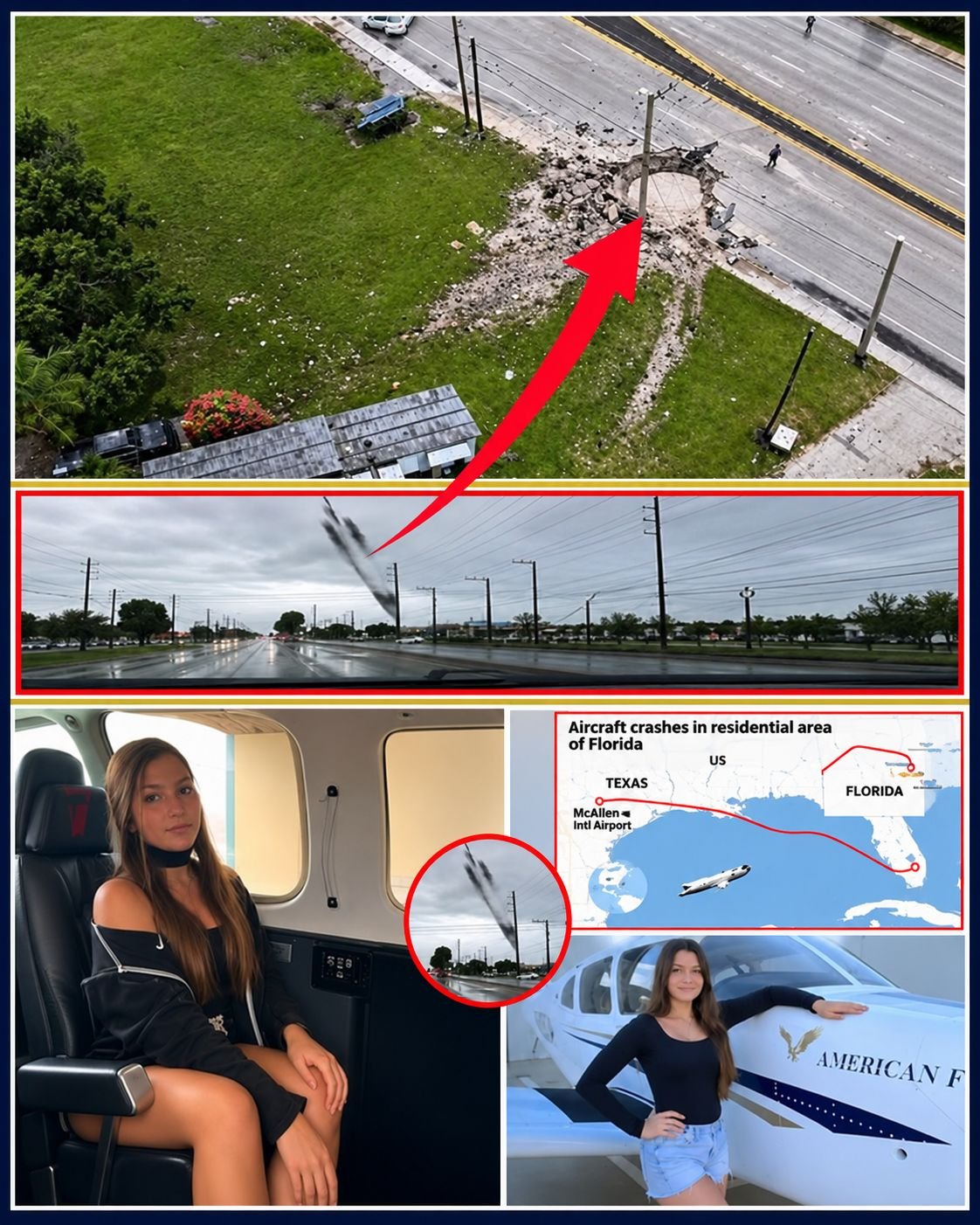
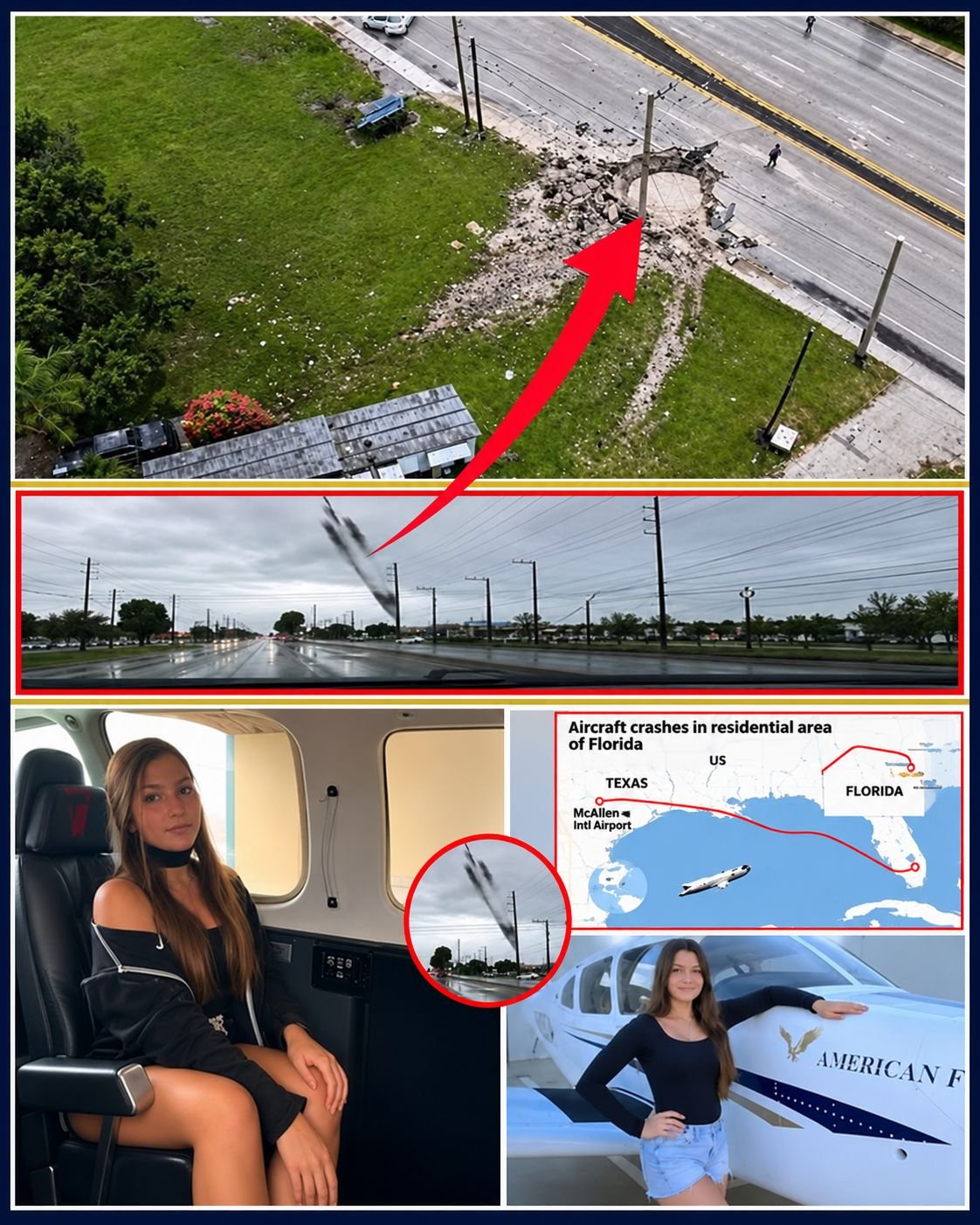
A dark shape. A sudden separation. And a question that could change how investigators understand the final seconds of the Florida Learjet disaster.
The November 1 crash of Learjet 60 N722BD near Greenacres, Florida, left nine people dead and an investigation filled with unanswered questions. The aircraft had been cruising at approximately 35,000 feet when its crew reported icing, turbulence and increasingly difficult flight conditions. Within moments, the situation deteriorated into a catastrophic descent.
Now, an unsettling hypothetical has emerged around the possibility of an unidentified object appearing in enhanced satellite imagery from that day.
Could a dark shape have separated from the aircraft shortly before its tail components came apart?
If such an image exists and can be authenticated, investigators would need to establish exactly what it shows. Was it an aircraft component? A shadow? An imaging artifact? Or something unrelated to the aircraft altogether?
The distinction would be critical.
Because the known evidence already raises a serious question about the Learjet’s structural condition during its final moments. Investigators recovered portions of the left elevator across a debris field extending miles from the main impact site.
But no public NTSB finding has established that an unidentified object left the aircraft, that anything escaped from the cabin, or that a satellite captured such an event.
The possibility is intriguing. The evidence, however, must come first.
THE MOMENTS BEFORE THE AIRCRAFT DISAPPEARED
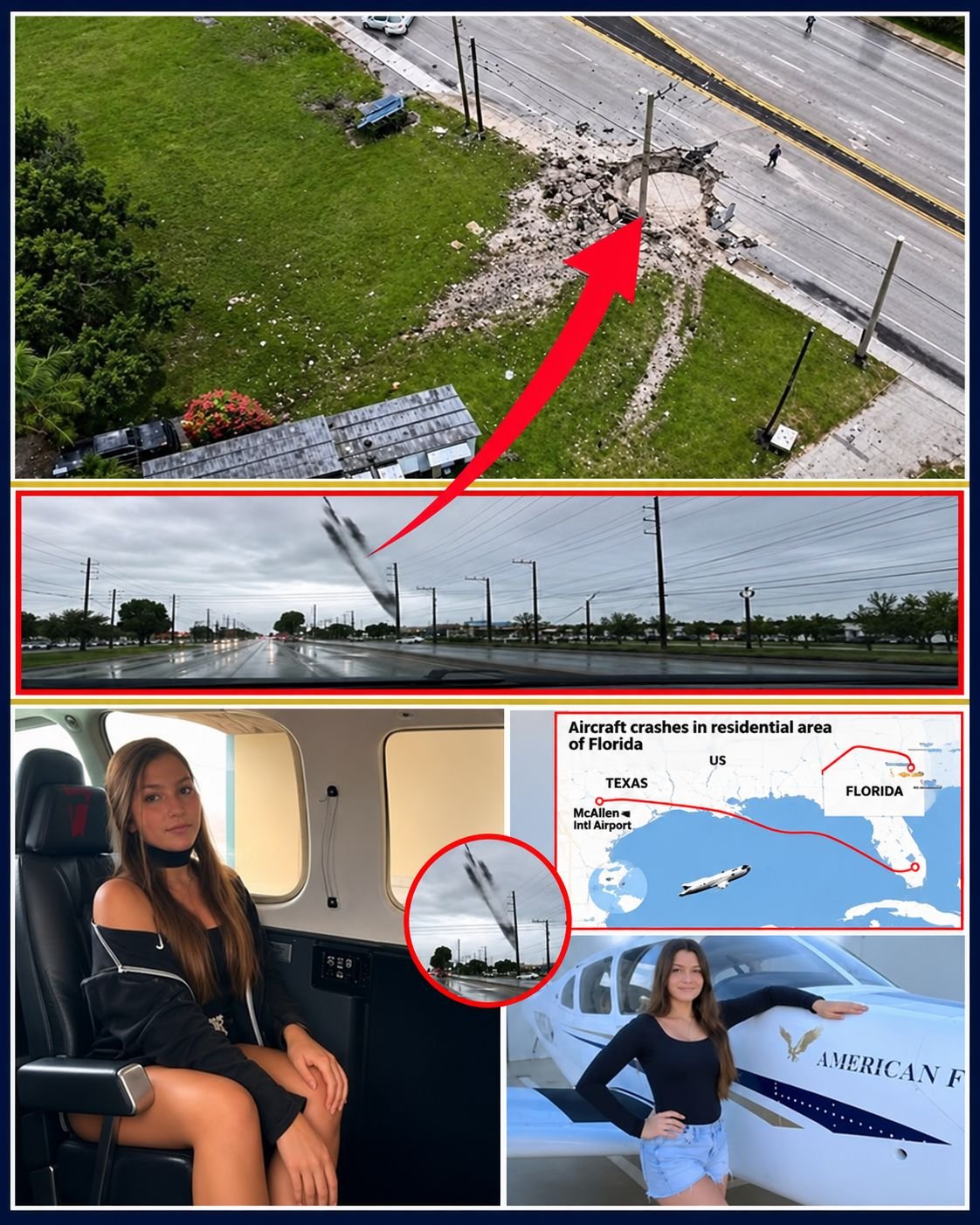
The final flight began in Austin, Texas, with North Eleuthera in the Bahamas as its destination.
On board were nine people, including Captain Jeffrey Gregory, 55, and co-pilot Nathalia Gadelha Filgueiras, 20. The passengers included technology entrepreneur Adam Robinson, his wife Helen Sharp, their two children, their nanny and two family friends.
At approximately 35,000 feet, the crew reported light clear icing and moderate turbulence. The aircraft was experiencing significant movement, with altitude fluctuations reported during the flight.
The pilots then requested clearance to climb to 37,000 feet.
Air traffic control approved the request.
But the situation changed with frightening speed.
Less than 30 seconds later, the crew reported a rapid descent and declared an emergency. Subsequent radio communications described descent rates reaching approximately 10,000, 20,000 and even 22,000 feet per minute.
One of the most distressing transmissions came as the crew warned that the aircraft was heading toward the ground.
The controller responded: “I’m here with you. Talk to me.”
Those radio exchanges provide a documented timeline of the emergency. They do not, however, reveal everything that happened inside the cockpit or cabin.
And that is where the physical evidence becomes so important.
THE LEFT ELEVATOR: THREE PIECES THAT RAISED NEW QUESTIONS
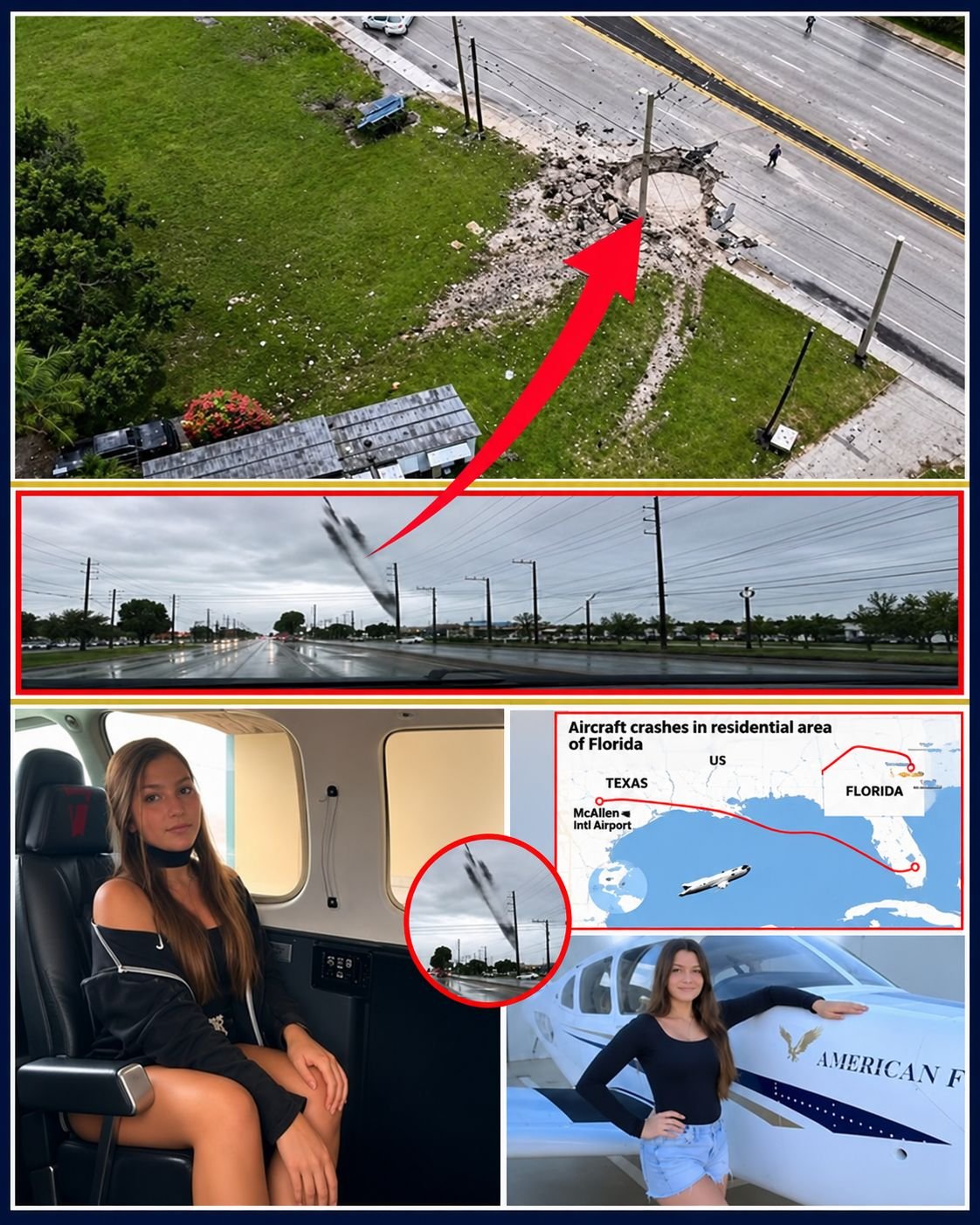
Among the most significant discoveries at the crash site was the condition of the Learjet’s left elevator.
The elevator is part of the aircraft’s horizontal tail assembly. It helps control pitch, allowing the aircraft to raise or lower its nose.
Investigators recovered portions of the left elevator in three pieces. Some of the debris was found between approximately 1.3 and 3.8 miles from the main impact site.
That distance matters.
It indicates that at least some components separated from the aircraft before the main ground impact. But it does not, by itself, establish why they separated or precisely when the damage occurred.
NTSB Board Member Tom Chapman discussed the significance of the recovered components during the investigation.
The central question remained unresolved: Did the elevator separate before the aircraft lost control, potentially contributing to the emergency? Or did extreme aerodynamic forces during the rapid descent tear the components away?
Those are two very different possibilities.
If a critical control surface failed before the aircraft entered its final descent, investigators would need to understand what caused the failure and whether it could have been detected earlier.
If the components separated because of the extreme forces generated during the descent, the damage could instead be a consequence of an already developing loss of control.
The distinction could help reconstruct the sequence of events.
But neither explanation establishes that a separate dark object left the aircraft.
WHAT COULD A DARK SHAPE IN A SATELLITE IMAGE ACTUALLY BE?
The headline’s most unsettling detail is the possibility that an unidentified object appeared to separate from N722BD at altitude.
Before drawing conclusions, investigators would need to answer several basic questions.
First, where did the image come from?
Commercial satellite imagery is not automatically a continuous video recording. Many satellite systems capture individual images at specific times, and their ability to track a fast-moving aircraft depends on the platform, imaging method, resolution and timing.
A single frame may show an aircraft as a small shape against a complex background. It may not reveal enough detail to identify individual components, much less determine whether something has separated from the cabin.
Second, can the image’s timestamp be independently verified?
An image labelled November 1 is not necessarily an image captured at the exact moment of the crash. Investigators would need the original file, acquisition metadata, location information and a reliable chain of custody.
Third, what does the dark shape look like in other frames?
A genuine object separating from an aircraft should ideally be visible across multiple consecutive observations, with a trajectory that can be compared against the aircraft’s movement.
A shadow, cloud feature, compression artifact or unrelated object could create a misleading appearance in a single enhanced frame.
Even sophisticated image enhancement cannot recover details that were never captured in the original data.
That is why the original image matters more than a dramatic edited version circulating online.
Without authentication, the supposed object remains an unverified claim.
DID SOMETHING LEAVE THE CABIN?
The most dramatic interpretation of the satellite theory is that something may have exited the aircraft before its tail components separated.
But there is currently no publicly confirmed evidence that a person, object, cargo item or unidentified device left the cabin during the flight.
There is also no authenticated satellite sequence establishing that an object separated from N722BD.
That distinction is essential because the aircraft’s breakup and the possible separation of an external object are not interchangeable events.
A piece of the tail could detach because of structural failure or extreme aerodynamic loading. A separate object could appear near the aircraft for entirely unrelated reasons. And a dark mark in an image might not represent a physical object at all.
To connect any alleged object to the crash, investigators would need to establish its identity, position, direction of travel and relationship to the aircraft.
They would also need to compare the imagery with recovered wreckage.
If the object were an aircraft component, its dimensions and material characteristics might help identify it. If it were unrelated, the apparent connection could disappear once the original data were examined.
At this stage, no public finding supports the claim that something was deliberately released, thrown from the aircraft or removed from the cabin.
THE COCKPIT VOICE RECORDER COULD PROVIDE ANOTHER PIECE OF THE PUZZLE
The NTSB confirmed that investigators recovered the cockpit voice recorder from the initial impact area and sent it to the agency’s Vehicle Recorders Laboratory in Washington, D.C.
That was an important development.
The recorder could potentially provide information about the crew’s conversations, cockpit sounds, warnings and actions during the emergency, depending on its condition and whether usable audio can be recovered.
But its recovery does not mean investigators have already decoded its contents.
No authenticated full cockpit recording or transcript has been publicly released.
The distinction matters because radio communications with air traffic control are not the same as a complete cockpit recording.
The public transmissions reveal what the pilots communicated externally. They do not necessarily reveal every warning, sound or conversation inside the aircraft.
If investigators eventually recover usable audio, it may help establish when the crew first noticed a problem and how the emergency developed.
That information could then be compared with the physical evidence, weather data and any independently authenticated imagery.
A satellite image alone cannot explain the cockpit emergency. A recorder alone may not explain the structural breakup. Investigators need to bring the different forms of evidence together.
WHY THE TIMELINE MATTERS MORE THAN THE IMAGE ITSELF
Suppose investigators obtained a genuine satellite image showing an object near N722BD shortly before the crash.
That would still be only the beginning.
They would need to establish whether the image was captured before, during or after the aircraft began its rapid descent.
They would need to determine whether the apparent object was moving independently or simply appeared separated because of the angle, resolution or timing of the image.
They would also need to compare its position with the known debris field.
The recovered left elevator components provide a physical reference point, but the debris distribution does not automatically reveal the identity of every object that may have been visible in the air.
Investigators would also examine aircraft maintenance records, structural components, weather conditions and the flight’s recorded data where available.
The goal is to construct one coherent sequence.
What happened first? When did the aircraft begin losing control? When did structural components separate? And what forces were acting on the airframe during the final descent?
Those questions are far more important than simply identifying a mysterious-looking shape.
THE NTSB HAS NOT ANNOUNCED A SATELLITE-IMAGE BREAKTHROUGH
There is no publicly confirmed NTSB announcement identifying a dark object separating from N722BD in commercial satellite imagery.
There is no authenticated public image proving that an object left the cabin.
And there is no official finding connecting an unidentified object to the separation of the aircraft’s tail components.
The established evidence remains serious enough without adding an unsupported explanation.
Nine people died. The aircraft entered a rapid descent after reporting difficult weather conditions. Portions of the left elevator were recovered in three pieces, with debris found miles from the main impact site. The cockpit voice recorder was recovered for evaluation.
Each of those facts gives investigators a concrete path to follow.
The satellite theory, if supported by an original and verifiable image, could become another line of inquiry. But until that happens, it should not be treated as proof of an object, an intrusion or deliberate interference.
ONE IMAGE, ONE TIMELINE — AND NINE LIVES LOST
The final moments of N722BD remain difficult to reconstruct.
For the families of Captain Jeffrey Gregory, co-pilot Nathalia Gadelha Filgueiras, Adam Robinson, Helen Sharp, their children and the other passengers, the investigation is about understanding how a routine journey ended in tragedy.
For investigators, every recovered component and every verified recording may help answer that question.
The left elevator’s separation is a documented part of the physical investigation. The rapid descent is captured in air traffic control communications. The cockpit voice recorder has been recovered for evaluation.
But the alleged dark object remains unverified.
If an original satellite image is eventually produced, investigators will need to examine it frame by frame, compare its timestamps with the flight timeline and determine whether the apparent separation corresponds to any physical evidence recovered from the ground.
Until then, the most important question is not what the dark shape might have been.
It is whether there is enough reliable evidence to establish that the shape was real in the first place.
Did something genuinely separate from N722BD before its final breakup — or is a mysterious-looking image creating a story that the evidence cannot yet support?