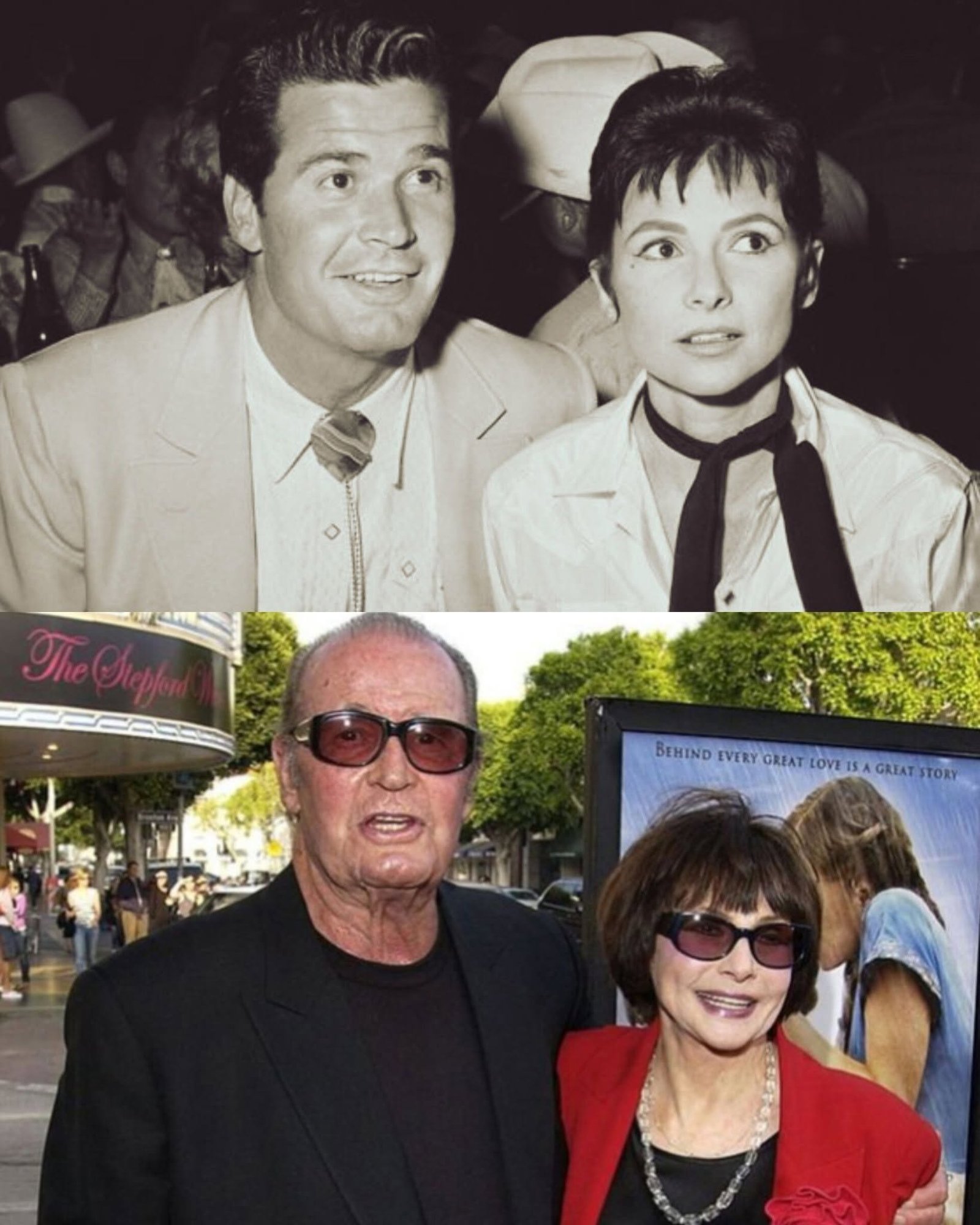
In the summer of 1956, Los Angeles shimmered with its usual sun-soaked glamour, but for James Garner, the world felt ordinary until he noticed her. Lois Clarke, quietly commanding yet understated, moved through the poolside party with a calm grace. Garner, a war veteran turned budding actor, felt an immediate pull. It wasn’t glamour or Hollywood allure that drew him; it was authenticity, resilience, and a subtle magnetism that Lois exuded in every gesture.
Over the next two weeks, fate—or perhaps the persistent hand of destiny—ensured their paths would cross again and again. From dinners to political rallies to casual encounters, each meeting deepened Garner’s fascination and admiration. On the fourteenth night of consecutive dinners, the improbable became reality: James Garner and Lois Clarke were married at the Beverly Hills courthouse on August 17, 1956. A whirlwind romance, yes, but one that would endure beyond Hollywood gossip and public speculation. While outsiders predicted fleeting excitement and inevitable heartbreak, Garner and Clarke were building something far more enduring: a partnership rooted in respect, understanding, and profound love.
Chapter One: From Strangers to Soulmates
The early encounters between Garner and Clarke were subtle but charged with meaning. Each conversation revealed shared values and perspectives. Garner was fresh from a life shaped by military service, carrying both scars and a sense of adventure that few could understand. Lois, raising her daughter alone and nurturing her back to health after polio, possessed a quiet determination and inner strength that left an impression on him. These two seemingly different worlds collided, creating a spark that would ignite into a lifelong flame.
Despite the speed of their courtship, Garner saw clarity from the very beginning. Lois was not just a companion but a kindred spirit. He often recalled that within fourteen days, he knew she was the person he could navigate life’s unpredictability with, the anchor in the whirlwind of fame and personal challenges that awaited him. Their marriage wasn’t about fairy-tale perfection—it was about choosing a partner who would stand beside them in both light and darkness.

Chapter Two: Embracing Differences
Every couple faces challenges in the early days of marriage, but for Garner and Clarke, the contrasts between them could have been magnified by their social backgrounds, religions, and experiences. Garner was a native Oklahoman, with the grit and pragmatism forged from rural roots and wartime service. Lois was a poised, urban woman, whose life in Los Angeles demanded a certain quiet resilience. Yet these differences became complementary rather than divisive.
Rather than seeing contrasts as conflict, they saw opportunity: opportunity to learn, to grow, and to support one another. Lois brought calm rationality to situations where Garner’s impetuousness might have dominated. Garner injected warmth, humor, and a sense of adventure into Lois’s structured world. Together, they navigated life as partners, equal and deeply connected, setting a foundation that would endure Hollywood’s relentless gaze.
Chapter Three: Hollywood’s Pressures and First Separation
Success came swiftly for Garner, especially with roles in Maverick and later The Rockford Files. Fame brought attention, yes, but also immense pressures: grueling work hours, injuries, and the constant glare of public scrutiny. By 1970, these pressures mounted to a breaking point. Garner and Clarke separated for three months, a pause that many interpreted as the inevitable collapse of yet another celebrity marriage.
Yet Lois understood the truth beneath the headlines. Garner was not running from her; he was contending with the cumulative weight of fame, personal challenges, and lingering emotional scars. She remained steadfast, knowing that time apart was not the end but a necessary step for him to regain equilibrium. This separation demonstrated the maturity and depth of their love, showing that understanding sometimes requires space and patience, not judgment.
Chapter Four: Navigating Rumors and Public Scrutiny
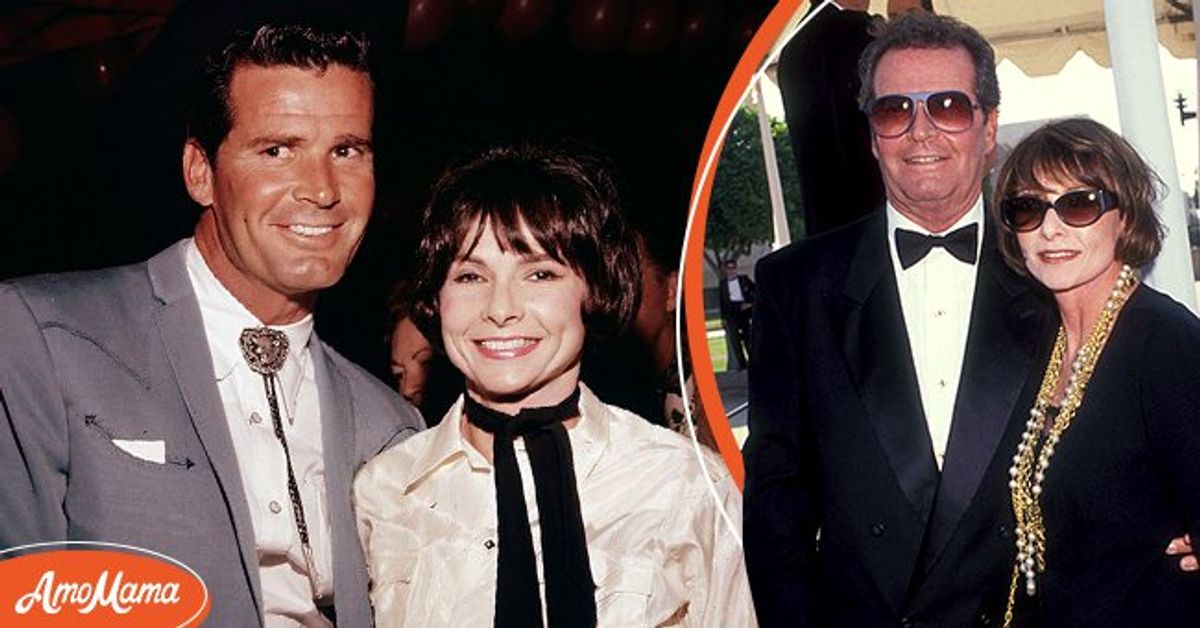
In the late 1970s, Garner faced the peak of his fame with The Rockford Files. With success came rumor and speculation, including gossip about potential entanglements with high-profile Hollywood actresses. Yet he never allowed these false narratives to dictate his marriage. Garner confronted his own vulnerabilities, recognizing that stress, ulcer flare-ups, and depression were personal challenges—not marital failings.
Lois’s role during this period was crucial. She married the man, not the celebrity. She understood that his public struggles were not a reflection of their love but of the demands and pressures of Garner’s career. Her steadfast support exemplified a rare strength: the ability to see beyond the headlines and remain anchored in the person she had chosen decades before. In an industry often defined by superficial relationships and fleeting attention, their bond stood as a testament to enduring partnership.
Chapter Five: The Everyday Acts of Love
Long-lasting marriages often thrive not on grand gestures but on daily acts of devotion. For Garner and Clarke, love was woven into the fabric of ordinary life. Shared meals, conversations, and quiet moments of laughter or reflection strengthened their bond. Garner famously compared marriage to the army: “Everyone complains, but look how many re-enlist.” For him, Lois was not a duty or obligation—she was home. He chose her every day, reaffirming their commitment amidst life’s uncertainties.
Even during medical challenges, financial concerns, or Hollywood-induced stress, their partnership remained resilient. Garner’s integrity and Lois’s patience allowed them to confront adversity without blame or recrimination. Their shared humor, mutual respect, and unwavering support became the glue that bound them across decades.
Chapter Six: Facing Adversity Together
Ulcers, depression, injuries, and financial disputes marked moments of difficulty, yet each challenge strengthened their connection. Garner and Clarke exemplified accountability: Garner never placed blame on Lois, and Lois never allowed public pressures to weaken her commitment. Their love was not defined by absence of conflict but by their capacity to confront it together, with empathy and honesty.
Their ability to weather these storms was a direct result of emotional maturity. Lois recognized that Garner’s struggles often stemmed from childhood experiences and professional pressures. By offering compassion rather than criticism, she allowed him to recover, reflect, and recommit to their marriage. Their story became one of resilience, patience, and enduring trust.
Chapter Seven: A Love That Endured Decades
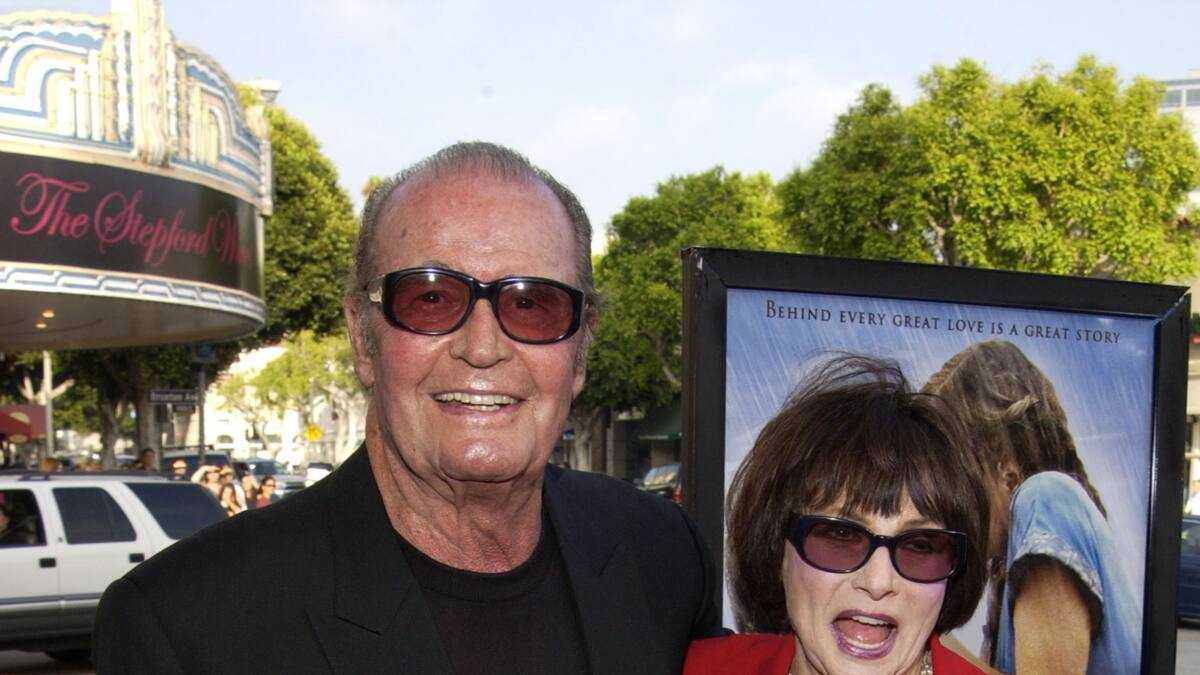
From 1956 to 2014, Garner and Clarke’s marriage spanned nearly six decades. Two periods of separation, immense professional pressures, and relentless public scrutiny could not undermine the strength of their bond. By the time 2014 arrived, just weeks before their 58th anniversary, they had built a life defined by loyalty, patience, and deep understanding.
Garner often reflected that he didn’t marry a perfect story or a fairy-tale ending—he married a partner who offered constancy, understanding, and the warmth of home. Lois Clarke’s steadfast presence throughout triumphs and trials became a defining feature of Garner’s life, shaping not only his personal journey but also the public’s perception of him as more than a Hollywood icon: as a man of character, loyalty, and love.
Chapter Eight: Lessons in Real Love
The story of James Garner and Lois Clarke transcends Hollywood spectacle. It is a masterclass in real, enduring love. Their marriage demonstrates that relationships are not defined by perfection or drama but by the willingness to choose one another each day. True love involves empathy, accountability, and shared resilience. It requires seeing beyond surface-level differences, public pressures, and fleeting distractions to nurture a bond grounded in mutual respect and understanding.
In a culture often obsessed with quick romances and celebrity gossip, their story serves as a reminder that lasting partnerships demand patience, honesty, and unwavering commitment. They showed the world that real love is messy, human, and ultimately rewarding when nurtured with care and devotion.
Chapter Nine: A Legacy Beyond Hollywood
Garner and Clarke’s marriage stands as a beacon of what is possible when two people choose to face life’s uncertainties together. It wasn’t glamorous headlines or social appearances that defined them; it was the quiet, consistent devotion that allowed their bond to flourish over decades. Their story inspires those seeking authentic connection, offering hope that true love is built on trust, understanding, and shared perseverance.
Chapter Ten: Choosing Home Over Fairy Tales
Ultimately, James Garner’s reflection on his marriage captures its essence: “I didn’t marry a happy ending. I married my home.” Lois Clarke was that home—a constant, unwavering presence, offering comfort, guidance, and love in life’s chaotic moments. Their love was enduring because it was real. It survived fame, stress, injury, and rumor because it was chosen every single day. In a world of fleeting attention and superficial connections, their story reminds us that love is not a fairy tale but a shared life—a home built together, brick by brick, day by day.