A Cold Building in West London and a Decision That Changed Everything
November 1971. Chiswick, West London.
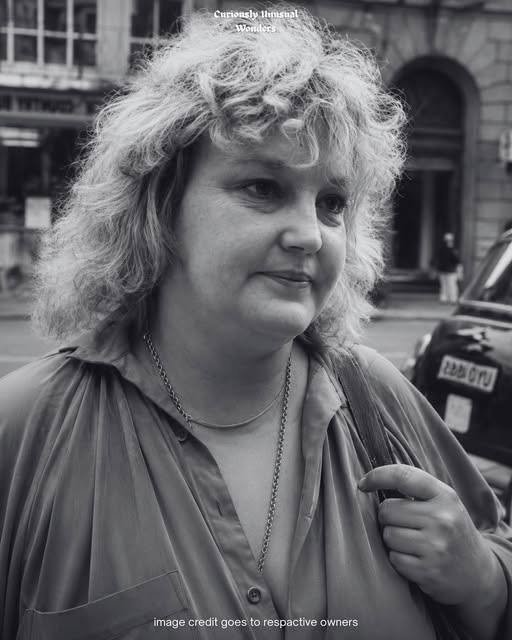
Erin Pizzey is 32 years old.
She is not a lawyer. Not a politician. Not a doctor. Not someone with authority or institutional backing. She is simply a woman with an idea — and a rented, half-abandoned community hall on Belmont Road that the local council agreed to let her use almost as an experiment.
Her original plan was small. Almost harmless, even by bureaucratic standards. A warm room. A kettle for tea. A place where mothers with young children could sit down, breathe, talk, and escape the quiet isolation of domestic life.
No one imagined it would become anything more than that.
But history rarely begins the way it ends.
Because one afternoon, the door opened.
And everything changed.
The First Woman Who Walked Through the Door
She stood in the entrance like she was afraid the air itself might hurt her.
Bruises covered her face and arms. She was holding two small children tightly against her body, as if letting go even for a second would mean losing them forever.
She did not ask for tea.
She did not ask for help.
She only asked for somewhere to hide.
Erin did not hesitate. She let her in.
Not because there was a procedure.
Not because there was a policy.
But because there was no one else coming.
When she called the police, the response was cold and familiar. They told her what they told women across Britain at the time: they could not enter a private home over a “domestic dispute.” The law did not recognize danger inside marriage as something urgent enough to intervene.
A home was private.
What happened inside it was not their concern.
At least, that was the system’s position.
Then Erin called a civil servant.
The answer was worse.
“There wasn’t a problem of battered wives,” the woman said flatly, “until you made one.”
Erin put the phone down.
And went back to the room where the woman and her children were waiting.

A Shelter Built Before the World Had a Name for It
Within days, the building stopped being “temporary help.”
It became something else entirely.
More women came.
Some arrived with nothing but the clothes they were wearing. Some came with children who had learned to stay silent. Some came at night, guided by whispered instructions from strangers: Go to Chiswick. There is a woman there who will not turn you away.
There was no funding.
No staff.
No security system.
No legal framework.
Only a door.
And Erin kept it open.
Within weeks, 40 mothers and children were sleeping in four small rooms. Every corner of the building was used. Floors became beds. Chairs became cribs. Hallways became sleeping spaces.
The smell inside was a mixture of exhaustion, cooking food, fear, and something almost forgotten by most of the women who arrived there:
relief.
Because for the first time, they were not being told to go back.
When a Hidden Crisis Became Impossible to Ignore
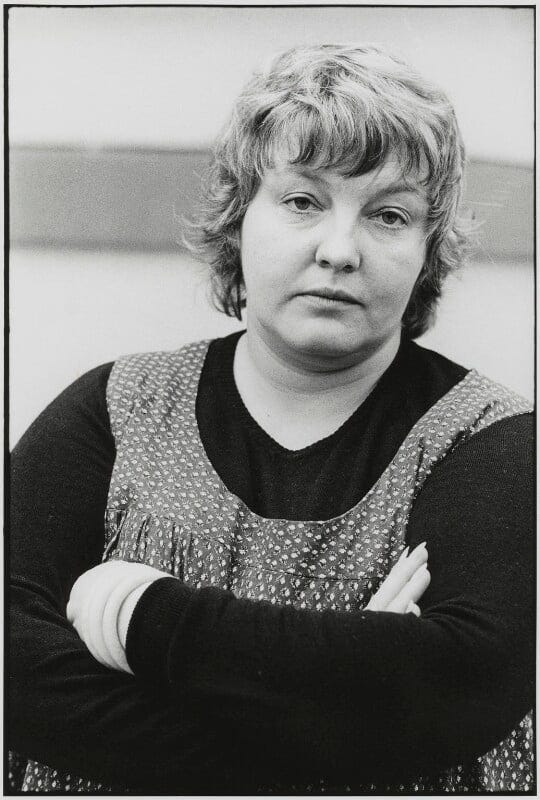
By 1973, word had spread far beyond Chiswick.
Not through newspapers at first.
But through women.
One telling another.
Quiet networks forming in kitchens, buses, workplaces, and school gates.
A map that did not exist on paper was forming in real life.
And at the center of it was Erin Pizzey’s building.
That same year, she hosted the first National Women’s Aid Conference in the United Kingdom. Women arrived from across the country expecting a discussion.
What they found instead was recognition.
Because for many of them, it was the first time they had heard their private suffering described as something real, shared, and structural — not individual failure.
For the first time, the silence had been broken in a room full of voices.
The System Pushes Back
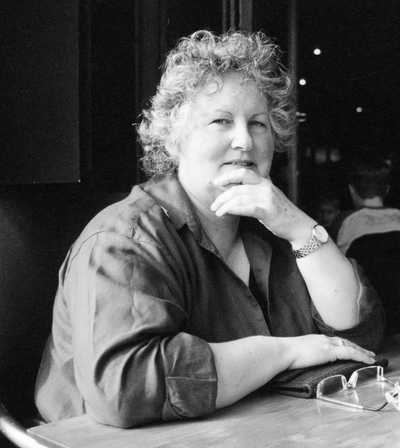
By 1974, the situation had reached a breaking point.
The council imposed a limit: 36 residents.
But the building no longer belonged to rules on paper.
At peak moments, 150 women and children were inside.
Sleeping on floors.
On stairs.
In hallways.
Because there was nowhere else.
Erin was taken to court for overcrowding.
She appealed.
And appealed again.
All the way to the House of Lords.
But she never closed the door.
Not once.
Not even while the legal system tried to force her to.
Because outside those walls, there was nowhere else to go.
A Book That Broke the Silence
That same year, Erin wrote a book.
It was called Scream Quietly or the Neighbours Will Hear.
The title itself captured the reality of what had been hidden for generations: violence that was expected to remain quiet, contained, and invisible.
Inside the book were real stories from real women living inside the shelter. Not statistics. Not theory. Not abstract sociology.
Truth.
For the first time, domestic violence was not just a private shame.
It was a public reality.
And the reaction was immediate.
The book spread quickly through Britain and beyond. Newspapers picked it up. Discussions began where there had been silence before. The word “domestic violence” began to enter public vocabulary not as a rare tragedy, but as a widespread issue that had been ignored for too long.
The silence had officially been broken.
And it could not be put back together.

From One Building to a Global Movement
What began in four small rooms in West London did not stay there.
Other women saw it.
Other cities copied it.
Other countries adapted it.
Refuges began to appear across the United Kingdom.
Then Australia.
Then Canada.
Then the United States.
The model was simple.
No permission required.
No perfect conditions needed.
Just a safe place.
And the refusal to turn people away.
Erin had not designed a system.
She had revealed that one already needed to exist.
Recognition That Came After Resistance
Not everyone supported her.
Far from it.
Her work was controversial.
Her methods were questioned.
Her ideas were debated in political and academic circles.
But the impact was undeniable.
MP Jack Ashley later said in Parliament:
“It was she who first identified the problem, who first recognized the seriousness of the situation, and who first did something practical.”
Awards followed.
The Italian Peace Prize.
A CBE.
Recognition in international rankings.
She was listed among the most influential women who changed modern society.
But none of it replaced what mattered most to her.
The door still open.

The Shelter Becomes Something Bigger Than a Building
The original shelter evolved into something far larger.
Chiswick Women’s Aid eventually became Refuge, one of the largest domestic violence charities in the United Kingdom.
It grew to hundreds of employees.
Millions in annual funding.
Thousands of women supported every year.
But its origin remained unchanged.
A borrowed building.
A kettle.
And a decision to believe someone who was not believed elsewhere.
The Final Years and the Legacy That Remains
Erin Pizzey passed away on October 4, 2025, at the age of 86.
By then, the system she helped force into existence had become part of public infrastructure across multiple countries.
Shelters existed where none had before.
Laws had changed.
Language had changed.
Awareness had changed.
But the origin story remained simple.
One woman.
One door.
One refusal to look away.
The Meaning of One Decision
It is easy to look at movements after they succeed and forget how fragile they once were.
It is easy to see systems and forget the first step had no system at all.
But Erin Pizzey’s story is not about scale.
It is about initiation.
About what happens when someone decides that what is not supposed to exist anyway must still be built.
She did not wait for permission.
She did not wait for funding.
She did not wait for consensus.
She opened the door.
And kept it open.
Even when the world tried to shut it.
Final Reflection
Forty women and children showed up with nowhere to go.
She made room.
And in doing so, she proved something that outlasts any institution:
Sometimes history does not begin with power.
It begins with refusal.
Refusal to ignore.
Refusal to turn away.
Refusal to close the door.