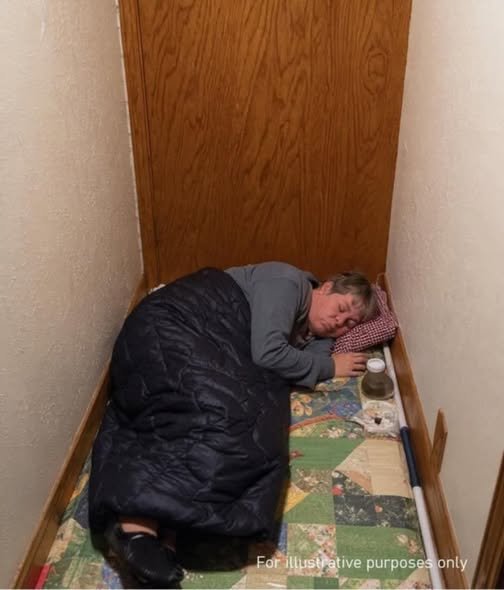
The mistreatment of elderly parents within family structures is often subtle, disguised as oversight or logistical snafus. Sharon’s story highlights a stark example: her mother, Meryl, was assigned a camping mat in a hallway during a paid family vacation, while younger relatives occupied the bedrooms. This incident goes beyond poor planning; it reflects a deeper disregard for an elder’s comfort and status. Sharon’s response provides a powerful blueprint for advocating for an aging parent’s right to dignity and respect.
The emotional manipulation was clear: Meryl, a lifelong caregiver, was conditioned to accept poor treatment to “keep the peace.” Her son, Peter, enabled the situation by minimizing her discomfort. This dynamic is tragically common, where the elder’s needs are sacrificed for the convenience or whims of other family members. Sharon broke this cycle by refusing to accept her brother’s excuses. She recognized that her mother’ physical discomfort and emotional humiliation were urgent issues requiring direct intervention.

Sharon’s advocacy was both practical and symbolic. By arriving with an air mattress, she highlighted the inadequacy of the provided “bed.” By confronting the planner, Jessica, and reclaiming the master suite, she performed a public re-evaluation of her mother’s worth. This action sent an unambiguous message to the entire family: the matriarch deserves the best available comfort, not the leftovers. It was a corrective act that restored proper familial hierarchy based on respect, not power plays.
The outcome was profoundly positive for Meryl’s well-being. The simple act of sleeping in a proper bed transformed her experience of the vacation from one of endurance to one of enjoyment. More importantly, it repaired a potential wound to her self-worth, showing her that her children see her value and are willing to defend it. This reinforcement is critical for the mental and emotional health of seniors, who can often feel sidelined or burdensome.
This story serves as a crucial reminder for families. Planning multi-generational gatherings requires conscious inclusion and priority-setting for elder members. It is not enough to assume they will “be fine” with less. Proactive advocacy, like Sharon’s, is sometimes necessary to ensure that those who have spent a lifetime giving are not, in their later years, relegated to the literal and metaphorical hallway. Defending an elder’s dignity is one of the most concrete expressions of familial love and gratitude.