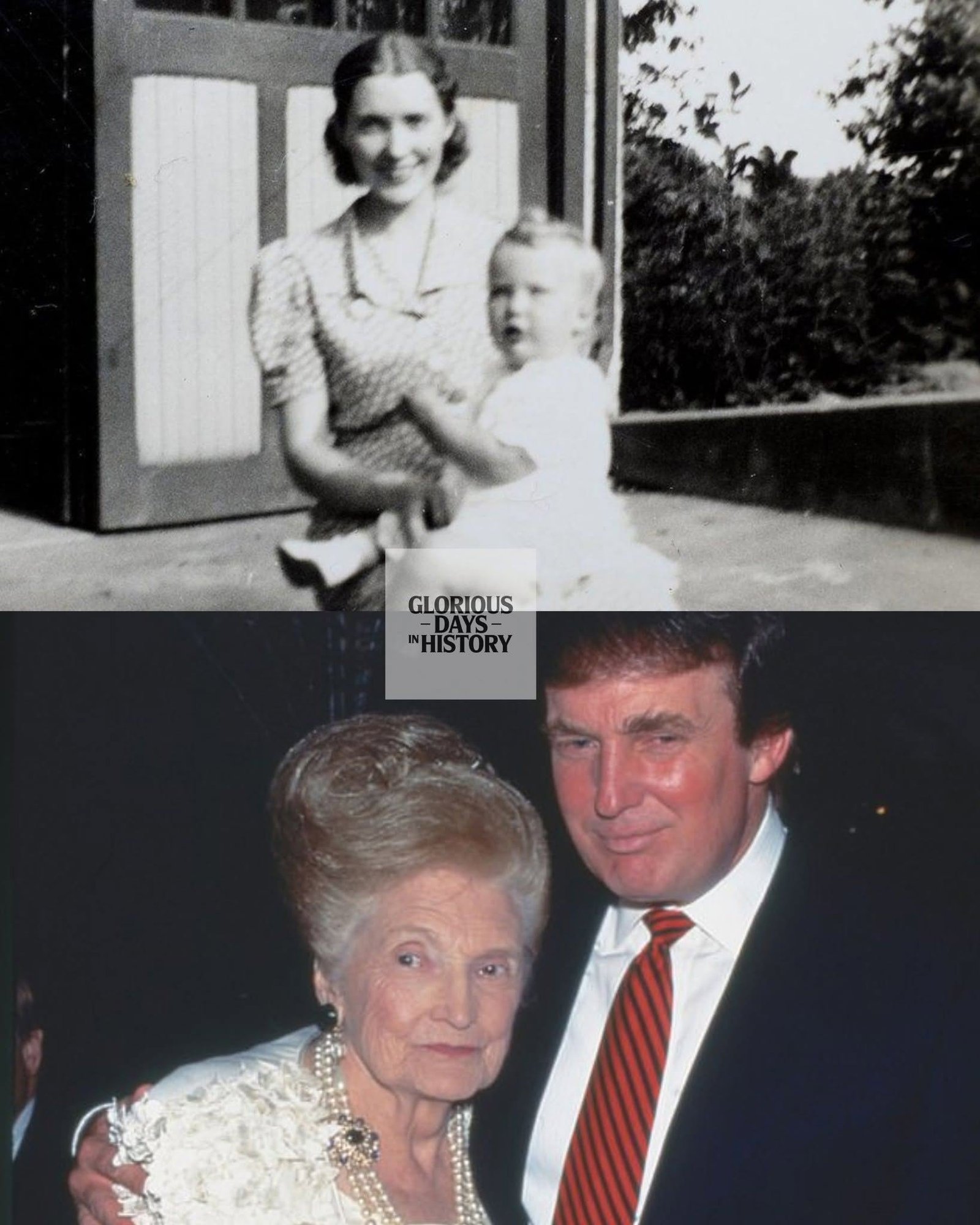
From the Outer Hebrides to New York – A Young Woman’s Journey
Circa May 10, 1930, an 18-year-old Mary Anne MacLeod stepped onto the deck of a steamship in Stornoway harbor, waving goodbye to a remote community of Gaelic speakers on the Isle of Lewis in Scotland. The island, rugged and beautiful, had been reshaped by the aftermath of World War I. Families were fractured, economic opportunities were scarce, and the specter of emigration hung over every young person with ambition. Mary Anne, aware that her world offered little beyond subsistence fishing and weaving, carried with her a sense of quiet determination. Though she had little in material wealth, she possessed something her future son would inherit in spades: unshakeable self-belief, a confidence that her presence could matter in places where the odds were stacked against her.
The voyage to New York was both physically exhausting and emotionally transformative. Immigrants like Mary Anne were packed into steerage compartments, enduring the relentless motion of the Atlantic, the unfamiliar smells, and the constant mixture of hope and fear that defined the immigrant experience. She arrived at Ellis Island with nothing but a small trunk and the clothes she wore, listing her occupation as “domestic” on immigration papers—a designation that hinted at both humility and opportunity. Within days, she joined a network of Scottish and British women already working as house servants in Manhattan and Queens, learning the rhythms of domestic life in the homes of the affluent, and observing the manners, ambitions, and societal hierarchies of a city that moved faster than her small village ever had.
In those early years, Mary Anne’s world was confined to kitchens, parlor rooms, and hallways, yet she imbibed lessons that would later influence her family in subtle ways. She watched how wealth was displayed, how manners were used to assert status, and how confidence could open doors even when one lacked formal education. Her Gaelic upbringing, steeped in oral traditions and communal support, gave her resilience, while her immersion into the bustling New York milieu refined her sense of presence and poise. Each day of work was more than a paycheck; it was an apprenticeship in understanding people, understanding performance, and understanding the power of quiet influence in shaping one’s environment.
Meeting Fred Trump – Love and Ambition Intertwined
By 1936, Mary Anne’s life had transformed from that of a young immigrant seeking stability to a woman navigating the intersecting worlds of ambition, wealth, and society. It was at a social gathering in Queens that she met Fred Trump, a rising real estate developer already recognized for his acumen in the rapidly changing New York housing market. Fred, charismatic and driven, was considered one of the borough’s most eligible bachelors. The meeting between Mary Anne and Fred was serendipitous, yet emblematic of her ability to carry herself with grace amid unfamiliar circles.
Their courtship was swift. A brief two-day honeymoon in Atlantic City followed their wedding, a symbol not only of their personal connection but also of the practical efficiency that would define the Trump household for decades. Mary Anne’s transition from domestic service to wife of an ambitious developer did not diminish her influence; instead, it allowed her to shape a family culture that blended discipline, exposure to opportunity, and an appreciation for public presence. In her new role, she was not merely a partner but an architect of social and emotional infrastructure, cultivating an environment where her children could flourish.

Mary Anne’s influence on her children went beyond the lessons of her husband’s boardroom. While Fred taught the mechanics of business—negotiation, risk-taking, and financial management—Mary Anne imparted something less tangible but equally critical: an understanding of human perception, of showmanship, and of the subtle arts of presentation. She encouraged her children to participate in community events, to practice courtesy and poise, and to recognize that confidence, displayed authentically, could elevate even the most modest person to positions of influence.
The Queens neighborhood, evolving rapidly in the mid-20th century, became a living classroom for Mary Anne’s children. They observed their mother’s engagement with neighbors, charitable organizations, and social clubs. Her membership in the Jamaica Estates Women’s Club was more than a social pastime; it was a demonstration of civic responsibility, a model of public engagement, and an early lesson in building networks of trust and mutual respect. This exposure subtly infused Donald, and his siblings, with an understanding that personal presence could be as impactful as any formal education.
The Birth of Donald Trump – A Mother’s Imprint
June 14, 1946, marked the arrival of Donald Trump, the fourth of Mary Anne and Fred’s five children. From the moment of his birth, he was immersed in a household where ambition, attention to detail, and social awareness were part of daily life. Mary Anne’s maternal influence was immediate and profound. Her approach to parenting blended warmth with expectation, allowing her children to explore, learn, and develop confidence under her attentive guidance. She was known for her theatrical presence at family events and in the broader community, creating an aura of grace and visibility that would later manifest in her son’s public persona.
Donald, reflecting on his mother in interviews and memoirs, credited her for shaping aspects of his character that no formal education or business experience could provide. In particular, he noted her flair for showmanship and presentation. Mary Anne demonstrated that perception mattered—that the way one carried oneself, the way one engaged with others, and the ability to command attention politely and confidently were as powerful as any financial acumen. This early exposure would become foundational for Donald’s future, embedding a belief that personality and presentation could leverage opportunities on a global stage.
Her charitable work in Queens further modeled values that balanced ambition with empathy. Mary Anne was actively involved in community efforts, understanding that social engagement was both a moral responsibility and a strategic tool in shaping one’s environment. Through these actions, she taught her children the importance of visibility, influence, and personal brand—long before the term existed in popular lexicon. Donald absorbed these lessons silently, internalizing a sense of entitlement balanced with duty, and a recognition that public perception could shape outcomes as decisively as private effort.
Lessons Beyond the Boardroom – Showmanship and Presence
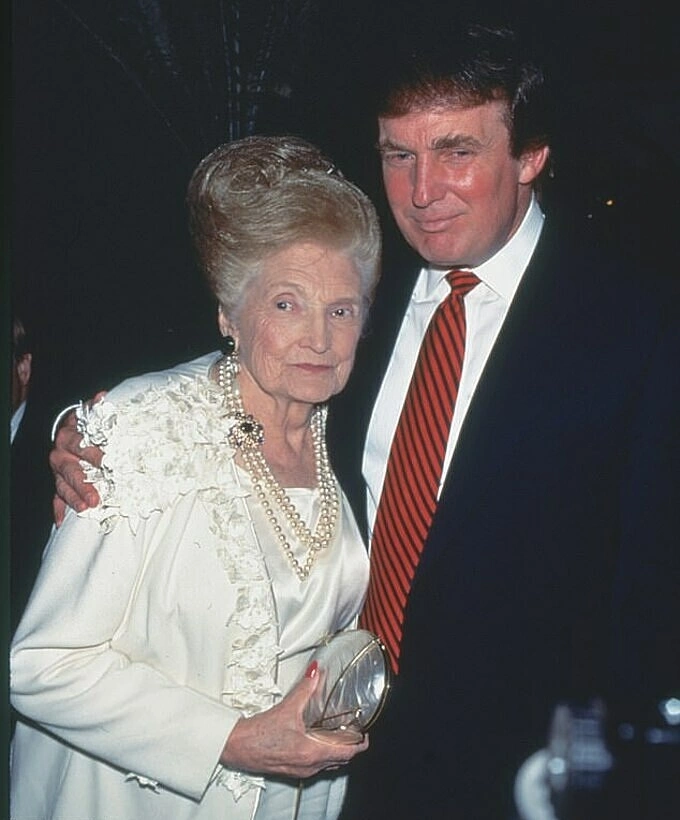
Mary Anne’s impact extended beyond family dynamics into lessons that would define Donald Trump’s approach to public life. While Fred Trump instilled toughness, competitiveness, and an understanding of business mechanics, Mary Anne demonstrated the softer yet potent skill of charisma. She understood how to captivate attention without overt aggression, to assert presence without alienating others, and to create an impression that lingered in the minds of observers. These lessons, often absorbed unconsciously by her children, were as formative as any formal instruction.
In interviews, Donald often reflected on his mother’s unwavering belief in him. He recounted that in her eyes, he could do no wrong—a form of encouragement that reinforced his self-confidence and willingness to take risks. Mary Anne’s approach was subtle, rooted in consistent support, gentle correction, and an example of social fluency. She knew that the world could be harsh, but she also imparted the belief that personal poise, dignity, and engagement could open doors where others saw only barriers.
Her mastery of social rituals—the way she hosted gatherings, participated in charitable events, and navigated community expectations—provided a template for Donald. He observed the effects of attention to detail, of elegance in presentation, and of the strategic cultivation of public perception. These skills, while not quantifiable in spreadsheets or contracts, would later manifest in the grander arenas of media, real estate, and political engagement, forming a bridge between domestic influence and public accomplishment.
Navigating New York – Immigrant Roots and Family Foundation
Mary Anne MacLeod’s journey from the Outer Hebrides to Queens was emblematic of the immigrant experience in early 20th-century America: precarious, uncertain, yet filled with opportunity for those with vision and perseverance. She brought with her a cultural heritage steeped in resilience, community, and the oral traditions of storytelling, which shaped the environment in which her children were raised. Her ability to navigate New York society—both the elite circles connected to her husband’s business and the immigrant networks that had supported her—demonstrated an adaptive intelligence that combined humility, charm, and strategic foresight.
Her household became a microcosm of ambition paired with moral grounding. While Fred managed the structural growth of his real estate ventures, Mary Anne cultivated the interpersonal, emotional, and performative aspects of her children’s upbringing. This dual influence—hard skills from their father, soft skills from their mother—produced a unique synthesis in Donald, equipping him with tools that few contemporaries possessed: a rigorous understanding of business, combined with an intuitive grasp of human perception, media, and public engagement.
The lessons of community involvement were as much about character as they were about influence. Mary Anne modeled the interplay between personal presence and social contribution, showing her children that visibility was a responsibility as well as an asset. These early exposures informed Donald’s later decisions, from his high-profile real estate ventures to his media appearances and eventual political life, reflecting a foundational understanding of social capital and personal narrative.
A Mother’s Legacy – The Subtle Art of Influence
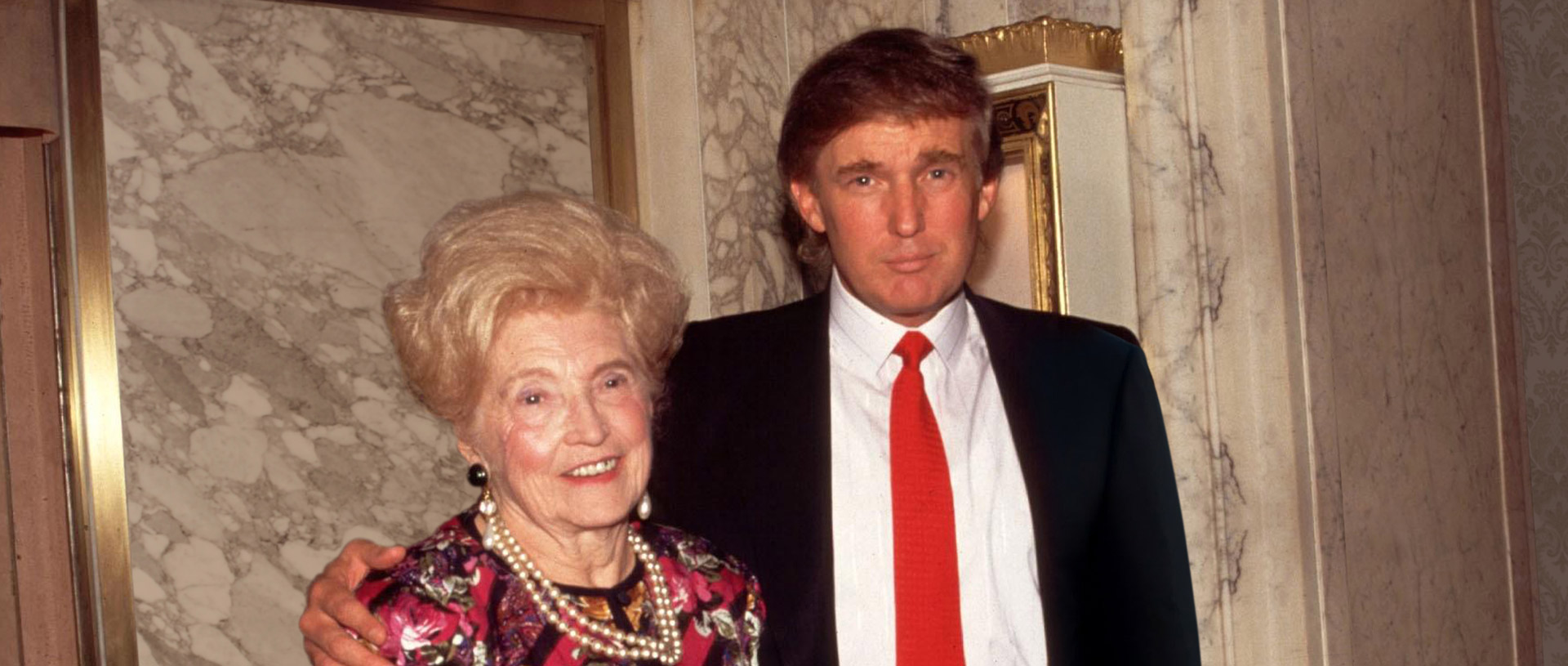
Mary Anne’s legacy in shaping Donald Trump cannot be overstated. Though she rarely sought public attention, her guidance created ripples that extended far beyond her immediate family. Her understanding of the power of self-belief, her attention to social nuance, and her emphasis on presence and perception cultivated in her son a lifelong pattern of performance in every arena he entered. From negotiating skyscraper deals to navigating televised debates, Donald applied lessons absorbed first in Queens under his mother’s watchful eye.
Her influence was not always overt; much of it manifested in the confidence, boldness, and sometimes flamboyant public persona that defined her son. The principles she demonstrated—charity, engagement, poise, and unshakeable self-belief—were internalized as tools to be wielded in complex, high-stakes environments. Donald’s frequent references to his mother in interviews reflect both affection and acknowledgment of the enduring imprint she left, shaping his worldview and approach to life.
Even in symbolic acts, her presence lingered. The Bible she gave Donald was the one he placed his hand on during his first inauguration in January 2017—a quiet testament to her influence and the moral and emotional foundation she provided. In this gesture, the past converged with the present, the private with the public, demonstrating the enduring resonance of maternal guidance across decades and continents.
Crossing Oceans, Shaping History
Mary Anne MacLeod’s journey from the remote Isle of Lewis to Queens, New York, is a story of courage, vision, and subtle mastery of human engagement. She navigated an unfamiliar world with dignity, securing her place in a rapidly changing city while imparting lessons that would echo through generations. Her life illustrates how influence is not always measured in public accolades or corporate achievements, but in the cultivation of presence, confidence, and resilience in the next generation.
Through her nurturing, Donald Trump inherited more than genes; he inherited an understanding of the human stage. She demonstrated that belief in oneself, combined with careful attention to appearance, engagement, and opportunity, can transform lives. Her impact, though quiet and often invisible, resonates through history: a young woman who crossed an ocean with nothing, built a family rooted in ambition and poise, and shaped a son who would assume one of the most powerful offices in the world. In her story, the essence of immigrant determination, maternal influence, and the subtle art of showmanship converge to illustrate the profound ways in which one life can echo across the world stage.